Our NGO
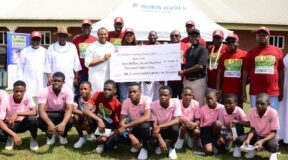
OpenLife Nigeria reports that Center For Development, Rehabilitation And Reintegration, CDRR, a non profit making organization, has rehabilitated over 94 persons who had previously involved in different shades of crime and have undergone corresponding punishments.
The essence, according to the NGO Secretary Barrister Cletus Nnacheta, is to rehabilitate and re integrate the ex criminals into the system to contribute their quota to national development.
He disclosed this and others in an interview with OpenLife Senior Staff Writer, Isaac Ngumah
Give An Insight Into The Scope Of Your NGO
Our NGO is non-governmental organization that was established primarily for the purpose of rehabilitating, ex-prisoners, ex-convicts and drugs addicts.
Our operational policies are tailored towards taking people off the street. The moments we see anybody who needs our help, we treat that person and see that the person is reintegrated back into the society.
We treat people with the fear of God.
How Do You Operate?
We have medical doctors, psychologists, who help through their professional expertise to counsel and administer drugs and treat drug addicts and by God’s grace, we have been able to rehabilitate more than 94 drugs addicts across Ekiti state Enugu and Delta States since 2013.
How Is Your Rehabilitation Section?
The rehabilitation section is where we treat and advice the ex convicts those that have completed their prison terms and maybe they don’t have anywhere to go, we bring them in and counsel them, treat their psychological problems and reintegrate them back into the society.
In some cases, some of them may not have where to start life all over again. We help them, counsel them and tell them where and how to start life afresh again.
Some learn skills like carpentry.
We introduce them to some carpentry markets and we buy materials for them.
Tell Us About Your Programmes And Developments So Far
Presently, we have concluded our programs in Enugu state and we have another programs that will take place in February in Benue state.
But because of insecurity, we decided not to move there for now.
We have set up facilities to ensure that those who are released straight from prisons are accommodated in our facilities.
We will take care, advise and counsel them. We study their mental state and reintegrate them back into the society.
How Is The Accommodation For Them?
We have three bedroom apartments. It is those who are in very bad conditions that we accommodate, feed and shelter.
Some voluntary organizations do come and give their own supports.
Our facilities can accommodate as many people as possible.
What About The Coordinating Units?
We have the chairman who overseers and supervises in the field.
I am the operating manager and as a lawyer, I move to prisons and get list of those who are about to be released.
I will apply and give them to our administrative section who will access them and refer them to the next office where they will be taken care off.
How Do Your Care For The Ones Accommodated In Your Facility Healthwise?
We have medical doctors who are permanent staff. We also synergize with other institutions like UNPH and they have been of tremendous help to us. We refer some of our clients there and we visit NDLEA, some other medical institutions for medical guidelines.
How Do You Identify Street People With Challenges?
The strategy we have employed so far since the inception of our programs is that we do what we call visibility studies.
We consider the state, look at what they are passing through.
For example, in Enugu state, I enlightened some communities where we have a lot of persons who roam the streets and having discovered that most of them are drugs addicts and ex prisoners, we studied their locations, did visibility studies.
After that, what we did next was to see that some of them are the people that we can accommodate in our facilities or those we can sponsor for a period by counselling them.
Some of them that we have concluded our treatments on, we enrolled them to learn skills or enroll them for trainings.
On completions we give them some money to establish little businesses. We have done that over the years.
Can You Point Out Areas You Have Achieved Much Success?
The areas we have performed well is in the areas of rehabilitations of drugs addicts and in this area we have been able to rehabilitate over 50 persons who are now doing well with some coming periodically to say thank you.
Also, we have statistic of those who have passed through our facilities. What we do periodically is to reach out to them, access them and ensure that they are improving in the state and bring more assistance to them.
Any Challenges So Far?
We have challenges. First is funds because ordinarily we need funds even to feed those ones who are in our place.
Some of them are helpless. Some of them are the ones that the society have rejected. We use our resources to feed them.So we need more funds.
Do You Get Support From The Government, Individual And Private Organizations?
Just few individuals, no support from the government at all even though some of the government agencies recognize our existence but nothing is forthcoming.
All they do is to refer people to us but in terms of funds and assistance.
But organizations like hospitals, governments institutions also corporate with us. That is where we get little assistance from them on humanitarian ground.
What Do You Want The Government To Do To Support Your NGO?
What we want the government to do to support our NGO is to create an enabling environments for NGOs like us. We have so many people who need rehabilitations. The people can be reintegrated back into the society.
Drug addicts need government’s assistance.
Do You Have Testimonies Since The Inception Of Your NGO?
A lot of people have come to say thank you.
How Old Is Your Foundation?
Since the year 2013, that is 13 years.
About Author