Anxiety Heightens In Nigeria
OpenLife News reports that for millions of Nigerians, a simple daily act — buying drugs, drinks, palm oil or fruit for the family — has become a source of anxiety.
Imagine getting a new job and buying a bottle of wine to celebrate with your boss, only for that bottle to have passed through a counterfeiter’s den. Imagine travelling home for Christmas with a carton of drinks for elders, unaware the contents may have been adulterated.
Imagine taking your blood pressure medication religiously, yet your pressure remains dangerously high. You spend more on hospital visits, change prescriptions, consult different doctors — not knowing the drug itself is the problem.
This is the reality heightening anxiety across Nigeria, as fake drugs, drinks and consumables flood markets while the perpetrators largely remain unchecked.
Inside the Counterfeiters’ Den – Where Government Fails
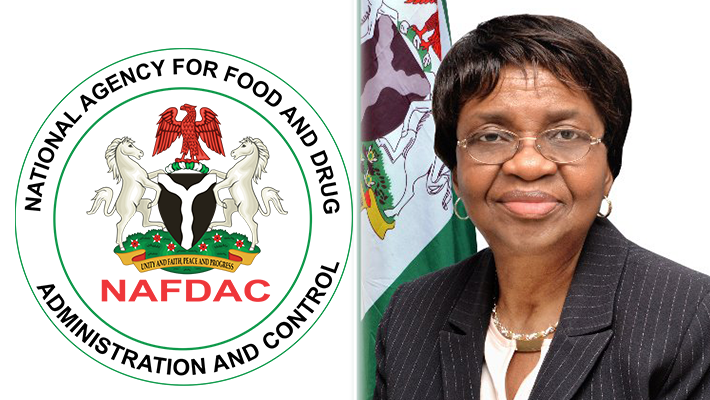
The scale of regulatory failure was exposed in two recent operations by the National Agency for Food and Drug Administration and Control, NAFDAC.
At Zamfara Plaza, BBA Trade Fair Complex, Ojo, Lagos, operatives uncovered a suspected illegal factory inside a two-storey building where alcoholic and energy drinks were allegedly being repackaged.
Two suspects, Chibuzor Okafor and William John, were arrested with drums, filters, heating devices and packaging materials.
Okafor’s confession exposed the loophole consumers face: “I change the bottle of the drink. It’s not that the bottle is not good. It’s the drink in there, because the other one is already damaged. So that’s why we are putting it to the next bottle.”
A familiar brand name, attractive label and cork now offer false reassurance. Government’s inability to monitor production and market entry means consumers cannot tell what is inside the bottle at point of purchase.
In Aba, Abia State, NAFDAC raided Old Court Road Market, described as notorious for producing packaging materials for highly branded spirits and wines. Operatives recovered corks, labels and outer packs bearing names of Jameson, Glenfiddich, Four Cousins, Lord’s Dry Gin, Imperial Blue, Chelsea, Squadron, Seaman’s Schnapps and Goya oil, valued at over N200 million.
These materials enable counterfeiters to make unauthorized products appear genuine — a clear evidence that the supply chain of fraud is thriving under weak surveillance.
During both operations, traders confronted and threatened NAFDAC officials and pursued their evacuation vehicles. Shop owners fled. No convictions have been announced — reinforcing public perception that perpetrators remain unchecked.
Government Regulatory Failures Exposed
Experts say the two raids only scratch the surface of systemic regulatory breakdown.
Weak Post-Market Surveillance
NAFDAC appears to treat product registration as the end of regulation.
Public health expert Dr. Casmier Ifeanyi, National President of Association of Medical Laboratory Scientists of Nigeria, queried: “The agency should concern itself with quality and integrity of products that receive their listing and numbering…
“The irony is that it is not this agency that is busting fake and counterfeit food and drugs. It is ordinary citizens, Nigerians, that are discerning.”
Porous Distribution System
The law allows medicines, drinks and consumables to move through unlicensed outlets, open markets, and online platforms without traceability. Government has failed to enforce a closed, traceable distribution chain.
Failure to Police Digital Markets
NAFDAC DG, Prof. Mojisola Adeyeye, admitted the agency now relies on corps members and interns to monitor sales on Instagram, Facebook, Jiji, Jumia and Konga. Penalties range from as low as N200,000 for micro businesses to N5m for larger ones — hardly deterrent against a multi-billion naira illicit trade. Sellers simply open new accounts and continue.
Lack of Deterrent Prosecution
Despite seizures worth N22.73 billion between January and August 2026, enforcement is measured by volume of goods destroyed, not number of convictions. No special courts exist for counterfeiters as demanded by health professionals.
Consequences on Citizens
The cost of regulatory failure is being paid by ordinary Nigerians
Treatment Failure and Death
Dr. Austin Aipoh, President of Healthcare Providers Association of Nigeria (HCPAN), said: “You have a patient you are treating, and the patient is not getting well. The patient becomes disenchanted just because the drugs are substandard or fake.”
A hypertensive patient on fake anti-hypertensive risks stroke, heart failure. A malarial patient on fake antimalarial risks severe disease and death. A diabetic on ineffective drugs risks organ damage.
Toxicity and Organ Damage
Methanol in counterfeit alcoholic drinks can cause blindness and death. Adulterated palm oil, artificially ripened fruits and fake food products expose families to chemical injuries.
Experts cite past cases of caustic soda sold as herbal fibroid cure, and toxic teething mixtures that caused kidney injury and child deaths in Ogun and other states.
Economic Devastation
Families exhaust savings on repeated hospital visits, tests and new prescriptions. A family struggling to pay bills moves from hospital to hospital while the real problem — fake medicine — goes undetected.
Erosion of Trust in Health System
When drugs fail, patients blame doctors, not the counterfeit. “When treatment fails, the patient may lose confidence in the doctor, the facility and the Nigerian health sector,” Aipoh warned.
Pregnant women denied real supplements risk harm to both mother and child.
Vulnerability of the Desperate
Radio adverts promising miracle cures for fibroids, hypertension and diabetes exploit poor access to specialists and high cost of orthodox care. Unverified herbal products are sold with impunity.
What Must Change
Experts insist raids alone cannot win the war, pointing out other measures have to be adopted to tackle the menace.
Accordingly, they demand:
Mandatory post-market surveillance and laboratory testing of products already in circulation.
Enforceable traceable distribution system from manufacturer to retail.
Special courts to try counterfeiters with severe penalties.
Empowered reporting system for health workers to flag suspected fake drugs when treatment fails.Government funding for NAFDAC intelligence, not reliance on interns.
Until then, the bottle may carry a trusted name, but the contents — and the government system meant to protect citizens — remain suspect.
About Author