Lost Opening Match, Won Final
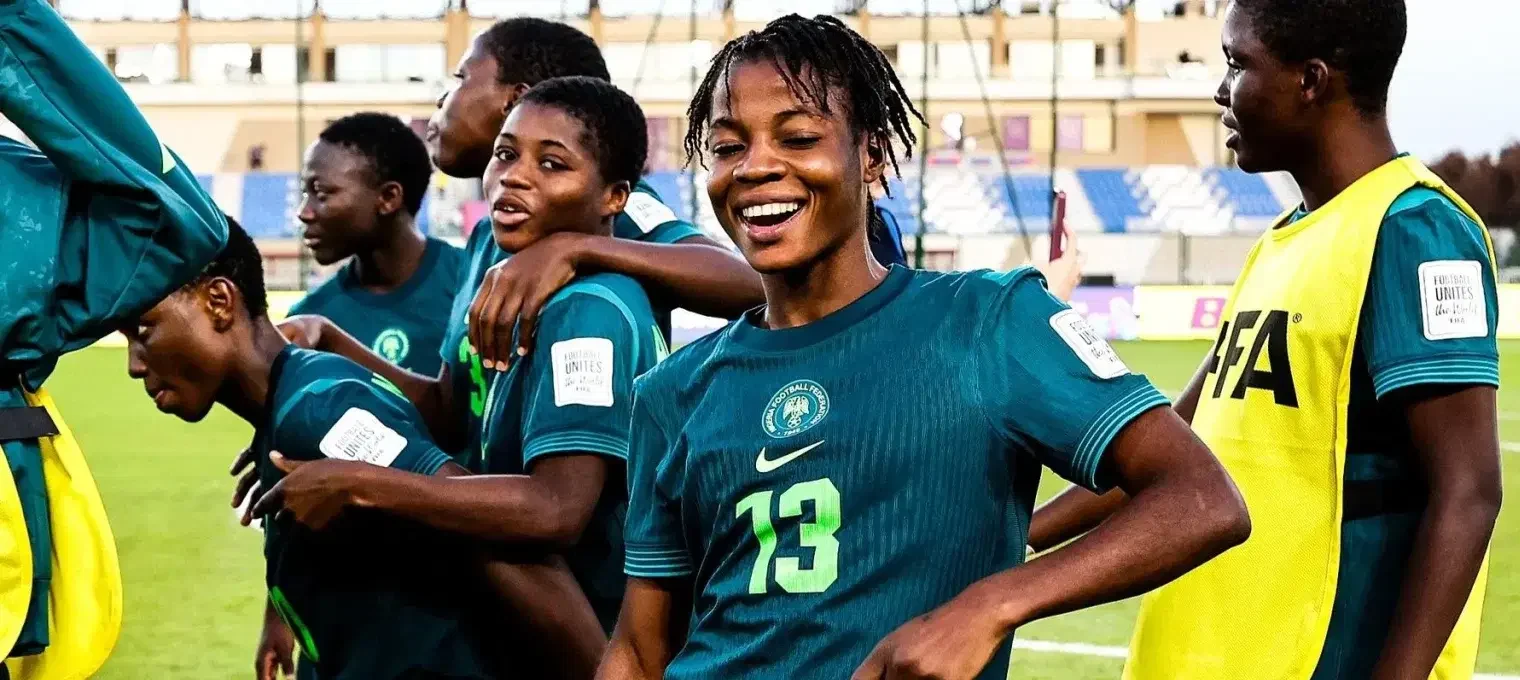
OpenLife News reports that Nigeria’s Flamingos have become the first African team to win the FIFA U-17 Women’s World Cup after beating Japan 2-1 in the final at the Mohammed VI Football Complex in Rabat, Morocco, on Saturday, November 7, 2026.
Goals from Awawu Bashiru in the 39th minute and Oluebube Umejiaku in the 47th minute secured the historic victory, making the Flamingos also the first team in the competition’s history to lose their opening match and still go on to claim the title.
It is a story of a group of Nigerian teenagers that did what no African team — male or female — had ever done at U-17 women’s level.
They beat Japan 2-1 in the final of the FIFA U-17 Women’s World Cup. The goals were scored by Awawu Bashiru at the 39th minute and Oluebube Umejiaku at he 47th minute.
Oluebube Umejiaku eventually emerged as the Player of the Match and she secured the win.
However, Fuki Ito of Japan obtained an 80th-minute consolation for Japan. But the scoreline is the smallest part of the story.
The real story is how they won it: After losing their opening match.That single fact makes this triumph historic in three different ways, and it is why this team will be studied for years.
Record of First To Lose And Still Win
The Flamingos lost 2-1 to Poland in their opening group game. No team in the history of the FIFA U-17 Women’s World Cup — founded in 2008 — had ever lost their opening match and gone on to lift the trophy.
Nigeria did it by winning five consecutive matches after that defeat in the following pattern:
Puerto Rico — group stage recovery
Korea DPR 3-1 — beating the defending champions to qualify as group runners-up
Mexico 2-1 — Round of 16
Venezuela — Quarter-final, won by Azeezat Oduntan’s decisive penalty in the 89th minute
Brazil 3-1 — Semi-final, Nigeria’s first-ever appearance in the final
Japan 2-1 — Final
This is a pattern seen only rarely in FIFA history. Across all FIFA tournaments, only a handful have done it.
First was Mexico U-17 men in 2005. They lost 1-2 to Uruguay, beat Brazil 3-0 in final. Then followed by Argentina U-20 men in 2005 that lost 0-1 to USA, beat Nigeria 2-1 in final.
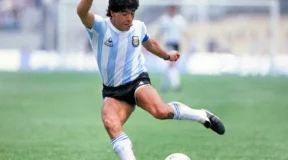
Argentina senior men in Qatar 2022 lost 1-2 to Saudi Arabia, beat France on penalties to win the World Cup.
Now, Nigeria’s Flamingos have joined that elite list of comeback champions. And they are the first women’s team to do it.This is not a footnote. It redefines what resilience means in tournament football, resonating with the age long adage that says “You do not need a perfect start, you need a perfect response.”
Historical Sketches Of 18 Years Of Near-Misses
To understand why November 7 matters, it is important to go back to 2008..
In 2008 New Zealand which was the inaugural edition of the FIFA U-17 Women’s World Cup, North Korea won it.
Nigeria was nowhere near. African women’s youth football is still an afterthought, starved of investment, structure and belief.
In 2010 — Trinidad & Tobago: South Korea won. Ghana reached the quarter-finals. Nigeria reached the quarter-finals, implying a hint of what Africa could do.
In 2012 Azerbaijan, France won. Nigeria was again quarter-finalists. Ghana finished 3rd — the first African medal.
The message was clear that Africa can compete, but not yet conquer.
In 2014 Costa Rica, Japan won their first title. Nigeria was quarter-finalists again. The ceiling seems fixed in a manner that Africa can reach last 8, occasionally last 4, but the trophy belongs to Asia, Europe, North America.
By 2016 Jordan, North Korea won again and Nigeria crashed out in group stage. This followed 2018 Uruguay which Spain won and Nigeria failed to qualify.
The cycle of inconsistency continued till 2022 India where the breakthrough came under Bankole Olowookere and the Flamingos, led by the likes of Opeyemi Ajakaye, won bronze, beating Germany on penalties in the third-place match.
At 2024 Dominican Republic, North Korea won again and Nigeria reached quarter-finals. The bronze of 2022 looks like it might have been a one-off. That was Nigeria’s best-ever finish before 2026. However and with this for the first time, Africa believes the final is reachable.
2026 — Morocco: The coronation.
Before Morocco, the Flamingos had already signalled intent because they won the 2026 WAFU-B U-17 Girls Cup in Côte d’Ivoire, winning 5 from 5, scoring 17 goals and conceding just once. That domestic dominance became continental dominance, then world dominance.
The Double History: Nigeria Completes The Set
This win makes Nigeria the first African country to win the FIFA U-17 World Cup in both men’s and women’s categories. That is a staggering claim when the men’s history is remembered.
Golden Eaglets
TheGolden Eaglets became champions in 1985, 1993, 2007, 2013, 2015, five titles, the most successful nation in men’s U-17 history.
So, for 41 years, Nigeria’s boys carried the flag. The girls were always told to wait.Now, the Flamingos have completed the set. Nigeria is also now the first African women’s national team at any level to win a FIFA World Cup trophy.
Put differently, no Super Falcons team has won a senior Women’s World Cup. No Falconets team has won a U-20 Women’s World Cup. The Flamingos are the first Nigerian women’s team — indeed the first African women’s team — to be crowned world champions by FIFA.
That is why FIFA President Gianni Infantino and CAF President Patrice Motsepe were both in the stands in Rabat.
They were not just watching a final. They were watching a continent break a ceiling.
The Tactical Context
The Flamingos beat the the Best, not the rest. This was not a lucky draw. Considering the teams Nigeria beat is the ultimate revelation that the Flamingos have arrived.
First was Korea DPR, the defending champions and serial winners, physically and tactically feared.
Then Brazil, a traditional powerhouse, beaten 3-1 in the semi-final. In like manner, Japan, the champions in 2014, runners-up in 2010 and 2016, finalists again in 2026 received Flamingos thrashing. A team that had conceded only twice on its way to the final. Nigeria scored twice in 47 minutes.
Japan’s style
The Japanese style revolve round possession, patience, technical precision, That is the exact style that has historically undone African teams. Nigeria did not try to out-possess them. They pressed, they attacked early, they unsettled them.
Bashiru’s long-range opener in the 39th minute, off an assist from Mary Dunstan, and Umejiaku’s clinical finish two minutes after half-time, were not accidents. They were a game plan executed.And when Japan pushed late, Nigeria held. That is maturity beyond 17.5.
What It Portends: Five Big Consequences
For Nigerian Women’s Football, it is a pipeline that finally worked. For years, the Super Falcons — 10-time African champions, fresh from Mission X, beating Morocco 3-2 to win their 10th WAFCON — have relied on overseas-born players and late developers.
The Flamingos prove there is now a genuine homegrown pipeline: WAFU-B → Flamingos → Falconets → Falcons.If the NFF and NSC protect this generation — no age fraud scandals, no abandonment after the trophy, no unpaid bonuses — Nigeria could dominate African women’s football for the next decade, and finally challenge at senior World Cup quarter-final level and beyond.
And for Africa, the psychological barrier is gone. Ghana, Cameroon, Kenya, Morocco, South Africa have all knocked on the door. Now one African team has walked through it.
The next African coach will no longer tell his girls “we can try to reach the semi-final.” He will tell them “Nigeria did it, we can do it.” That mental shift is more valuable than any trophy.
For FIFA and Global Women’s Football, this is a power shift. Since 2008, the U-17 Women’s World Cup has been dominated by North Korea (3 titles), Spain (2), Japan, South Korea, France. Africa had zero. Now Africa has one. With FIFA expanding the tournament to 24 teams and holding it annually from 2025, the talent pool will only widen.
Now, stakeholders would expect more African investment, more scouts in Lagos, Accra, Nairobi, and Rabat.
For the players, it is life changing but fragile. Bashiru, Umejiaku, captain Harmony Chidi, Oduntan — these names will now be on the radar of European clubs. The danger is history repeating itself,
Nigeria’s Golden Eaglets stars of 1985, 1993, 2013 often disappeared because there was no transition plan.
The Flamingos need scholarships, professional contracts, mental health support, and education. Winning at 17 is not the end; it is the beginning of a career that can be lost if mismanaged.
For Nigeria As A Nation, it is a unifying story in a divided time. President Bola Tinubu, First Lady Oluremi Tinubu, the NSC, and even opposition figures like Uche Secondus all congratulated the team within hours. In a country battered by economic hardship, insecurity, and political division, the Flamingos gave Nigeria a rare, clean, unifying triumph.
That matters. Sport is not a substitute for governance, but it is a reminder of what Nigeria can be when systems work, when talent is nurtured, and when young people are trusted.
Conclusion: From Defeat To Destiny
The Flamingos’ story will be told to future generations not as “Nigeria won the World Cup,“but as “Nigeria lost first and still won the World Cup.”
That is the lesson: A bad start is not a bad ending. A loss to Poland in October became a win over Japan in November.In 2008, Africa had no trophy.
In 2022, Nigeria had bronze. In 2026, Nigeria has gold.The next question is no longer “Can Africa win?” It is “Who will be next, and how will Nigeria defend it?”
The Flamingos have answered the first question forever.
Why we lost to Nigeria in final – Japan coach Shirai Laments
Japan U-17 women’s national team coach, Sadayoshi Shirai, has praised Nigeria’s Flamingos following his side’s 2-1 defeat in the final of the 2026 FIFA U-17 Women’s World Cup in Morocco.
Shirai admitted that Nigeria’s speed and physical strength posed major problems for his players, particularly when the Flamingos managed to break through their defence.
Nigeria secured the title through goals from Oluebube Umejiaku and Awawu Bashiru, while Fuki Ito scored for Japan.
Reacting after the encounter, Shirai acknowledged Nigeria’s superiority but maintained that his players gave their best throughout the final.
“First of all, I have to say that Nigeria were a very strong team. We understood their strengths, but there were moments when they managed to get in behind our defence.
“Even so, I think our players fought incredibly hard until the very end, doing everything they could to cope with Nigeria’s speed and physical power.
“I also believe that if we had managed to score earlier, we might have had a better chance of winning the match. I want them [Japan’s players] to be proud of themselves.
“The way they fought until the very end of this World Cup will have inspired many people, and I hope they can take confidence from that,” Shirai said.
Japan reached the final after defeating DPR Korea in the semi-finals, while Nigeria booked their place in the title decider with a victory over Brazil.
For the records
Q: Who won the FIFA U-17 Women’s World Cup 2026?
A: Nigeria’s Flamingos won the 2026 FIFA U-17 Women’s World Cup in Morocco, beating Japan 2-1 in the final.
Q: Who scored for Nigeria in the final vs Japan?
A: Awawu Bashiru scored in the 39th minute and Oluebube Umejiaku scored in the 47th minute. Fuki Ito scored Japan’s consolation in the 80th minute.
Q: Did Flamingos lose their opening match?
A: Yes. The Flamingos lost 2-1 to Poland in their opening group match, then won five consecutive matches to lift the trophy — the first team in history to do so.
Q: Has any African team won the U-17 Women’s World Cup before?
A: No. Nigeria’s Flamingos are the first African team to win the FIFA U-17 Women’s World Cup, and the first African women’s team at any level to win a FIFA World Cup.
Q: How many times has Nigeria won the men’s U-17 World Cup?
A: Nigeria’s Golden Eaglets have won the men’s FIFA U-17 World Cup five times: 1985, 1993, 2007, 2013 and 2015. Nigeria is now the first African country to win it in both men’s and women’s categories.
Q: What was Nigeria’s previous best at U-17 Women’s World Cup?
A: Bronze medal in 2022 in India, before winning gold in 2026.
About Author