As Nigeria’s Selective Truth-Telling
OpenLife News reports that Oladipo Oluwole, a Public affairs analyst, social commentator and former Director of Information and Education in Ogun State Civil Service, in this piece, reflects on the clash between President Tinubu and Catholic Bishops, arguing that Nigeria’s selective truth-telling and identity politics threaten national unity ahead of 2027
If human beings, like our forefathers, were conscious of the gains of speaking the truth — calming frayed nerves, making peace in society, and living a stress-free life — many would adhere strictly to truth-telling, no matter whose ox is gored. Families, communities, our nation, and indeed the world, would avoid many pitfalls and become more peaceful places to live.
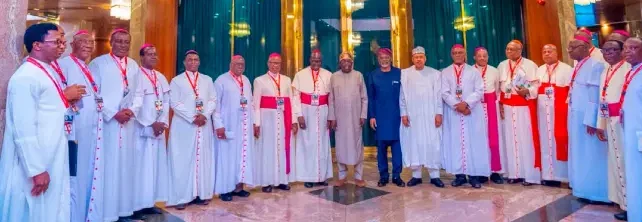
But human nature is complicated. The truth we speak is often conditioned by friendship or enmity, love or hatred, social class, and ethno-religious leanings. All of these have been on full display in the recent face-off between the Presidency and Catholic Bishops.
Speaking Truth to Power: A Nigerian Tradition
Religious leaders — traditionalists, Christians, and Muslims — have always spoken truth to power. Catholic bishops like Baba Olubunmi Okogie, Rev. Fr. Matthew Kukah, and Cardinal John Onaiyekan have done so consistently, even during military rule.
However, the human element in us often blinds us to the importance of timing, place, and context in how truth is delivered. The recent outburst by one of the visiting bishops, outside the usual channels of conferences, seminars, and State House interactions, raises a critical question.
Is There a Right Time and Place to Speak Truth?
Truth is constant. But where are we today because of our collective failure to speak it when it matters most?As the Yoruba say: “Ai fele ke ibosi….ni ko je ki o see jo” — saying the right thing in the wrong way and place, or the wrong thing in the right way and place. This has fueled falsehood and its consequences in our body polity.
The Presidency, as host, and the Catholic Bishops, as guests, are both important institutions. But they are made up of humans with strengths, weaknesses, fears, ethno-religious sentiments, and political interests — especially with 2027 approaching.
Where It Went Wrong
President Tinubu chose to defend INEC activities as if he were the agency’s spokesperson, and remarked that “all things are fair in politics”, instead of offering reassurance in areas of public doubt.
On the other side, one of the bishops took what should have been an inner-chamber discussion to the media, with allegedly disparaging comments against the nation’s number one citizen.
This would likely not have degenerated into a religious hullabaloo if civil society groups like SERAP, human rights organizations, critics like Sowore and Femi Falana, or opposition parties were the ones raising the issues. But once religion enters the frame, the conversation becomes polarized.
The 2027 Test: Competence vs Identity
The truth is, if Nigerians are asked to choose between tribalism/ethnicity, religion, and competence in selecting political leadership for 2027, many will still choose the first two over competence. Only to become disgruntled later, as usual.
The relationship between state and religion ought to be symbiotic and mutually beneficial. It should not become a destructively polarized tool that threatens the well-being of citizens.
Oladipo Oluwole a Public Affairs Analyst, Social Commentator, and former Director of Information and Education, Ogun State can be reached via: Email: oladipooluwole21@gmail.com
About Author