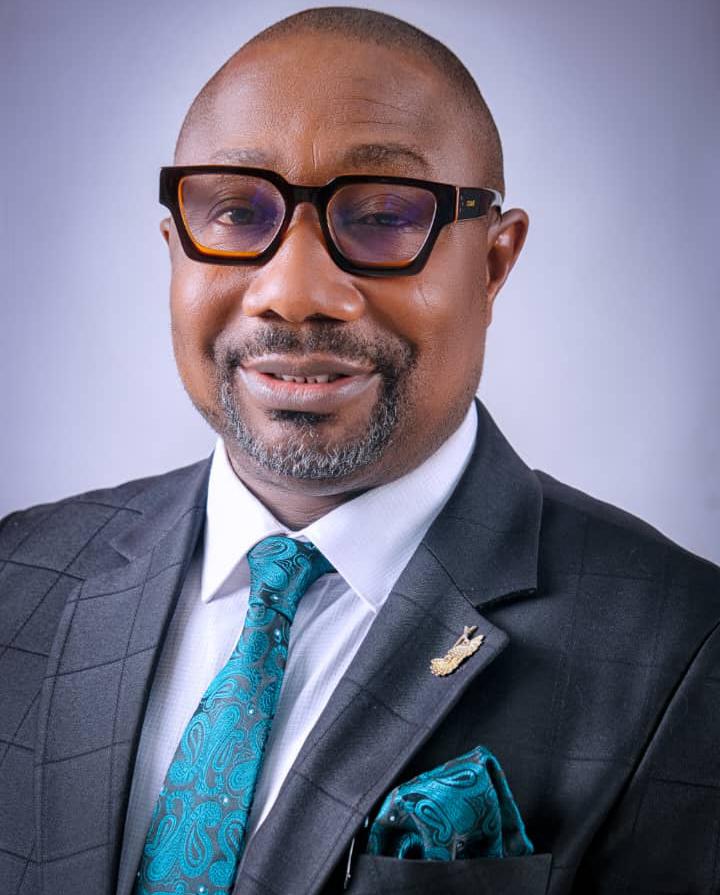
My Edge Over Other 2027 Abia North Senate Candidates—ADP’s Dr. Okey Okoro Udo
OpenLife News reports that Abia North has been served by strong political names, including Dr. Orji Uzor Kalu. But as 2027 approaches, a different kind of argument is being made — not for another career politician, but for a technocrat who can audit power.
Dr. Okey Okoro Udo, economist, forensic accountant and chartered tax practitioner, says his decades tracing public money through budgets and bank statements is exactly what the red chamber needs.
With the Nigeria Tax Act 2025 reshaping revenue and sharing, he argues the zone needs a Senator who already understands the law, not one learning it on the job.
And even without public office, his Udo Chia Foundation and GIFT Foundation have kept less-privileged children in school, a pointer to what he would do with a mandate.
What he is promising is what he calls measurable stewardship — a published constituency contract on scholarships and youth skills, federal intervention for roads and erosion sites, support for traders and farmers, and a yearly public account of every project and every naira.
Having run on a national ticket in 2023, he also brings cross-party and cross-regional relationships that most first-time Senators lack.
His pitch is simple: Abia North has had representation; now it needs representation that can be audited.
These and more the National Treasurer of Action Democratic Party, ADP and the party’s 2027 Abia North Senate candidate tells OpenLife’s Senior Staff Writer, Isaac Ngumah, in an exclusive interview that reveals his strength above his competitors
What can you say on the economic policy of the president as the nation celebrates 66 years of Independence?
Let me be fair before I am critical. On paper, the numbers have improved: inflation that peaked above 33 percent in 2024 is now around 15 to 16 percent, reserves have crossed 50 billion dollars, the gap between the official and parallel exchange rates has nearly closed, and GDP grew 3.89 percent in the first quarter of 2026.
I concede that subsidy removal and exchange rate unification were decisions others dodged. But my question at 66 is simple: has the Nigerian improved, or only the spreadsheet? A minimum wage of 70,000 naira, worth about 45 dollars, cannot feed a family for two weeks.
Over 100 million of us remain multidimensionally poor, and growth of 4 percent in a population growing at 2.5 percent is too thin to feel.
The surgery may have been necessary, but the patient is still in the recovery ward. Until reform reaches the dinner table, declaring victory is campaigning, not governing.
The President has come to say that Nigeria has crossed the red sea. What is your take?
Isaac, let me stress it as it is. It is a lovely metaphor, but let us finish the Bible story. After the Red Sea came forty years in the wilderness, and that wilderness was caused not by Pharaoh but by leadership failure and a golden calf of corruption. If we have truly crossed, why are over 100 million Nigerians still poor?
Why does a bag of rice still swallow a worker’s entire monthly wage? Reserves of 50 billion dollars and a steadier Naira are shoreline achievements, and I concede them, but GDP figures do not cross the Red Sea; people do.
Pharaoh’s army may be behind us; hunger and insecurity are still camped in front of us. So my advice to the President is simple: less poetry, more delivery. Do not confuse the shoreline with the Promised Land.
People are asking why celebrate Independence day while the country is still trapped inside poverty. What can you say to these?
The anger is legitimate, but I separate celebrating our sovereignty from endorsing our condition. We celebrate the founders who won us self-rule, the resilience of our people, and the fact that we are still one country despite a civil war and every stress test since.
What we must not celebrate is the mismanagement that has kept the world’s most gifted black nation poor. Let October 1 be a day of sober reflection and recommitment, not fireworks over empty pots. In the ADP, we marked it with service, not champagne.
Some people are saying that the country should unite and believe in the future of Nigeria. Do you key into that ?
I align completely; no section of this country can prosper alone. But unity cannot be commanded, it must be earned by justice. People believe in a country that believes in them.
Give every Nigerian child the same chance whether born in Daura or Diobu, share burdens and benefits fairly, and you will not need to preach unity; it will flow naturally. Faith in Nigeria is my political creed, but faith without the works of justice is dead.
Some people are saying that Nigeria is bleeding while celebrating independence day. what is your take?
They are describing a reality we must not deny. In the very week of the 66th anniversary, prospective corps members were abducted on the Owerri to Onitsha road, and communities still pay levies to bandits.
That is bleeding. But a serious nation can do two things at once: honour its birth and treat its wounds. The bleeding can stop, with decentralised policing, prosecution of terror financiers, and economic hope for the idle young men who are criminality’s recruitment pool.
Security is the first social contract; a government that cannot protect its citizens has no other achievement to advertise.
There are lots of admonitions that leaders of this country should be resilient and committed in building a stronger nation. What are your views?
Correct, but let us define resilience properly.
It is not the capacity of leaders to endure the people’s suffering; it is the discipline to keep doing the right thing when it is politically costly: cutting the cost of governance before taxing the people, staying with long-term projects beyond election cycles, and building institutions that outlive individuals. Nigerians have shown resilience for 66 years.
It is now the turn of the leadership class to match them.
There are concerns about vote buying and delay in releasing election results. What is your impression on this?
Absolutely, and this is a hill the ADP will stand on. Make electronic transmission of results from the polling unit to the IReV portal mandatory in law, so that what is announced in Abuja matches what was counted before the voters, and publish polling unit results in real time for permanent public audit.
Take the appointment of INEC’s leadership out of the sole hands of a President who is himself a contestant, and give the Commission first-line funding so it can neither be starved nor induced.
As for vote buying, treat it as the electoral armed robbery it is: prosecute buyer and financier alike and create cashless zones around polling units. An umpire appointed, funded and promoted by one of the teams cannot inspire confidence.
What can you say about the recent release of the abducted but released corps members?
I thank God for their safe release, I commend our security agencies and the vigilante groups, and I rejoice with their families.
But I refuse to call it a success story. Why were young Nigerians answering the call of national service abducted on a federal highway in the first place? Was ransom paid, and by whom, since every undisclosed ransom is seed capital for the next abduction?
Where are the arrests? Rescue without justice is an invitation to repetition. Going forward, give corps members escorted or safer travel options, stop routing our children through dangerous corridors by night, and provide trauma care for every victim. National service must never become national sacrifice.
What can you say about the faulty structure and the clamour for restructuring in Nigeria?
The clamour is legitimate. Nigeria runs a unitary system in federal clothing: 36 states queue in Abuja every month for allocation, the Exclusive Legislative List has swollen to 68 items, and a governor cannot control the police that secure his people.
Restructuring is not about breaking Nigeria; it is about making Nigeria work.
For the ADP, it means devolving policing, railways and power to the concurrent list, fiscal federalism that turns every state into a centre of production rather than a centre of allocation, real local government autonomy, and a leaner federal government.
The regions of the First Republic competed in cocoa, groundnuts, palm oil and education; that competitive federalism is the engine Nigeria switched off in 1966 and has never restarted.
Express your points about north/south dichotomy?
It is our most exploited fault line, and I say exploited deliberately, because the elite manufacture it at election time and dissolve it at dinner time.
The poor northerner and the poor southerner have more in common with each other than with the elite of their own regions.
Yes, the gap in literacy, poverty and health between North and South is real, and closing it is a national security imperative, not a regional favour.
But power rotation has never fed anybody. The answer is equity plus merit: invest where deprivation is deepest, and let competence, not compass direction, determine appointments.
From Sokoto to Yenagoa, Nigerians ask the same three questions: security, food, and a future for their children.
Your comments about poverty and insecurity in the country
Poverty and insecurity are Siamese twins; you cannot treat one and discharge the other.
Over 100 million Nigerians are multidimensionally poor, and the regions with the worst poverty carry the worst insecurity, because poverty supplies the foot soldiers of banditry and banditry destroys the farms that could cure poverty.
My prescription is straightforward: secure the farm first, because there is no food security without physical security; decentralise policing so communities police terrains they know; follow the money, because the financiers of terror live in our cities, not the forests; and invest massively in the skills and credit of our young people, since an engaged young man is a recruitment loss to the bandits.
Bullets alone and handouts alone will fail at both.
How does the unbridled corruption in Nigeria bother you?
As a forensic accountant, corruption is not an abstraction to me; I have traced its footprints in ledgers and bank statements.
In Nigeria it is no longer an event but a system, with its own logistics, bankers and lawyers, costing us trillions of naira yearly through padded contracts, oil theft and illicit flows. That is why a rich country houses poor people.
The fight is also selective: defection to the ruling party should not operate as a detergent that washes sins away.
Prevention beats prosecution: digital end-to-end procurement, beneficial ownership registers, lifestyle audits, and automated revenue collection so human hands never touch cash.
And my own profession must stop providing corruption’s technical services; he who audits the thief and signs clean accounts is a co-conspirator.
What can you say about the flawed elections in Nigeria?
Flawed elections are our original sin. Leaders who do not owe their power to the people do not answer to the people; they answer to godfathers, financiers and the courts, and the result is governance by settlement, impunity in office and voter apathy.
Three things must change: punish electoral offenders by passing the Electoral Offences Commission Bill before 2027; stop the judiciary from being the final collation centre, because elections should be won at the polling unit, not the tribunal; and let parties, mine included, democratise internally, for you cannot impose candidates through dubious primaries and then demand clean general elections.
There is skepticism about the Independence especially absence of confidence in government
I respect the sentiment but I respectfully disagree, and I say this as a critic of the government. Despair flatters our failed leaders; it tells them they have succeeded in killing our hope.
There is plenty to be proud of: our doctors, academics and tech talents excelling on every continent, Afrobeats and Nollywood conquering the world, and a democracy that has survived 27 unbroken years with power changing hands through the ballot. What we should be ashamed of is the gap between this potential and our governance.
So be proud of Nigeria, be angry at its management, and convert that anger into a voter’s card. Pride without demand is complacency; anger without participation is noise.
What are your views about State Police, regional autonomy and implementation of 2024 National Confab?
They are chapters of the same book. On state police, I am a supporter with safeguards: 370,000 officers cannot secure over 200 million people across 923,000 square kilometres, but we need independent state police commissions, federal standards and guaranteed funding, so that state police do not become governors’ private armies.
On regional autonomy, I prefer the language of devolution: take decisions closest to the people and leave the centre with defence, foreign affairs and currency.
And on the 2014 National Conference, its roughly 600 consensus resolutions remain our most comprehensive roadmap, gathering dust only because implementation threatens entrenched interests.
Extract the implementable resolutions and act on them. A nation does not keep commissioning dialogues; at some point it must obey its own conversations.
Tell us about the challenges of your party presently
I will be candid, because a party that cannot diagnose itself cannot diagnose a nation. Our challenges are those of every genuine alternative in money-driven politics: funding asymmetry against ruling parties that convert state resources into campaign resources, limited media visibility because airtime follows advertising budgets, a defection culture that occasionally takes ambitious members to deeper pockets, and voter scepticism after decades of two-party dominance taught people to vote fear rather than hope.
We regard defections as self-cleansing; those who remain believe in something. What we do not have is a crisis of ideas or of integrity, and those are the scarcest commodities in Nigerian politics.
How do you want to win the 2027 elections?
Without handing our playbook to opponents through your microphone, our strategy stands on five legs: grassroots before gladiators, building ward by ward with trained agents in every polling unit, because you cannot protect votes you cannot see; the youth and women majority, since over 60 percent of registered voters are under 50, with subsidised nomination forms for them; an issue-based contrast built on a costed governance contract covering security, food, jobs, power and education; coalition without absorption, open to alliances of like-minded parties but never swallowed; and massive voter registration and PVC collection, because apathy is the ruling party’s best friend, and turnout is ours.
What structures has your party put in place to win the elections?
Structure is where alternative parties usually fail, so we have been deliberate. The ADP is on the ballot nationwide, with functional executives at national, state, local government and ward levels across the 36 states and the FCT.
Our electoral machinery includes polling unit agent training, parallel vote tabulation capacity and a litigation-ready legal team.
We are building a candidate pipeline that screens for character and competence over cash, a digital directorate paired with mobilisation through town unions, faith communities and markets, and transparent member-based funding, because he who funds you owns you, and we prefer to be owned by our members.
Elections are won when organisation meets opportunity, and 2027 offers the biggest opening for an alternative in a generation.
In clear terms, why should Abia North senatorial zone voters vote for Dr Okey Okoro Udo, and what value can you add different from Dr Orji Uzor Kalu and the senators who have served before now?
Let me answer with respect, because Abia North has been represented by distinguished sons, including Dr Orji Uzor Kalu, and I will not build my case by tearing anyone down; I will build it on what I bring that the zone has not yet enjoyed.
I come as a technocrat, not a career politician: an economist, forensic accountant and chartered tax practitioner who has spent decades tracing public money through ledgers, budgets and bank statements.
The real power of a senator lies in appropriation and oversight, and Abia North deserves a senator who can read the federal budget line by line, insert and defend constituency projects, track every kobo released, and expose the paddings that others wave through.
I also understand the new fiscal landscape: with the Nigeria Tax Act 2025 reshaping how revenue is raised and shared, our zone needs a voice that has guided businesses and governments through these laws, not one learning them on the job.
And my service precedes my ambition: through the Udo Chia Foundation and the GIFT Foundation, I have put less-privileged children in school without holding any public office, so imagine what I will do with one.
The difference, in one word, is stewardship. I will sign a measurable constituency contract with Abia North covering scholarships and skills for our youth, federal attention for our roads and erosion sites, support for our traders and farmers, and a published yearly account of every constituency project and every naira.
Having run on a national ticket in 2023, I also bring relationships across party and regional lines that a first-time senator rarely has. Past senators gave us representation; I offer representation that can be audited.
That is the value I add: a forensic accountant in the red chamber, going not to join the chorus, but to check the books for his people.
What can you say on the militarization of elections in Nigeria?
Hmmm, I condemn it without reservation. Soldiers belong at the borders and in theatres of insecurity, not at ballot boxes.
Our courts have ruled repeatedly that the military has no role in election duties, yet every cycle armoured vehicles appear in opposition strongholds, suppressing voters under the guise of security.
Election security should be led by the police under a transparent protocol observed by all parties, military deployments must be publicly justified and audited, and officers who allow themselves to be used for partisan intimidation should face court martial.
A democracy that needs gun trucks to conduct a civic exercise is advertising its own illegitimacy.
What are your comments about rigging and stomach politics in Nigeria today?
Isaac. Rigging and stomach infrastructure are two sides of the same coin: one steals the vote by force or forgery, the other buys it with a bag of rice. And let us be honest about the economics of it: a hungry electorate is a cheap electorate.
Those who keep the people poor on Monday purchase them on Saturday. Poverty is therefore the biggest rigging machine in Nigeria, and genuine economic empowerment is itself electoral reform.
Beyond that, civic education must be aggressive and conducted in our local languages, so that every voter understands that selling his future for five thousand naira is self-enslavement.
Campaign finance limits must be enforced with real-time disclosure of party spending, because today’s limits exist only on paper, and our communities, religious bodies and traditional institutions should return the stigma to vote merchants by naming and shaming them.
The day the Nigerian voter cannot be bought is the day the Nigerian leader will be forced to perform.
How is INEC preparedness to conduct the 2027 general elections?
I will be measured but candid. INEC has a new leadership and has commenced continuous voter registration, but preparedness is not measured by press statements; it is measured by verifiable milestones.
The Commission must first restore public confidence after the result-transmission failures of 2023, which it has never satisfactorily explained, because confidence is rebuilt by candour, not by silence.
It must also secure a clear and binding legal framework on electronic transmission before the election timetable is released, so that the rules are settled early and not changed at half time.
More so, Isaac, Beyond the legal questions lie the practical ones: timely delivery of materials, functional BVAS machines on election day, and the welfare of ad hoc staff, because an unpaid and stranded corps member is a vulnerability.
The voter register must be cleaned and transparently displayed for claims and objections, and the Commission must engage early and equally with all registered parties, not just the big two.
We will judge INEC by its conduct of the off-cycle elections between now and 2027, and so far the signals are mixed. Nigerians deserve better than mixed signals.
What are your views about State Police ?
The bill to alter the Constitution and move policing to the concurrent list is one of the most consequential proposals before the National Assembly, and the ADP supports its passage, but we insist it must be passed right, not just passed fast.
Operational independence must be entrenched, with state commissioners of police appointed through independent commissions and protected by security of tenure, rather than hired and fired at the pleasure of a governor, and state police should be barred from election duties in their formative years so that they are not converted into electoral weapons.
Hear this, my brother.
The bill should also set national minimum standards on recruitment, training, human rights and arms control, enforced by a federal inspectorate, and implementation should be phased, beginning with willing and fiscally capable states supported by federal transitional funding, so that we do not create 36 underfunded forces overnight.
The rules for resolving jurisdictional conflict between federal and state police must be written into the bill itself, not left to future litigation.
The status quo has failed, because ungoverned spaces cannot be policed from Abuja, but a badly designed state police would replace one problem with 36 problems, and the ADP will engage the public hearings with concrete amendments in this spirit.
About Author