With All The Advanced Technology
OpenLife News reports that twelve years after Malaysia Airlines Flight MH370 vanished with 239 people on board, its main wreckage has still never been found despite the most expensive search in aviation history.
Earlier reports suggested its transponder and ACARS were said to be manually switched off and it flew seven more hours on satellite pings into the southern Indian Ocean.
This, to say the least, is curious.
The story
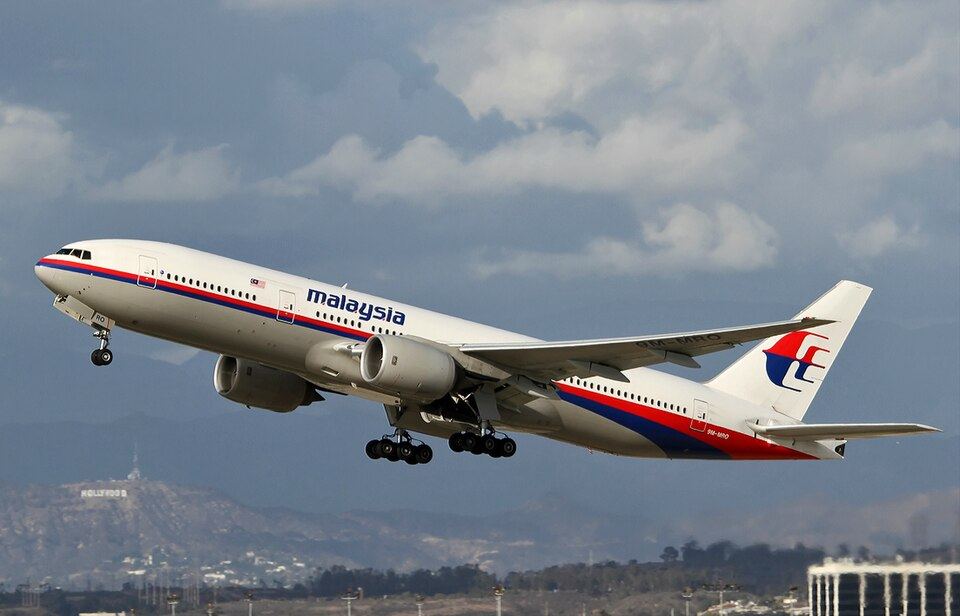
It was not a small plane.
A Boeing 777-200ER. 63.7 metres long – about 15 cars parked bumper to bumper. A wingspan wider than a football pitch. Almost 300,000 kilograms when loaded – the weight of 200 cars.
A machine that can carry over 300 people across continents. Now imagine something that big just disappearing.
On March 8, 2014, that is exactly what happened. Malaysia Airlines Flight MH370 took off from Kuala Lumpur at 00:41 local time, bound for Beijing.
On board were 239 people – 227 passengers and 12 crew. It was a routine red-eye flight. Weather was clear. No technical faults reported.
At first, everything seemed normal. At 01:19 a.m., as the plane was about to leave Malaysian airspace for Vietnamese airspace, the cockpit signed off with air traffic control: “Good night Malaysian three seven zero.”
It was the last voice anyone ever heard from the aircraft. A standard handover. No distress. No panic.What controllers did not know at that moment was that the plane had already started going dark.
Minutes before that final call, the aircraft’s ACARS – the Automatic Aircraft Communications system that automatically sends data about the plane’s engines and condition – had stopped transmitting.
Three minutes after the pilot’s goodbye, the second system went dark: the transponder. That is the system that allows civilian radar to identify a plane, its altitude and speed. When it went off, MH370 vanished from civilian radar screens.
Investigators later concluded both systems were not failures. They were manually switched off. Someone put them off.
Then came the turn that changed everything. Malaysian military radar, which does not need a transponder, picked up an unidentified aircraft making a sharp U-turn, flying back across the Malay Peninsula, then turning north-west and heading towards the Andaman Sea.
It was flying in the completely opposite direction to Beijing.For families in Beijing waiting for loved ones to land, the flight was still listed as delayed. They had no idea their loved ones were already heading thousands of kilometres the other way.
Eventually, even military radar lost it. For the world, the plane had vanished.But it hadn’t stopped flying.For seven more hours, MH370 was silently shaking hands with a satellite.
British company Inmarsat revealed that even with ACARS and the transponder off, the plane’s satellite data unit kept sending automated hourly pings – often called handshakes – to an Inmarsat-3F1 satellite over the Indian Ocean.
The pings did not give an exact location, but they proved one chilling fact: the plane was still powered on, and still flying.The final handshake came at 08:19 a.m. – 7 hours and 38 minutes after take-off. No more pings after that. Experts believe it ran out of fuel.
By analyzing the frequency and delay of those pings, scientists drew two vast arcs – a northern corridor and a southern corridor. The northern corridor was ruled out.
That left the southern Indian Ocean – one of the most remote, deepest and most hostile stretches of water on Earth, thousands of kilometres away from any normal flight route. Could that be why, 12 years later, it cannot be found?
The search that followed became the most expensive in aviation history. Malaysia, Australia, China, the UK and the US poured over $150 million into it. Ships and aircraft scanned more than 120,000 square kilometres of ocean floor. For two years, underwater drones combed depths of up to 6,000 metres. They found nothing.
In July 2015, a breakthrough: a piece of the right wing, called a flaperon, washed up on Reunion Island, 4,000km from the search zone.
It was confirmed to be from MH370. Later, over 30 other pieces of debris were found along the coasts of Mozambique, Madagascar, Tanzania and South Africa.It confirmed the plane crashed. But it did not tell us where, or why.
And the why is the most controversial part. Attention turned to the captain, Zahari Ahmad Shah, 53, a veteran with over 18,000 flying hours who colleagues said was passionate about flying.
Investigators found deleted flight simulator files at his home showing a route deep into the southern Indian Ocean, similar to the suspected flight path of MH370.
No suicide note was ever found, and people close to him said they saw no sign of distress. Malaysian police cleared him, but the finding has fueled endless debate.
Other early leads collapsed too. Two Iranians boarded with stolen Austrian and Italian passports. They were soon identified as asylum seekers trying to reach Europe, not terrorists.
So why, in an age where we can track a phone to a street corner, can we not find a 200-ton jet? Because the technology we trust failed in the worst possible combination: the very systems designed to tell us where a plane is were switched off over open ocean, at night, in a radar gap between countries.
The only clues left were faint satellite whispers that gave a 500km-wide corridor, not a GPS pin. And the final resting place is likely under miles of water in mountains and canyons that have never been mapped.
Twelve years after 239 souls boarded a routine flight from Kuala Lumpur to Beijing, the sky still holds its secret.
Until the main wreckage and the black boxes are found, MH370 remains aviation’s most painful question: how can something so big, in a world so connected, simply vanish?
About Author