OpenLife Business Review
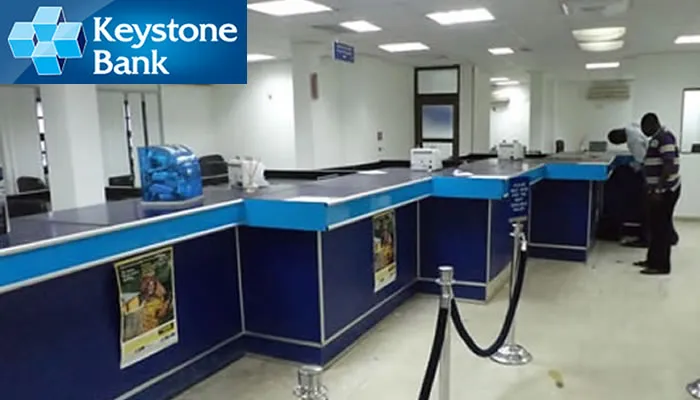
OpenLife News reports that for nearly three years, Keystone Bank has lived in a state of permanent transition, rescued, taken over, forfeited to the Federal Government, promised a new investor, yet never quite arriving at a final destination.
From the dramatic dissolution of its board in January 2024 to the court-ordered forfeiture of its shares in 2025, and now to the sudden removal of Hassan Imam and the appointment of Murtala Mohammed as Acting MD, each new phase has raised more questions than answers for depositors, staff and investors who are left wondering: who really owns Keystone, who really runs it, and where is it really headed?
That confusion deepened on Thursday when the Central Bank of Nigeria announced Imam’s exit without giving any reason, without a handover note, and without a profile of his successor.
The only assuaging note in the CBN’s action was an assurance that the bank remains fully operational and depositors’ funds are safe.
In a bank that has changed from a bridge bank to a privately-owned bank, to a regulator-controlled bank, to a 100% government-owned bank, the latest change feels less like a routine appointment and more like another unclear turn in a story Nigerians have struggled to follow.
The Central Bank of Nigeria (CBN) has removed Hassan Imam as Managing Director/Chief Executive Officer of Keystone Bank Limited and appointed Murtala Mohammed as Acting MD/CEO with effect from November 26, 2026.
The announcement was made on Thursday in a statement by the CBN’s Director of Corporate Communications and Investor Relations, Michael Akuka.
Crucially, the CBN gave no reason for Imam’s exit.
It said only that the appointment was made in exercise of its powers under the Banks and Other Financial Institutions Act (BOFIA) 2020, and was “consistent with the CBN’s mandate to promote a safe, sound and stable financial system.”
It also reassured depositors that Keystone Bank “remains fully operational, with banking services continuing as normal and depositors’ funds remaining secure.”
On its part, Keystone Bank has thanked Imam for his leadership and contributions during his tenure and wished him well, while describing Mohammed as a banker with over two decades of experience in leadership, strategic execution and business development.
So why would the CBN remove a CEO it installed itself less than three years ago?
This development has thrown up debates in the circle of market watchers who weigh concerns about CBN’s decision.
Some of the possible reasons being discussed by market watchers, none of which the CBN has confirmed are:
Unfinished Recapitalisation
This is the biggest open issue.Keystone Bank, alongside Polaris and Union Bank, is one of three banks still under CBN administration that failed to meet the ₦200 billion minimum capital requirement for a national licence by the March 31, 2026 deadline.
While 33 other banks raised about ₦4.65 trillion, Keystone, Polaris and Union were given a special three-week window because of “ongoing regulatory and judicial processes.”
Seven months later, there is still no new investor, no merger, and no sale announced.
A change at the top is often how a regulator signals a fresh push to close a recapitalisation deal — either through a new investor, a merger, or a licence downgrade to regional status, which requires only ₦50 billion.
Preparing Keystone For Sale Or Divestment
Keystone is now 100% owned by the Federal Government.On February 11, 2025, a Lagos court ordered the forfeiture of 6.3 billion shares previously held by Sigma Golf Nigeria Limited to the Federal Government, following a plea bargain with the EFCC over the alleged diversion of ₦20 billion belonging to AMCON.
With the ownership question now legally settled, unlike Union Bank where ownership is still in court, Keystone is the most “sale-ready” of the three intervention banks.
Analysts say a new acting CEO could be brought in to clean up the books, negotiate with prospective investors, and manage a transition — a task that is often easier for an incoming leader with no ties to the previous regime.
Reports have already pointed to interest from a local consortium, but with doubts about local capacity without a foreign partner.
End Of The Intervention Phase
Imam was never a substantive CEO in the normal sense. He was an intervention CEO. He was appointed on January 10, 2024, when the CBN dissolved the boards and management of Keystone, Union and Polaris banks, citing regulatory non-compliance, corporate governance failures, disregard for licensing conditions, and activities capable of threatening financial stability.
After nearly three years of stabilisation, the CBN may be moving Keystone from “rescue mode” to “resolution mode” — a phase that requires a different leadership style, focused on capital, sale, or restructuring rather than day-to-day stabilisation.
The use of an Acting MD, rather than a substantive appointment, supports this reading: the CBN is buying time while it decides Keystone’s final fate.
Regulatory Fatigue And Governance Reset
Almost three years after intervention, and almost two years after federal ownership, Keystone still has no substantive board, no substantive MD, and no clear path to sale or recapitalisation, according to market commentary.
That prolonged limbo itself creates pressure for a reset, even without any allegation of wrongdoing against Imam.The CBN has not linked Imam’s exit to any fresh governance breach, fraud, or financial difficulty.
There is no evidence in the CBN statement of misconduct. The change should therefore not be read as an indictment.
Routine Regulatory Rotation
In intervention banks, the CBN routinely rotates leadership to avoid entrenchment and to maintain regulatory control. Imam had served for 34 months — a long tenure for an intervention appointee.
What Is Opaque
The CBN did not disclose the reason for Imam’s replacement.
The CBN did not say how long Mohammed will serve in acting capacity or when a substantive CEO will be named. Depositors’ funds are, according to the CBN, secure and services are continuing normally. Keystone remains a government-owned bank waiting for a decisive decision on recapitalisation or sale.
What To Watch Next
Will the CBN name a substantive board and MD? Will a preferred investor or buyer emerge for Keystone?Will Keystone retain its national licence, downgrade to regional, or merge? Will Union and Polaris also see leadership changes?
Until the CBN speaks further, the sacking of Imam remains a regulatory mystery but the recapitalisation clock, the federal ownership, and the need to finally resolve Keystone’s future are the most plausible concerns about the bank’s future.
About Author