OpenLife Editorial
Democracy was supposed to be government of the people, by the people, and for the people.
In Nigeria, 26 years into uninterrupted civilian rule, it has become something else: government by the connected, for the connected, until the consequences of bad governance catch up with everyone — including the architects.
That is the irony we are witnessing today. The same public officials who presided over the looting of budgets meant for security, health, and roads are now the ones most exposed to the dangers of that decay.
Power and sirens can only insulate you for a short period.
Insecurity: From “It Is Their Problem” To “It Is Everyone’s Problem”
For years, insecurity was framed as a problem of “the village people” and “the poor masses.” Governors, ministers, and lawmakers flew over troubled highways in jets and helicopters. They traveled in convoys of 20 vehicles. They lived in gated estates with both government and private guards.
But kidnappers now attack convoys. Bandits operate 30 minutes from Abuja. Terrorists strike airports and trains. The bullet does not ask for your title before it hits.
The budgets for police equipment, intelligence, and community policing were diverted. The training schools were abandoned. The result is a security architecture so weak that even those who benefited from the rot can no longer sleep with both eyes closed. That is the irony: the insecurity you funded with corruption has now come to everyone’s doorsteps, both rich and poor.
Healthcare: When Private Jets Can’t Save You
Stories have been told about how top traditional, bureaucratic, corporate and political Nigerians go abroad to treat catarrh and fever, draining foreign exchange.
The elite mock public hospitals. “Go to LUTH?” That was for the poor. The standard response to any ailment was: “Book a flight to London, Dubai, or India.”
Billions meant for primary health centers, teaching hospitals and equipment have been shared as constituency projects and inflated contracts. Doctors went on strike. Nurses emigrated. Equipment expired.
Then COVID-19 happened. Then medical tourism became expensive and restricted. Then even the VIP wards began to fail. We have seen former governors, senators, and ministers die in Nigerian hospitals because the plane could not take off, or because the condition was too critical for travel.
The irony is painful: the same people who ensured Nigerian hospitals remained mortuaries are now vulnerable to those same mortuaries. You cannot destroy a system and expect to be exempt from its collapse.
Bad Roads: The Great Equalizer
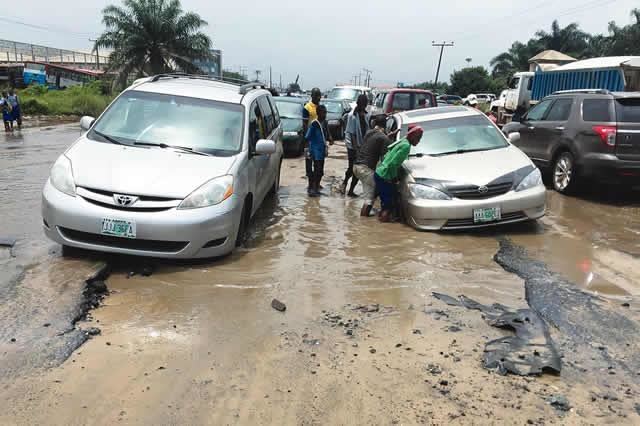
Of all the failures, bad roads may be the most democratic. They humble everyone.
The Lokoja-Okene road, the Benin-Sagamu expressway, the East-West road. These were budget lines for 15 years. Yet contractors were paid 100% for 20% job. Supervising agencies were settled. Quality was sacrificed.

Today, no amount of SUVs, sirens, or escorts can save you from a 10-hour gridlock on the Lagos-Ibadan expressway; Benin-Agbor-Asaba road; Benin-Sapele-Warri road or from potholes on the Abuja-Kaduna road that have claimed lives of commissioners and traditional rulers.
The elite built private airstrips, but they still have mothers, brothers, and aides who must use those roads. When an accident happens, the siren cannot reverse death. The irony is complete: the road you refused to fix has now fixed you.
The Deeper Irony: Democracy Without Consequences
What makes this tragic is that in a functioning democracy, failure has consequences in which case a minister whose hospital kills people should resigns; a governor whose roads collapse should lose re-election and a legislator who steals security votes should end up in jail.
But in Nigeria, the opposite happens. Failure is rewarded with another appointment. Corruption is rewarded with a chieftaincy title. Impunity is rewarded with a second term.
So the officials feel safe until insecurity, sickness, or a bad road reminds them that Nigeria is not a gated estate. The country is one interconnected system. When you poison the well, either you or family member will drinks and what follows is a guess for everyone including you, the corrupt officials.
The Way Forward: Governance Must Hurt The Governors Too
The lesson is simple: if our leaders must use the same hospitals, roads, and security as the people, governance will improve overnight.
Recommendations
Ban Medical Tourism For Public Officials: If you cannot fix the hospitals, you should not be allowed to leave them.
Travel The Roads You Budgeted For: Every governor and minister should spend one week per quarter on the worst federal road in their state. No convoy. No siren.
Children In Public Schools: If executives, judiciary and lawmakers’ children attend public schools, education budgets will be taken seriously.
Prosecution, Not Just Exposure: Corruption must have consequences beyond Twitter trends.
Nigeria’s democratic practice has been reduced to sharing and looting. But the wind has changed direction. Insecurity, collapsing health care, and deadly roads are no longer “the masses’ problem.” They are now a national problem.
That is the irony. The very people who built a broken Nigeria are now trapped inside it. Until we change the practice of democracy from entitlement to service, from looting to building, no title, no connection, no retinue of guards, no humongous wealth and no siren can save anyone.
In the end, a bad system does not discriminate. It consumes everyone.
About Author