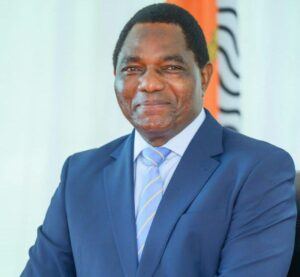
President Hichilema Speaks On Zambia Election
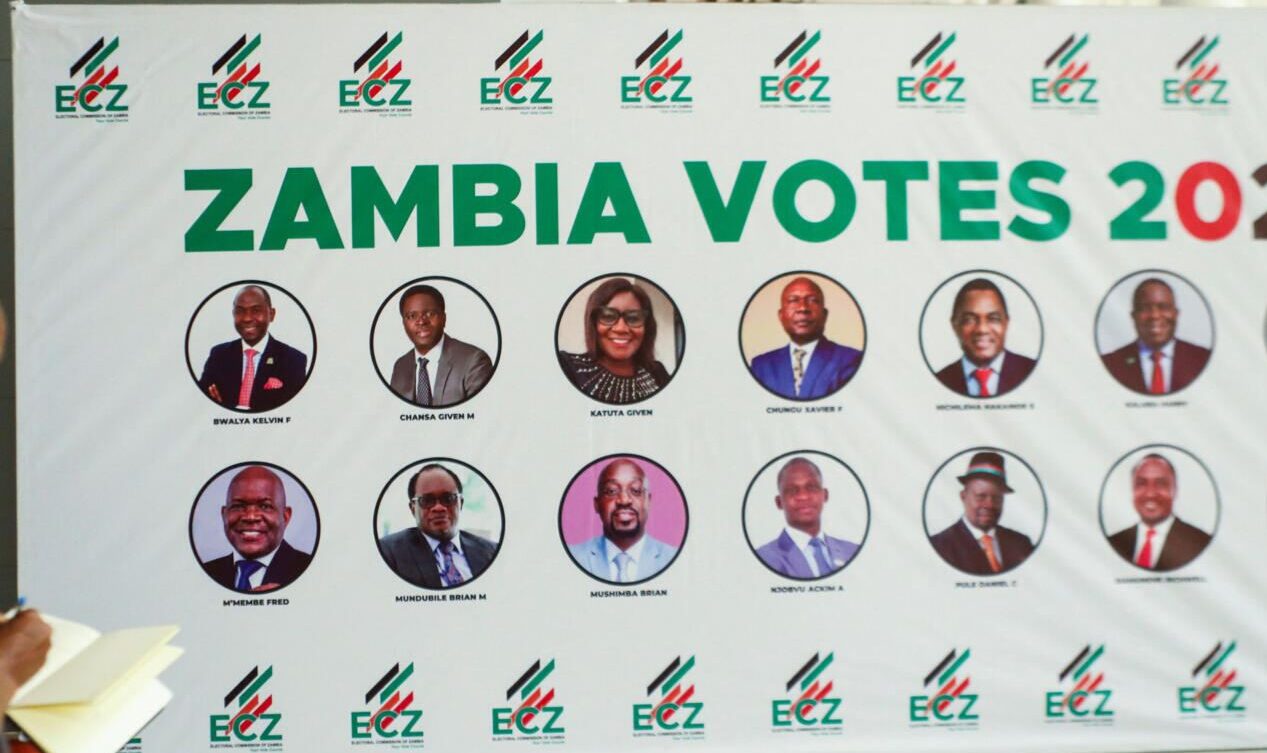
OpenLife News reports that the Republic of Zambia, a landlocked country in Southern Africa, held general elections on Wednesday, 13 August 2026 to elect a President, 280 Members of Parliament, councillors and council chairs.
The candidates include incumbent President Hakainde Hichilema of UPND with his running mate, Mutale Nalumango.
In power since 2021, credited with steering Zambia through debt restructuring after the 2020 sovereign default.
Others include 55 years old Brian Mundubile, a first-time presidential candidate of the New Republican Party / NRPUP, Tonse Alliance with running mate, Makebi Zulu. He described himself as leading “a revolution” after voting.
Harry Kalaba of Citizens First, CF, Orange Alliance with a running mate, Moses Mawere.
Polls closed at 6pm Thursday.
The Electoral Commission of Zambia, ECZ, said. Ballot distribution to districts was completed ahead of polling day.
ECZ Chairperson, Mwangala Zaloumis has urged stakeholders to avoid misinformation and disinformation during the tallying period, adding that results are expected to be announced by 17th August 2026 at the latest .
Incumbency Advantage
Analysts say Hichilema, 64, is favoured to win due to incumbency and a fractured opposition. He campaigned on economic reforms and recovery post-debt crisis.
Opinion Polls – March 2026
In a final EMV poll: Facebook Poll: Hichilema 51.27%, Mundubile 27.17%, Zulu 17.09%, Kalaba 4.48%Online Voting: Zulu led with 43.5%, Kalaba 24.4%, Mundubile 14.8%, Hichilema 11.3%Live Phone Calls: Kalaba 44.2%, Zulu 40.1%.
The split shows Hichilema leading among social media users, while opposition candidates split the rest of the vote.
Opposition Dynamics
The main opposition was divided. PF delegates chose Makebi Zulu as party leader, but he’s now VP to Mundubile under Tonse Alliance. Harry Kalaba led Citizens First separately. This fragmentation benefits the incumbent.
Key Issues
The key issues are debt, copper mining, cost of living, and U.S./China competition for Zambia’s critical minerals were central. Hichilema highlighted debt restructuring and development. Final OutcomeBased on polling, incumbency, and opposition splits
Hichilema is projected as the frontrunner to win a second term.
The March Facebook poll had him above 50%, which would avoid a runoff.If no candidate gets over 50%, a runoff must be held within 37 days.
The most likely runoff pairing would be Hichilema vs Mundubile.
Parliament: UPND held 82 seats last election. With opposition divided between PF, CF, and Tonse, UPND is likely to retain a plurality, but may need coalition partners to reach the 141-seat majority.
What’s at Stake
Zambia is Africa’s 2nd largest copper producer and a test case for post-default recovery. The winner will have to manage IMF programs, debt payments, and pressure from China and the U.S. over mining deals.
Speaking on the election Friday morning, President Hichilema said “ We continue to receive encouraging results and reports of peace, unity and solidarity across our country as the votes come in. There is much in this moment to be grateful for.
Let us remain peaceful, patient and patriotic as we await the official outcome from those entrusted with managing the vote. HH”
Abridged History
Republic of Zambia is bordered to the north by the Democratic Republic of the Congo, Tanzania to the northeast, Malawi to the east, Mozambique to the southeast, Zimbabwe and Botswana to the south, Namibia to the southwest, and Angola to the west.
The capital city of Zambia is Lusaka, located in the south-central part of Zambia.
The population is concentrated mainly around Lusaka in the south and the Copperbelt Province to the north, the core economic hubs of Zambia.
Originally inhabited by Khoisan peoples, the region was affected by the Bantu expansion of the thirteenth century.
Following European expeditions in the eighteenth century, the British Empire began to consolidate control of the area following the 1890 British Ultimatum against the Portuguese, who had claimed the area between Angola and Mozambique in the 1885 Pink Map.
Britain formed the British protectorates of Barotziland–North-Western Rhodesia and North-Eastern Rhodesia towards the end of the nineteenth century. These were merged in 1911 to form Northern Rhodesia.
For most of the colonial period, Zambia was governed by an administration appointed from London with the advice of the British South Africa Company.
On 24 October 1964, Zambia became independent of the United Kingdom as a republic in the Commonwealth, and prime minister Kenneth Kaunda became the inaugural president.
Kaunda’s socialist United National Independence Party (UNIP) maintained power from 1964 until 1991, with him playing a role in regional diplomacy, cooperating with the United States in search of solutions to conflicts in Southern Rhodesia (Zimbabwe), Angola, and Namibia.
From 1972 to 1991, Zambia was a one-party state with UNIP as the sole legal political party under the motto “One Zambia, One Nation” coined by Kaunda. Following the introduction of a multiparty system in the early 1990s, Kaunda was defeated in the 1991 Zambian general election.
Zambia has since continued to experience peaceful transitions of power.
Natural resources in Zambia include minerals, wildlife, forestry, freshwater, and arable land.
As of an estimate in 2018, 47.9% of the population is affected by multidimensional poverty.
The Common Market for Eastern and Southern Africa (COMESA) is headquartered in Lusaka.
About Author