Why We Paid Over $2 Billion To The Nigerian Government In 2025…Ronald Adams, Managing Director, Shell Nigeria Exploration And Production
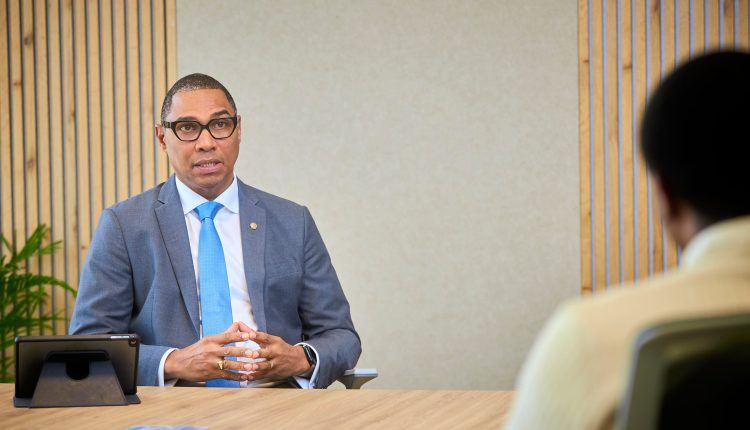
OpenLife Nigeria reproduces an earlier interview with Ronald Adams, Managing Director, Shell Nigeria Exploration and Production Company Limited (SNEPCO), by Ndubuisi Micheal Obineme, Managing Editor, The Energy Republic, on the company’s long-term investment plan in Nigeria, highlighting the critical factors attracting capital investment for oil and gas projects and what Nigeria needs to continue doing to become globally competitive in deepwater and gas projects
Shell paid over $2 billion to the Nigerian government in 2025. What factors drove this contribution compared to previous years, and what major milestones were recorded from SNEPCO’s operations in 2025?
Shell’s payments to government reflect the scale of its business and its commitment to transparency, and in 2025 those payments to Nigeria totalled about $2.02 billion, covering production entitlements, taxes, royalties, and statutory fees.
From a SNEPCo perspective, 2025 was an important year operationally and strategically. A key milestone was the final investment decision on the HI gas project in October 2025, which will supply gas to NLNG before the end of the decade.
Shell also completed the increase in its interest in OML 118, which includes the Bonga field, lifting its stake from 55% to 65% and reinforcing its position in Nigeria’s deepwater sector. So the story in 2025 was not just the value delivered through payments to government, but also the strengthening of Shell’s long-term position in Nigeria through targeted deepwater and gas investments.
What new initiatives have SNEPCO introduced to strengthen its social investment programmes?
Sustainability is at the heart of our social investments, so we favor partnerships in project implementation, allowing all parties to contribute to the common good.
One of our most significant recent social investment milestones is the Geosciences Centre of Excellence at the University of Lagos, delivered in partnership with NNPC Limited and the Nigerian Content Development and Monitoring Board.
The Centre was commissioned in April 2026 and is designed to strengthen teaching, research, and hands-on training in geosciences, helping to build Nigerian capability in a critical area for the energy sector.
The establishment of the Centre of Excellence is the latest milestone in our support for education over the years, which has seen the award of scholarships, donation of science laboratories to secondary schools across Nigeria, and the construction of e-learning centres at universities in Delta, Enugu, Edo, and Bayelsa states.
As global competition for capital investment builds momentum, how can Nigeria sustain investors’ interest in the upstream sector, and what is SNEPCO’s long-term plan for upstream investment?
To sustain investor interest, Nigeria needs to remain globally competitive by providing regulatory stability, fiscal predictability, efficient approvals, and a secure operating environment.
Capital is mobile, and investors will continue to compare Nigeria with other destinations on ease of doing business, project economics, and confidence in long-term policy consistency.
For SNEPCo, the long-term plan is to continue investing in Nigeria through a focused deepwater and integrated gas portfolio. This is already reflected in major decisions such as Bonga North, where Shell took FID in December 2024, and the HI gas project, where FID was taken in October 2025.
Shell has also completed the share sale of its former onshore subsidiary and publicly states that its focus in Nigeria is now on deepwater and LNG, reinforcing the long-term direction of the portfolio.
Overall, our approach is to remain a disciplined long-term investor in Nigeria, advancing projects that are competitive, value-accretive, and aligned with the country’s energy ambitions.
How will Shell’s $20 billion investment in Bonga South West impact the Nigerian oil and gas industry, and what role will local content play in the execution of the project?
The proposed Bonga Southwest/Aparo development awaits FID. The project has the potential to be one of the most significant deepwater investments in Nigeria in many years, once executed, following the recently approved fiscal incentives.
I have no doubt that, consistent with our track record, local content would be an important part of that project. But let’s wait for the FID.
Which specific areas is SNEPCO prioritizing for sustained growth in Nigerian Content?
The priority areas for sustained growth in Nigerian content are those where local capability can continue to move up the value chain and deliver long-term value.
That includes fabrication and manufacturing, subsea and offshore support services, maintenance and turnaround execution, engineering support, and human capital development.
We have already seen strong progress in these areas. Nigerian companies have supported major fabrication scopes for Bonga and related infrastructure, and indigenous yards have taken on increasingly complex work in-country.
Nigerian companies also played an important role in the 2026 turnaround maintenance campaign on the Bonga FPSO, contributing to a safe and efficient execution.
Going forward, our focus is to deepen that capability further, supporting more in-country execution, greater technical specialization, and stronger local supply chains that can participate competitively in future project delivery.
We see Nigerian content not simply as a compliance requirement, but as a long-term value proposition for our business, the industry, and the broader economy.
SNEPCO will be participating in the 2026 NOG Energy Week. How important is the NOG event to the company, and what will the company showcase at this year’s NOG event?
NOG Energy Week is important because it remains one of the leading platforms for dialogue, collaboration, and business engagement across Nigeria’s energy sector.
The 2026 edition marks the event’s 25th anniversary and will bring together policymakers, regulators, investors, and industry leaders in Abuja at a particularly important time for the country’s energy future.
For SNEPCo, it is a valuable opportunity to engage stakeholders on the role of deepwater and gas in powering Nigeria’s progress, while also sharing perspectives on competitiveness, project delivery, safety, and local content.
At this year’s event, we expect to showcase our contribution to Nigeria through deepwater operations, key growth projects, and our efforts in capability development and responsible operations.
You will be speaking at NOG Energy Week 2026. What will be your major talking point at this year’s NOG event?
SNEPCo’s key message at this year’s NOG Energy Week will be the importance of competitiveness and collaboration in unlocking Nigeria’s next wave of energy investment.
As one of the industry’s leading platforms, NOG Energy Week brings together policymakers, regulators, investors, and operators to discuss the sector’s future, making it an important forum for conversations on investment, energy security, and long-term value creation.
For SNEPCo, the focus will be on how deepwater and gas can continue to support Nigeria’s energy ambitions, while also highlighting the need for policy stability, efficient regulation, strong partnerships, and disciplined execution.
Ultimately, the message is that Nigeria has significant potential, and with the right conditions, that potential can be translated into sustained investment, project delivery, and broader economic value.
About Author