Secretary Of State
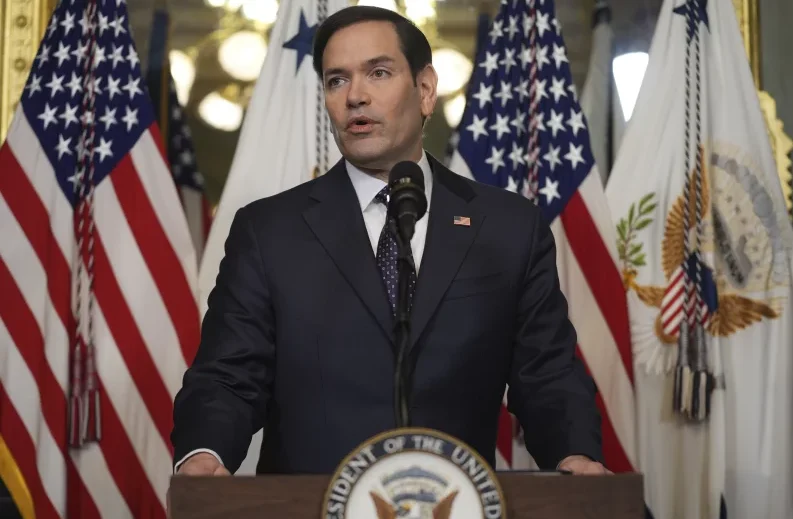
OpenLife News reports that Ambassador Kevin Kim, the United States of America Ambassador to the Association of Southeast Asian Nations, ASEAN, in an interactions with journalists, gives insight into the success of the trip to Manila by Marco Antonio Rubio, the 72nd United States Secretary of State who assumed office in 2025.
Established on August 8, 1967, ASEAN which stands for the Association of Southeast Asian Nations, an intergovernmental political and economic union, currently comprises 11 member states.
They are Brunei, Cambodia, Indonesia, Laos, Malaysia, Myanmar, the Philippines, Singapore, Thailand, Vietnam, and Timor-Leste.
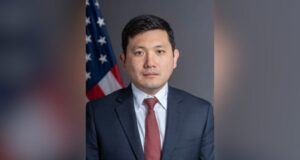
Speaking during the media interactions which was made available to OpenLife News through the U.S Department of State’s Asia Pacific Media Hub, Kevin Kim, a career diplomat and former State Department official who assumed his post in June 2026, stated that he was incredibly honored and delighted to join with all journalists.
]Kevin Kim’s responses to questions asked by different journalists from different media are reproduced below, unedited
Introduction
If I could just start off the top, I think, number one, Secretary Rubio had an incredibly successful trip to Manila, engaging with ASEAN and regional leaders to advance the U.S. vision for a free and open Indo-Pacific. Secretary Rubio, through his engagements both in multilateral and bilateral settings, was able to reaffirm our commitment to ASEAN centrality, strengthened the U.S.-Philippines alliance, and bolstered many of our relationships – key relationships here in Southeast Asia.
And I think at the core, this all stems from the fact that President Trump last year at Kuala Lumpur stated that the United States is with ASEAN 100 percent. That is the United States’ policy. That is the United States’ approach to Southeast Asia.
The administration understands that the story of the 21st century will be written in the Indo-Pacific, particularly in Southeast Asia, given that demographically Southeast Asia is growing economic growth. This region will be the engine of economic growth in the 21st century. The United States wants to be part of the growth of this region and contribute to the stability, prosperity, and security of this region.
That’s why the administration works so hard to see how we can ensure that the Secretary’s visit was a productive and meaningful trip, because the United States of America, USA wants to fundamentally provide solutions to the regional challenges that we face together between the United States and Southeast Asia.
As many of you probably have seen, we released a fact sheet outlining many of the deliverables, very, very meaningful deliverables that the administration will work on, also providing a commitment to invest $2.5 billion to strengthen security cooperation, build strategic infrastructure, advance technology-related cooperation, bolster energy security, and combat transnational crime here in the region.
We understand that we want to leverage financing tools available in the U.S. government. We want to work with ASEAN as ASEAN develops its digital economy, as ASEAN continues to bolster its energy security and address any other regional challenges in the region – to include, of course, ensuring that stability and security is preserved as well.
So the Secretary obviously highlighted the importance of freedom of navigation, which is an important critical principle that every developing economy here relies on, to include the United States, our allies in Northeast Asia and Southeast Asia as well.
I’ll stop there for my opening remarks and turn it over to questions.
Philip Heijmans from Bloomberg
The Chinese Coast Guard reported now a third incident with the Filipinos at sea. And Secretary Rubio has had conversations in Manila with the – with counterparts and so forth. But I kind of wonder – including he mentioned that the U.S. had – a U.S. ship had gotten squarely in the middle of one such incident and helped with rescue operations.
Has the U.S. committed during those meetings over ASEAN to kind of ramp up efforts to protect Filipino ships or any concrete deliverables on that front?
And then just a second question, if you were able to: How much of scams were part of the agenda this week, given all the other kind of big geopolitical issues that were discussed?
Sure. So the first question is – yeah, okay. So number one, as the Secretary reiterated many, many times, the United States – freedom of navigation is fundamental to U.S. national security interests here in the region and throughout the world. The United States also has treaty obligations to the Philippines. We have done everything we can and will continue to do so to ensure that the Philippines, as our ally, has the capabilities and the capacity to be able to defend itself as well.
That’s why – that’s why as part of this, as part of the Secretary’s trip, we were able to announce that we’re allocating an additional $60 million increase so that it’s $100 million in military grant assistance to the Philippines so that it can defend its sovereignty and deter conflict. And this is, of course, in addition to the regular security cooperation that goes on between the United States and the Philippines. And at the end of the day, what’s important is that these types of disputes in the South China Sea need to be – they need to respect the territorial sovereignty of the Philippines as the United States has highlighted multiple, multiple times.
Second, with respect to your – with respect to your question regarding scam centers, one thing that the administration wants to highlight is that transnational crime is a scourge that affects everyone throughout the world. There’s significant emphasis and attention here in Southeast Asia, but it also affects millions and millions of Americans, which is why it’s a priority for the United States. That’s why FBI Director Kash Patel is in the region, talking to many regional leaders. I believe he was recently in Cambodia and is on his way to Indonesia right now, I believe.
And that’s why for U.S.-ASEAN, we have been working with the private sector and U.S. – leading U.S. tech companies such as Meta and Google to draft 10 Public-Private Partnership Principles for Tackling Online Scams. And as part of the Secretary’s trip, the United States plans to provide $2.5 million to unite ASEAN countries through tailored interventions against scams, cyber crime, drug trafficking, and money laundering.
And this is an issue that we discussed within the ASEAN Digital (inaudible) Meeting that was approved, and we’re hoping for all of our leaders to also engage on this issue as well.
Chito Lozada from the Daily Tribune
Well, Mr. Ambassador, my question is: What makes your posting and this administration’s ASEAN policy different from previously? And how do you answer critics in Manila who say U.S. commitment to Southeast Asia is inconsistent?
As President – as President Trump stated last year, the United States is with ASEAN 100 percent. The President has made our position very, very categorically clear that we’re with ASEAN 100 percent.
The recent deliverables that the Secretary was able to announce here in Manila – investing $2.5 billion to strengthen security cooperation, build strategic infrastructure, advanced technology-related cooperation, bolster energy security, combat transnational crime in Southeast Asia – to me simply highlight just how much willingness the United States has to work and cooperate with Southeast Asia.
And as Secretary Rubio stated, our partnership with Southeast Asia and ASEAN at large, it’s in the national interest of the United States. We will never abandon it. No matter what else is going on in the world, no matter what our bilateral relationship may be with other countries, we will never do so at the expense of other partners, and Southeast Asia will be at the core of what the United States is pursuing with respect to a free and open Indo-Pacific. Over.
Samantha Beltran from South China Morning Post
So I have two questions for you. So Secretary Rubio mentioned $2.5 billion in strategic investments in Southeast Asia. So I know you mentioned a couple of areas earlier, but what do these investments specifically entail, and what is the U.S. prioritizing in these investments?
And my second question is: So ASEAN countries are worried about second-round energy shock effects from renewed tensions between the U.S. and Iran. Is the U.S. giving or considering any mechanisms or concessions that will help the region battle oil shortages and effects to its inflation?
Sure. Your first question is with respect to the $2.5 billion. Well —
So the 2.5 billion is spread across multiple thematic categories. There’s a big emphasis on advancing technologies of the future in Southeast Asia, given the region – given the region’s interest in digital economy development, whether it’s in AI or data centers and so forth. And the administration’s – the Trump Administration’s AI Exports Program, we recognize that any type of growth in digital economy will incorporate Southeast Asia in the future.
So we wanted to be – the administration wanted to be able to pursue strategic application of foreign assistance to see how the United States and Southeast Asia can mutually benefit with respect to development of digital economy, which is why we launched a new Pax Silica initiative called the U.S.-ASEAN AI SPARK, which will support American AI exports in the region by providing financial and technical support to Southeast Asian governments interested in deploying the U.S. AI stack for public sector applications.
In addition, the United States is also investing $1.5 billion in an investment platform to facilitate the buildout of energy security infrastructure across the Indo-Pacific. And this deal is the largest single project investment in the history of the Development Finance Corporation. And this is in addition to other grant assistance and investments we’re making with respect to energy security in Southeast Asia.
I won’t go through all of them because, quite frankly, they’re quite lengthy, and the State Department should have a fact sheet on its website that you will all be able to see. But we’re also addressing crime, transnational crime in the region, enhancing law enforcement cooperation.
And of course, as I mentioned earlier about the increase in Foreign Military Financing, we’re also working to strengthen military education and training and improving global health by pursuing a joint agreement with Philippines to provide up to $685 million to improve and sustain capacity to detect, treat, and prevent HIV. That’s question number one.
Question number two regarding energy security, I just highlighted all the different projects and initiatives we are pursuing in order to strengthen energy security here in Southeast Asia. We also understand that as ASEAN continues to implement its ASEAN Petroleum Security Agreement, and as it builds out the Strategic Petroleum Reserve stockpile, the United States will continue to stay heavily engaged on energy-related issues, because at the end of the day, this is a – this part of the world will be the engine of economic growth in the 21st century with incredible demands for additional energy, and the United States wants to be able to work with Southeast Asia on different types of energy and becoming a source of diversification for Southeast Asian markets as well.
So we want to work with Southeast Asia on – by providing access to the American LNG market development, the deployment of U.S. grid technologies, as well as providing and working with ASEAN and Southeast Asia on small modular nuclear reactors as well. These are all the different types of projects and initiatives that we want to be pursuing in the region. Over.
Sharon Kuruvilla from BFM Radio
So many ASEAN ministers stressed the importance of keeping the Strait of Hormuz open and preserving freedom of navigation. So what assurances has the U.S. given ASEAN about safeguarding maritime security and preventing further disruptions to global trade?
Sure. I think at the end of the day, freedom of navigation – the United States as a maritime power fundamentally believes that freedom of navigation is critical to global as well as regional security. So the United States will continue to – to continue to work with all the countries to ensure that from a – from an access standpoint that international waterways remain open. And the same logic applies here in the South China Sea, where the vast majority of the global economy relies on free access in South China Sea to ensure that global growth or regional economic growth can take place.
And that’s – it’s a very fundamental principle, and as the Secretary stated, it’s – the issue isn’t simply about what’s happening in the Straits of Hormuz. The fundamental principle, once it’s threatened, the global economy becomes threatened and the rules which have underpinned 150 years of international trade and commerce are also threatened, and we cannot allow that to happen.
May Wong from The Straits Times
Good morning, Ambassador Kim. Thank you very much for taking the questions. My first question would be: You talked about how the U.S. wants to bolster its relations with ASEAN, and yet today, a day after the foreign ministers’ meeting, we’re seeing increase in the trade tariffs.
For example, four countries in ASEAN are facing a 12.5 percent trade tariff. Can you talk us through on how is that going to square with your assurance that you want to improve relations with ASEAN?
My second question is about the Myanmar crisis. What’s the U.S. position on Myanmar continuing to retain the Five-Point Consensus given that Myanmar has refused to acknowledge that peace plan? Thank you.
AMBASSADOR KIM: Sure. With respect to your first question regarding trade-related matters, number one, I defer all technical responses to USTR, as that’s in the – that’s a USTR-led mechanism and process. However, what I can say is that the United States is pursuing fair and reciprocal trade.
President Trump was elected in 2024 because the American people fundamentally believe that the trading mechanism that has underpinned the last 30 to 40 years needs to be addressed for the benefit of the American people. And for a meaningful, sustainable trading relationship to continue into the future, we have to address some of the imbalances that exist.
Trade simply is one part of the – is one component of the relationship that the United States has with ASEAN. We will continue to work on it and we will continue to address it.
Second, with respect to your question regarding Burma and its Five-Point Consensus, ASEAN as an institution operates based on consensus, so the United States respects ASEAN’s decision to form a consensus regarding the Five-Point Consensus. The United States will of course have its own perspective on the issue – the ongoing issues in Burma, but we will always work with ASEAN on any issues where it’s formed a consensus.
Eno Mandasari from National Radio of Indonesia
Good morning, Ambassador Kim. I’m Eno from National Radio of Indonesia. My first question would be: Could you please to elaborate the bilateral meeting of Secretary Rubio and Foreign Minister of Russia Mr. Lavrov?
And then second, how U.S. feels the negotiation of code of conduct of South China Sea between ASEAN and China? Thank you.
Sure. Number one, I won’t comment on the Secretary’s meeting with Foreign Minister Lavrov. I’m the U.S. ambassador to ASEAN, so it would not be appropriate for me to comment on his meeting with Minister Lavrov.
But with respect to your question regarding the code of conduct negotiations that are ongoing, number one, as I stated earlier, the United States respects the institution of ASEAN operating based on consensus.
The United States respects ASEAN’s decision and its ability to have discussions with China on this issue that have been going on for multiple decades at this point. It is obviously a very important subject to both China as well as all ASEAN member-states.
From the United States perspective, what we can say is that any outcome must not undermine the interests of the United States, because the U.S. has critical interests and stakes in the South China Sea as well. As Secretary Rubio highlighted, the United States will continue to sail in international waters. The United States will continue to uphold our treaty obligations.
The United States – our treaty obligations to the Philippines. And the United States will continue to respect the principles underpinned by international law such as UNCLOS as well as the 2016 arbitral tribunal ruling. Over.
Kharishar Kahfi from The Jakarta Post
So my questions for this morning are – so Secretary Rubio mentioned and you already mentioned about the small modular nuclear cooperation with ASEAN and some Southeast Asian countries. Can you spare some details about the cooperation?
And also, if you can comment on the meeting between Secretary Rubio and Foreign – Indonesian Foreign Minister Sugiono in Manila, perhaps what did they talk about in Manila.
So number one, regarding small modular reactors, on the margins of NATO the Secretary signed an MOU with the Japanese and Korean foreign ministers for trilateral cooperation on small modular – small modular reactors moving forward. This is a growing – this is a growing industry in the United States. Given the energy demands of this region as well as within the United States and throughout the world, SMRs will play a critical role in supplying energy in the future.
Within ASEAN, the United States continues to have deep discussions with many of the governments on how we can work together on this subject. I think I don’t want to get too much into the details of specific proposals and so forth because they’re – the discussions are ongoing, but what I can say is that this is an absolute priority for the administration, and I know it’s a priority for governments in Southeast Asia. And we want to – we want to work with – we want to work with different governments on this subject.
With respect to the second question, I will have to get back to you on this at a later date, because I am not sure exactly when and where the Secretary met with Foreign Minister Sugiono. But I did have exchanges with the foreign minister myself where we agreed that we need to deepen the U.S.-Indonesia relationship.
Kenji Kawase from Nikkei
What were the discussions with ASEAN and other countries represented at the Manila meeting on U.S. tariffs and trade policy?
I’m sorry, can you just repeat the question?
What were the discussions with ASEAN and other countries represented at the Manila meeting on U.S. tariffs and trade policy?
At the meetings here in Manila, the Secretary was focused on advancing our vision for a free and open Indo-Pacific. Secretary of State focuses on ensuring at a strategic level how we deepen our engagement with the region and ASEAN, so our focus was on highlighting the important role that Southeast Asia has in U.S national security and as part of our broader strategy and the different areas of opportunities that we want to work on, to include energy security, digital economy, combating national – transnational crime – issues, quite frankly, that both the United States and this part of the world are going to grow together. And Japan also – our key allies such as Japan and Australia remain critical partners as we pursue similar objectives and initiatives in Southeast Asia as well.
Seung Yeon Kim from Yonhap News Agency
I just have a follow-up question on the small modular nuclear reactors. U.S. and South Korea, Japan, they recently signed the cooperation framework on SMR. Was just wondering, what would be the immediate follow-up steps to implement this framework in the short term? Do you have plans to launch any regular, like, consultative body or joint project?
And since you’ve mentioned the – this framework is targeting or, like, wants to work with the ASEAN countries, do you have any specific countries in mind of the ASEAN countries that you want to work with to move this cooperation framework forward?
Sure. Number one, I think energy security is an issue that is always discussed in the trilateral format between the United States, the Republic of Korea, and Japan. I think the recent MOU that was signed between the three countries continues to illustrate the tight strategic cooperation that exists among the three countries.
With respect to – with respect to what the next discussions will be, I think the – I think the three governments will continue to have deep discussions about this – deep and more detailed discussions about this in terms of what the next steps will be.
I defer – I defer to my colleagues in Washington about whether that will be done in a more organized or more – “organized” is not the right word – a more official format. But the reality is that the substance will be discussed no matter what.
I think there are discussions ongoing about where and how this can be best discussed. I defer to – I don’t want to comment too much about which specific countries or when because those are discussions that are still sensitive and governments are exchanging their views.
Ambassador Kim’s closing remarks
In closing, what I would highlight is the following: This administration prides itself in output and the ability to deliver quickly and the ability to deliver fast to solve regional challenges or to address regional challenges. That’s why the Secretary highlighted the strategic application of foreign – U.S. foreign assistance in Southeast Asia and our willingness to invest over $2.5 billion to strengthen security cooperation.
These types of initiatives and projects, where American – American dollars are contributing to regional issues such as transnational crime, security cooperation, advancing technologies in the future – these are the issues in which the United States wants to be working with Southeast Asia on moving forward, and as President Trump stated last year once again, we’re with ASEAN 100 percent.
The United States is behind ASEAN 100 percent. This is a point that Secretary Rubio hit every single (inaudible) meeting. This remains the policy of the United States. This will remain the policy of the United States.
Thank you very much.
About Author