Peter Obi’s 2027 Manifesto
OpenLife News “Economy and Policy Desk” presents a breakdown of Peter Obi’s 2027 presidential manifesto in which the Nigeria Democratic Congress, NDC, candidate lays bare his plans for northern and southern Nigeria that would translate to his envisioned “New Nigeria” mantra
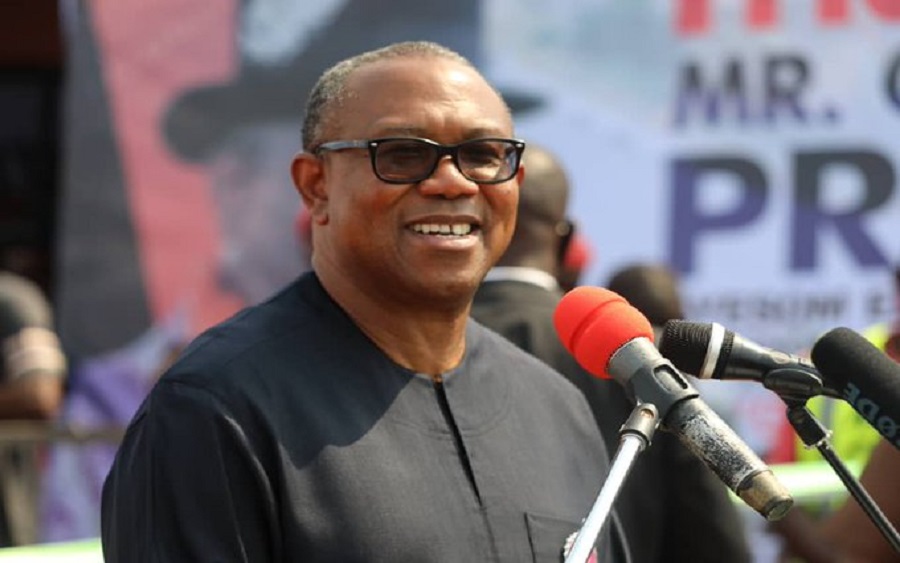
Clearly, when Peter Obi, former Anambra State Governor unveiled the economic blueprint of his 2027 presidential bid in Kaduna last month, he didn’t call it a “manifesto.”
He called it a “production map,” adding that “Politics has failed Nigeria because we keep sharing consumption,”Obi told a hall filled with farmers, manufacturers, traditional rulers, and students.
“From 2027, we must start sharing production. And production must have an address. The North will feed Nigeria. The South will build Nigeria.”
That one sentence has become the anchor of what his team is branding the “Farm-to-Factory Agenda.”
It is a deliberate regional specialization plan that seeks to end decades of copy-paste economic policies by mapping comparative advantage: Northern Nigeria for large-scale agriculture and agro-processing, Southern Nigeria for industrialization, manufacturing, and ports-driven export.
For over 1000 words, here is how the plan is structured, why his team believes it can work, and what it means for 200 million Nigerians.
1. The Core Philosophy: Stop Doing Everything Everywhere
Obi’s team argues that Nigeria’s biggest economic mistake since 1960 is trying to do everything in every state. “We have 36 states all trying to build steel plants, all trying to plant rice, all trying to run refineries,” said Dr. Tanko Yunusa, spokesperson of the Obidient movement. “The result is 36 failures.”The Farm-to-Factory Agenda rejects that. Instead, it proposes 2 Economic Corridors:
The Northern Agricultural Corridor: 19 states + FCT focused on food security, livestock, cash crops, and agro-allied industries.
The Southern Industrial Corridor: 17 states focused on manufacturing, petrochemicals, tech, shipbuilding, and export processing zones tied to seaports.“China did this with Shenzhen. India did this with Gujarat. Brazil did this with Sao Paulo,” Obi said.
“We must stop pretending Lagos and Kano have the same economic DNA.”
2. Northern Nigeria: The Breadbasket, The Protein Bowl, The Agro-Factory
Under Obi’s plan, the North is not just for “farming.” It is to become a continental food and agro-processing hub. The manifesto breaks the North into 4 sub-zones:
A. The Northwest: Grains and Dairy Belt
States: Kano, Katsina, Jigawa, Kaduna, Sokoto, Zamfara, Kebbi
Focus: Wheat, maize, rice, sorghum, millet. Plus large-scale dairy.
Key Project: National Dairy and Fodder Parks in Sokoto and Kano with 100,000 cows in feedlots, cold chain to Lagos and Port Harcourt. Obi cites New Zealand’s model.
Target: Cut Nigeria’s $1.5 billion annual milk import bill to zero in 6 years.
B. The Northeast: Irrigation and Oil Seeds Belt
States: Borno, Yobe, Adamawa, Bauchi, Gombe, Taraba
Focus: Wheat via irrigation, sesame, groundnut, cotton.
Key Project: Reactivation of Lake Chad Basin Irrigation and partnership with Egypt and Israel on drip irrigation. Also Textile Revival Clusters in Kano, Kaduna, and Maiduguri to absorb cotton.
Target: Return Nigeria to top 5 cotton producers globally.
C. The North Central: Food Basket and Processing Belt
States: Benue, Niger, Plateau, Nasarawa, Kogi, Kwara, FCT
Focus: Yam, cassava, soybean, fruits, vegetables.
Key Project: Benue Agro-Industrial Park as the “Food Terminal of Nigeria” with rail link to Lagos and Onitsha. Tomato and Pepper Processing Factories to end the yearly tomato-season glut and importation of paste.
Target: Make Benue, Niger and Kaduna the 3 largest food exporters in Africa.
D. Livestock Transformation
A major part of the plan is ending farmer-herder conflict through Ranching Infrastructure. Obi proposes 12 National Grazing Reserves with ranches, water, veterinary clinics, and feed mills across the North.
“We will move from roaming to ranching. Cattle will be assets, not problems,” he said.
To fund this, the manifesto proposes a Northern Agricultural Bank with N2 trillion take-off capital, guaranteed by the CBN, to give farmers 5% single-digit loans for 10 years.
3. Southern Nigeria: The Factory Floor, The Export Door
If the North feeds, the South builds. Obi’s team says Southern Nigeria’s advantage is coastline, ports, human capital, and existing industrial base. The South will be split into 3 sub-zones:
A. Southwest: Tech, Manufacturing and Financial Hub
States: Lagos, Ogun, Oyo, Osun, Ondo, Ekiti
Focus: Electronics, automobiles, pharmaceuticals, fintech.
Key Project: Lagos-Ogun Industrial Megaplex expanded to rival Shenzhen. Deep Seaport including Free Trade Zone linkage from Lekki to Badagry.
Automobile Assembly Mandate: All government vehicles must be assembled in Nigeria within 4 years.
Target: Make Ogun the “Manufacturing Capital of Africa.”
B. Southsouth: Petrochemicals, Gas and Maritime Industrialization
States: Rivers, Bayelsa, Delta, Edo, Cross River, Akwa Ibom
Focus: Gas-to-power, fertilizers, plastics, shipbuilding.
Key Project: Niger Delta Industrial City in Ogidigben. Reactivate moribund fertilizer plants. Build 6 modular shipyards to service Gulf of Guinea.
Target: Stop gas flaring by 2028 and use gas to power factories.
C. Southeast: SME Industrialization and Export Hub
States: Abia, Anambra, Ebonyi, Enugu, Imo
Focus: Leather, garments, pharmaceuticals, ceramics, auto parts.
Key Project: Ariaria and Nnewi Upgrade into ISO-certified export clusters. Enugu Inland Dry Port including Rail to move goods to Lagos and Calabar.
Obi, who industrialized Onitsha and Nnewi as governor, says: “Aba should not be importing thread. We should be exporting finished clothes to the world.”
To power all this, the manifesto commits to 4,000MW of embedded power for industrial clusters in the South within 4 years, using gas and solar.
4. The Connective Tissue: Infrastructure That Moves Goods
Obi knows agriculture and industry will fail without logistics. So the “map” has 3 infrastructure pillars:
Rail: Complete Lagos-Kano, Port Harcourt-Maiduguri, and Calabar-Abuja standard gauge. Add spur lines from Benue and Kaduna to ports.
Roads: Prioritize 10 federal highways that link farms to factories. Top of list: Lokoja-Benin, Kano-Maiduguri, Enugu-Port Harcourt.
Ports: Dredge Calabar, Warri, and Onitsha River Port. Declare 24-hour port operations. “No nation exports by airport,” Obi said.
5. How It Will Be Funded: No Borrowing For Consumption
This is where Obi draws the line from past governments. Funding sources listed:
Budget Reallocation: Cut cost of governance by 40%. Merge agencies. Stop fuel subsidy. Move savings to capital projects.
Diaspora and FDI: Target $20 billion in agro and manufacturing FDI in 4 years through tax holidays and single-window approvals.
Development Banks: Capitalize Bank of Agriculture, Bank of Industry, and the new Northern Agricultural Bank.
PPP: Government provides land and policy. Private sector builds factories and farms.“We will not borrow to pay salaries,” the manifesto reads. “We will borrow only to build assets that produce.”
6. The Social Contract: Jobs, Security and Youth
Obi ties the economic map to security. “You cannot have investment where there is kidnapping,” he said.
His plan includes 150,000 new recruits into Police and Forest Guards, with technology and better pay.
On Jobs: The campaign projects 8 million direct jobs in 4 years — 5 million in Northern agro-processing and 3 million in Southern factories.
For Youth: There is “Skill-to-Factory”: 1 million youths trained yearly in welding, agronomy, logistics, and machine operation, then placed in the new factories and farms.
7. Criticism and The Obi Team’s Response
Critics have called the plan “regionalization” and warned it could deepen division.
Others ask: what stops a Southerner from farming in the North? Obi’s response: “This is not exclusion. This is specialization. A Yoruba man can own a farm in Benue. An Hausa man can own a factory in Aba. But government incentives will follow where the land and port are.
”Economists are also skeptical about execution. Dr. Ayo Teriba of NECA said, “The idea is sound. The problem in Nigeria has always been implementation and politics.”
Obi’s answer: “Implementation is leadership. When I was governor, Anambra was number 1 in WAEC and in attracting SME investment. We will do it nationally.”
8. What This Means For The Average Nigerian
For a farmer in Kebbi: It means access to a 5% loan, a feeder road, and a guaranteed buyer at the Kano agro-processing park.
For a graduate in Aba: It means a job in a garment factory exporting to the US under AGOA.
For a mother in Maiduguri: It means cheaper food because trucks from Benue arrive in 12 hours by rail, not 5 days by road.
For a businessman in Lagos: It means stable power in the industrial park and a port that clears goods in 48 hours.
Conclusion: A Gamble On Production
Peter Obi’s 2027 manifesto is essentially a bet: that Nigerians are tired of sharing oil money and ready to share work. By mapping the North for agriculture and the South for industrialization, he is asking voters to think like a CEO, not like a distributor.
“This country is not broke,” he told the Kaduna crowd. “It is just badly managed. The North has land. The South has sea. Let us use both.”Whether voters buy into the “Farm-to-Factory” map will be decided at the polls.
But for the first time in a long while, a presidential candidate has presented a Nigeria that is not divided by tribe, but divided by function — with one goal: to produce, process, and export.
As he ended his speech: “When we get it right, a tomato from Jos will become paste in Kano, be packaged in Lagos, and sold in London. That is the Nigeria we are building.”
About Author