Okey Okoro Udo: A Tested And Needed Hand In Global Conversations Fiscal Policy
OpenLife Nigeria reproduces the inspiring curriculum vitae of Okey Okoro Udo, the Managing Director of VOG Global Group of companies which can reposition Nigeria’s corporate and public governance for all inclusive growth.
Profile
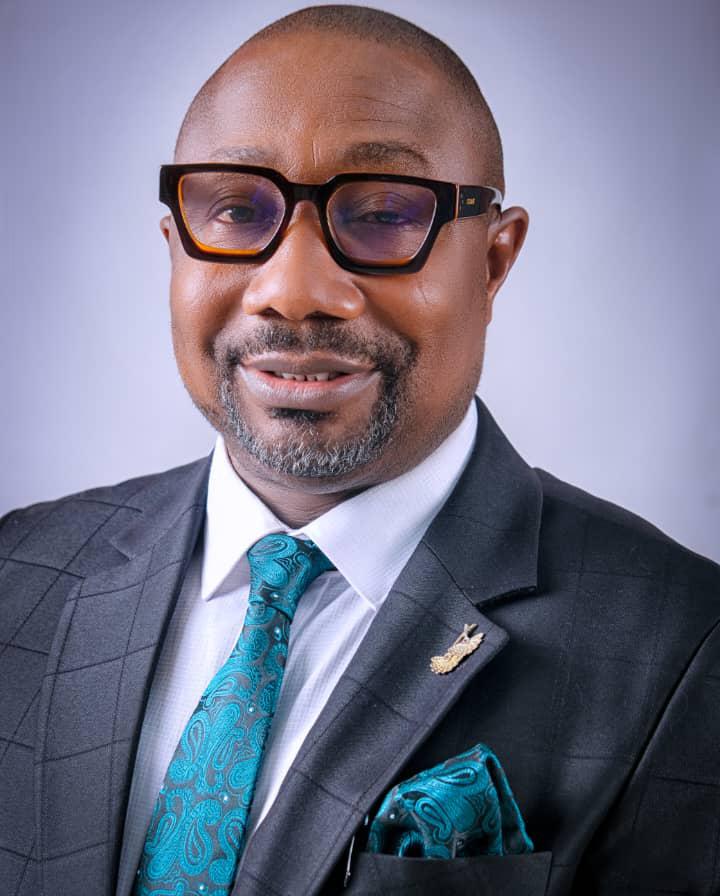
Dr. Okey Okoro Udo is a distinguished scholar, finance professional, and development strategist with over two decades of experience spanning accounting, taxation, public finance, and institutional governance.
He holds a B.Sc. in Economics from the University of Calabar, an M.Sc. in International Accounting and Finance from the University of Liverpool, a Ph.D. in Management (Finance) from Walden University, and a Post-Doctorate in Education from Emmanuel University, Raleigh, North Carolina, USA.
Dr. Udo has built a career at the intersection of academia and practice, combining rigorous research with real-world application in fiscal systems, tax administration, and economic development.
As a faculty member at Emmanuel University, he contributes to teaching, research, and thought leadership in finance, accounting, and governance.
His academic work is complemented by extensive professional experience in audit, taxation, and financial advisory services.
He is the Managing Director of VOG Global Investment Limited and VOG Global Farms, and the Managing Consultant at VOG Global Consults, an accounting and advisory firm providing audit, tax, and business consulting services.
Through these platforms, he has advised organisations across sectors on financial management, tax compliance, and strategic growth.
Dr. Udo also serves as a board member of the Business School at Michael Okpara University of Agriculture, Umudike, where he contributes to institutional development and academic–industry collaboration.
His professional engagements extend to policy discussions and capacity-building initiatives aimed at strengthening fiscal systems and promoting sustainable economic development.
A prolific writer and researcher, Dr. Udo has authored and co-authored numerous academic papers, policy briefs, and professional publications.
His research interests include tax policy reform, public financial management, digitalisation in taxation, fiscal governance, and the role of accounting systems in economic development.
He is particularly known for advancing the concept of the accounting–taxation–development nexus, which underpins much of his scholarly and professional work.
Beyond his professional achievements, Dr. Udo is a family-oriented individual, happily married and blessed with children.
He is committed to mentoring young professionals, supporting community development initiatives, and promoting ethical leadership in finance and governance.
Dr. Okey Okoro Udo continues to contribute to global conversations on fiscal policy, governance, and development, positioning himself as a leading voice in the integration of accounting, taxation, and economic transformation.
Dr. Okey Okoro Udo Speaks To OpenLife’s Senior Staff Writer, Isaac Ngunmah about his political party, Action Democratic Party,ADP, and its 2027 prospects
What can you say about economic hardship and inflation in Nigeria today?
The economic hardship in Nigeria is still very real, especially for ordinary citizens. While government may point to reforms in fiscal policy, tax administration, exchange-rate management, and subsidy removal as necessary structural adjustments, the real test of any reform is whether it improves the welfare of the common man.
Let me tell you, my brother. As of May 2026, Nigeria’s headline inflation stood at 15.93%, while food inflation stood at 16.96%, according to the National Bureau of Statistics. This means that food, transport, rent, school fees, and daily household expenses remain under heavy pressure for millions of Nigerians.
The World Bank has also acknowledged that although Nigeria has recorded improvements in growth, revenue mobilisation, foreign reserves, and external balances, these gains have not yet translated sufficiently into improved living standards for most households. In fact, hear this, the World Bank noted that the cost of a basic food basket has risen sharply since 2019, placing severe pressure on poor and middle-income families.
Hmmm. So, my position is clear: reforms are not enough on paper. Until Nigerians can afford food, transportation, healthcare, education, and basic comfort, the reform agenda cannot be celebrated as a success. The government must move beyond macroeconomic numbers and focus on household-level impact.
What can you say about insecurity, kidnapping and banditry in Nigeria today?
Thank you for that question, if you really want to know this. The security situation remains deeply troubling. Although government may report progress in some areas, the reality on the ground still shows widespread fear, displacement, kidnapping, banditry, terrorism, and attacks on vulnerable communities.
Recent school abductions in Oyo State, where armed groups attacked schools and abducted students and a teacher, show that kidnapping is no longer limited to one region of the country. It is not a hearsay, that over 30 students and a teacher were abducted in Oyo in May 2026, confirming that the crisis is spreading into areas previously considered relatively safer.
International conflict-tracking institutions have also continued to flag Nigeria as a country facing serious internal-security challenges. ACLED has noted rising violence involving Boko Haram and Islamic State West Africa Province in early 2026, while other reports show persistent attacks on civilians across several states.
For sure. Insecurity is also linked to poverty, unemployment, weak intelligence, ungoverned forests, porous borders, corruption, and lack of trust between communities and security agencies. Nigeria cannot solve this problem through military action alone. We need intelligence-led policing, state police, community security networks, technology, economic inclusion, and serious prosecution of sponsors and collaborators.
What can you say about unemployment and brain drain?
Unemployment and underemployment remain serious national concerns, even where official figures appear moderate. Under the new ILO-aligned methodology, Nigeria’s unemployment rate was reported at 4.3% in Q2 2024, but the same NBS report also showed that informal employment remained extremely high at 93%, while the combined unemployment and time-related underemployment rate stood at 13%.
This means many Nigerians are technically “employed” but are doing low-income, unstable, informal, or survival-level work. That is why official unemployment numbers do not always reflect the pain young people feel.
The brain drain is even more alarming in the health sector. Nigeria’s Minister of Health reportedly stated in 2025 that over 16,000 doctors had left Nigeria in the previous five to seven years, while Nigeria has about 3.8 to 3.9 doctors per 10,000 people, far below what is required for adequate healthcare coverage.
When a country trains doctors, engineers, lecturers, nurses, IT experts and other professionals, only for them to relocate because of poor wages, insecurity and weak institutions, the country loses both human capital and development capacity. The solution is not to stop people from leaving; the solution is to make Nigeria worth staying in.
What can you say about government institutional trust?
Institutional trust in Nigeria is weak because many citizens feel that public institutions do not serve them fairly. Trust is not built by speeches; it is built by transparency, justice, performance and accountability.
Nigerians trust religious and traditional leaders more than formal government institutions. I remember in one 2024 survey, 60% of Nigerians expressed trust in religious leaders, compared with 27% for the president and 19% for the National Assembly.
I can recall, Transparency International’s 2025 Corruption Perceptions Index gave Nigeria a score of 26 out of 100, ranking the country 142nd out of 182 countries. That is a serious warning that corruption remains a major barrier to governance and investment confidence.
When contractors are owed, when court judgments are questioned, when elections are disputed, when citizens believe access to government depends on political loyalty, institutional trust collapses. Nigeria must rebuild institutions that are stronger than individuals, stronger than political parties, and stronger than ethnic or personal interests.
What can you say about the three-year scorecard of the President?
The President’s three-year scorecard should be judged in two ways: macroeconomic reform and human welfare impact.
On the macroeconomic side, there have been reforms. The World Bank has projected Nigeria’s economy to grow by about 4.2% in 2026, while S&P upgraded Nigeria’s sovereign rating from B- to B, citing improvements in the macroeconomic profile, higher oil production, exchange-rate reforms and stronger external balances.
However, the more important question is this: has that improvement reached the common man? Many Nigerians will say no. Food is still expensive, transport remains high, power supply is unreliable in many places, insecurity persists, unemployment and underemployment continue, and many families are struggling.
Therefore, the government may have achieved some reform milestones, but the welfare scorecard remains weak. Until reforms become jobs, food, safety, electricity, lower cost of living and confidence in institutions, the ordinary citizen will not feel renewed hope.
What can you say about alleged marginalisation in appointments and projects?
The issue of marginalisation must be handled carefully and objectively. In a diverse country like Nigeria, perception matters almost as much as reality. If citizens believe that appointments, projects and access to power are concentrated in one region, one ethnic group, or one political circle, national unity is weakened.
The solution is simple: the government should publish transparent data on federal appointments, project distribution, capital releases, board memberships and regional development spending. This will allow Nigerians to judge based on facts rather than emotion.
Nigeria belongs to all Nigerians. Every region must feel seen, respected and included. The principle of fairness is not a favour; it is a foundation for national stability.
Has the President delivered on his campaign promises?
Some policies have been initiated, but delivery must be measured by outcomes. Nigerians are not asking for policy announcements alone; they are asking for results.
If power supply remains unstable, if food remains unaffordable, if hospitals are losing doctors, if schools are unsafe, if businesses are struggling with cost of production, and if citizens are still afraid to travel freely, then delivery is incomplete.
A government should not be judged only by what it has started; it should be judged by what citizens can feel. The promises around security, economic revival, power, employment and infrastructure are still works in progress, and Nigerians deserve faster, more visible results.
What can you say about the Renewed Hope Agenda?
Ho-ho-ho, I laugh in hope against hopelessness. The Renewed Hope Agenda is a good slogan, but hope must be backed by evidence. Hope means food on the table. Hope means safety in communities. Hope means functional schools, hospitals, electricity, roads, jobs and justice.
At the moment, many Nigerians feel that the hardship has overshadowed the hope. The government must therefore move from renewed hope as a political message to renewed hope as a measurable development programme.
For the agenda to succeed, it must prioritise food security, security of lives, youth employment, lower cost of living, healthcare reform, power-sector reform, and social protection that reaches the real poor, not political loyalists.
What can you say about food security in Nigeria?
Nigeria’s food-security situation is one of the most urgent national emergencies. The problem is not only that food is expensive; it is also that many farmers cannot safely access their farms because of insecurity.
The World Food Programme has warned that nearly 35 million Nigerians are facing food insecurity in 2026, with nearly 5.8 million people facing severe food insecurity, particularly in the North-East.
Food security cannot be achieved by speeches. It requires secure farmlands, rural roads, irrigation, storage facilities, affordable fertiliser, access to credit, mechanisation, agro-processing, and market stability. If farmers are unsafe, Nigeria will remain food insecure.
What are your views about the tax reforms?
The tax reforms are one of the most important fiscal reforms in recent Nigerian history. If properly implemented, they can simplify compliance, reduce multiple taxation, protect small businesses, improve revenue collection, and strengthen fiscal federalism.
The Nigeria Tax Administration Act was published in the Official Gazette on 26 June 2025, and the new tax framework became central to Nigeria’s fiscal restructuring.
As a development economist and tax practitioner, under the new tax structure, small companies with annual turnover not exceeding ₦100 million and fixed assets not exceeding ₦250 million enjoy 0% Companies Income Tax, while other companies are taxed at 30%. However, tax reform must not become tax oppression. The government must ensure that implementation is fair, technology-driven, transparent, and taxpayer-friendly. The aim should be to widen the tax net, not punish the already compliant taxpayers.
Evaluate the economic reforms of the President?
The economic reforms are bold, but they have been painful. Subsidy removal, exchange-rate liberalisation, tax reforms and fiscal restructuring may improve government revenue and investor confidence, but they also increased the cost of living.
The World Bank has acknowledged that Nigeria’s reforms improved revenue mobilisation and external balances but also stressed that these gains have not sufficiently improved living standards.
So, the next phase of reform must be people-centred. The government must focus on food prices, transport costs, jobs, small businesses, agriculture, power supply and targeted social protection. Reform without relief creates frustration.
What can you say about the Oyo pupils and teachers kidnapped?
The Oyo school abduction is a painful reminder that no part of Nigeria should assume it is completely safe. Schools should be places of learning, not fear.
The May 2026 attacks in Oyo involved the abduction of over 30 students and a teacher, showing that school kidnapping has expanded beyond the traditional flashpoints in the North.
This is a national emergency. The government must secure schools, strengthen intelligence gathering, protect forest corridors, improve rapid-response capacity, and ensure that perpetrators are arrested and prosecuted. The future of Nigeria is at risk when children cannot go to school safely.
Government has upped its game by recruiting 1,000 forest guards to solve insecurity. Do you believe that is the way to go?
The approval of 1,000 forest guards is a step in the right direction, especially because many kidnappers and armed groups use forests as hideouts and transit routes.
The Presidency announced in May 2026 that 1,000 forest guards were approved for Oyo State alongside a special rescue team following the Oyo school abductions.
However, forest guards must not be symbolic or political gimmicks. They must be properly trained, equipped, supervised and integrated with police, DSS, military intelligence, local vigilantes and community leaders. Without proper coordination, funding and accountability, the initiative may not achieve its objective.
What can you say about state police in Nigeria?
State police is becoming increasingly necessary. Nigeria is too large and too diverse to be policed effectively from only one central command.
In June 2026, Nigerian lawmakers had advanced a constitutional bill that would allow the 36 states to create and operate their own police forces, although the bill still requires approval from two-thirds of state assemblies.
State police can improve intelligence gathering because local officers understand the terrain, language, culture and criminal networks within their communities. However, safeguards are necessary to prevent abuse by governors. There must be independent oversight, proper funding, human-rights training, and clear limits on political interference.
What solutions do you advocate to end insecurity?
The first solution is state police with strong safeguards. The second is intelligence-led security, not only reactive military deployment. The third is to secure forests, borders, highways and schools. The fourth is to prosecute sponsors, informants and collaborators.
Nigeria must also address the economic roots of insecurity. Hunger, unemployment, drug abuse, poor education, weak justice systems and lack of opportunity all create fertile ground for crime and extremism.
Security must be preventive, not only reactive. We must know where threats are forming before they become attacks.
What about restructuring the country?
Restructuring is not about dividing Nigeria; it is about making Nigeria work better. A well-structured federation gives states more responsibility, more resources, and more accountability.
Restructuring can improve security, infrastructure, taxation, education, agriculture and local development. It allows each region to develop according to its comparative advantage while still remaining part of one Nigeria.
The current centralised system has created overdependence on Abuja. We need a federation where states are productive, competitive and accountable to their citizens.
Your views about the detention or imprisonment of Nnamdi Kanu?
The Nnamdi Kanu matter remains one of Nigeria’s most sensitive legal and political issues. In November 2025, a Nigerian court sentenced him to life imprisonment after convicting him on terrorism-related charges. Chai.
However, beyond the legal judgment, the government must understand that unresolved grievances in the South-East require political engagement, justice, dialogue and inclusive governance. Court cases alone cannot solve deep feelings of marginalisation.
Nigeria must distinguish between legitimate calls for justice and actions that threaten public safety. The best path is dialogue, constitutional reform, fairness and respect for the rule of law.
Some are agitating for self-determination. Is it right?
Agitation is usually a symptom of deeper dissatisfaction. When people feel excluded, unsafe, cheated or unheard, they begin to question their place in the nation.
The best response is not intimidation. The best response is good governance, fairness, justice, inclusion and development. If Nigeria works for everyone, the desire to leave will reduce naturally.
A country is held together not by force alone, but by justice, equity and shared prosperity.
2027 elections and public confidence on INEC are disturbing issues. Do you believe in that ?
The 2027 elections will be a major test for Nigeria’s democracy. INEC must work hard to rebuild public confidence.
Before the 2023 elections that only 23% of Nigerians trusted INEC “somewhat” or “a lot,” while more than three-quarters expressed little or no trust.
For 2027, INEC must improve transparency in result transmission, logistics, voter education, technology deployment, party regulation and dispute resolution. Electoral credibility is not optional. If people do not trust elections, they lose faith in democracy.
Tell us the crisis in your party.
There is no major crisis in our party. I am a member of the Action Democratic Party, and our party remains focused, disciplined and committed to offering Nigerians a credible alternative.
Like every political organisation, people may have opinions and ambitions, but what matters is that we are building structures, strengthening internal democracy, and opening our doors to Nigerians who want genuine change.
What is the plan of your party to win the 2027 elections?
Our plan is to present a credible, youthful, vibrant and people-centred alternative to Nigerians. We believe Nigeria needs fresh thinking, inclusive leadership and practical solutions to insecurity, unemployment, poverty, education, power and corruption.
We will mobilise youths, women, professionals, traders, farmers, students and ordinary Nigerians who are tired of politics without results.
The 2027 election will not be won by noise alone. It will be won by structure, credibility, message, grassroots mobilisation and trust.
What is the strategy of your party to win the 2027 elections?
Our strategy is grassroots mobilisation. We are building structures from the national level down to states, local governments, wards and polling units.
We will engage young people, women, religious groups, professional bodies, market associations, farmers, artisans and civil-society groups. The message is simple: Nigeria must work for everyone, not only for a privileged few.
We are not merely contesting elections; we are presenting a new governance culture based on accountability, security, economic opportunity and fairness.
What can you say about religious killings and the intervention of the United States?
The killings in Nigeria, especially in parts of the North and Middle Belt, must be taken seriously. Many Christians have been victims, but Muslims and traditional communities have also suffered from terrorism, banditry and communal violence.
The U.S. Commission on International Religious Freedom has repeatedly recommended that Nigeria be designated a Country of Particular Concern because of severe religious-freedom violations and government failure to adequately stop attacks by violent non-state actors.
However, Nigeria must not wait for foreign governments before protecting its citizens. Whether victims are Christians, Muslims or traditional worshippers, the Nigerian state has a constitutional duty to protect lives, prosecute attackers and restore displaced communities.
What can you say about the war involving Israel, the United States and Iran?
The conflict is dangerous because it has implications beyond the Middle East. It affects oil prices, shipping routes, global inflation, food prices, diplomatic stability and security cooperation.
For a country like Nigeria, which is import-dependent and sensitive to fuel and food-price shocks, global conflicts can quickly worsen domestic hardship. The World Food Programme has warned that global conflict, economic shocks and funding shortages are worsening acute hunger in several countries, including Nigeria.
Nigeria’s foreign policy should therefore support diplomacy, ceasefire, humanitarian protection and peaceful resolution. War may start in one region, but its economic consequences travel across the world.
What can you say about stomach politics?
Stomach politics is one of the greatest threats to Nigerian democracy. Politicians create poverty and then exploit that poverty during elections by sharing rice, cash, seasoning cubes or small gifts.
This practice weakens democracy because hungry citizens may vote for temporary relief instead of long-term development.
The solution is economic empowerment, voter education, electoral reform and poverty reduction. When citizens are economically secure, they are less likely to sell their votes. Democracy cannot be healthy where hunger is widespread.
What can you say about corruption in Nigeria?
Corruption remains one of Nigeria’s biggest development problems. It affects public finance, security, infrastructure, justice, education, healthcare and investor confidence.
Transparency International ranked Nigeria 142nd out of 182 countries in the 2025 Corruption Perceptions Index, with a score of 26/100.
The World Justice Project also ranked Nigeria 120th out of 143 countries in the 2025 Rule of Law Index, showing that justice, accountability and institutional effectiveness remain weak.
Corruption cannot be fought selectively. It must be fought through transparent procurement, independent courts, strong audit systems, open budgeting, whistle-blower protection and prosecution of offenders regardless of party or position.
What is the role of the judiciary in electoral malpractice?
The judiciary is the last hope of democracy, but it must not become the last disappointment of the people. Electoral malpractice will continue if offenders are not punished.
Nigeria needs faster electoral trials, stronger sanctions for vote buying, result manipulation, violence, intimidation and abuse of technology. Election petitions should not only determine winners; they should also punish those who corrupted the process.
When electoral offenders go free, they return stronger in the next election. Justice must be swift, impartial and courageous.
Is your party merging with other parties to win the ruling party?
Our party is not losing its identity. We are open to collaboration with credible Nigerians and like-minded groups who share our vision for a better country, but we are not driven by desperation.
Any alliance must be based on principles, not merely ambition. Nigeria does not need another political arrangement that only shares offices. Nigeria needs a movement that shares values: security, fairness, economic growth, institutional reform and accountability.
Our party remains a credible platform for Nigerians who want a fresh direction.
About Author