
NCC Launches Free 100MB Daily Data For Students
OpenLife News reports that the Nigerian Communications Commission (NCC) has launched a new programme to make learning free and accessible online for millions of Nigerians.
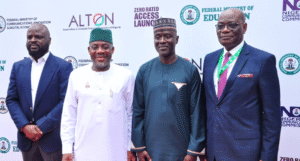
The Zero-Rated Data Access to Educational Platforms and Content Initiative, launched on Thursday, September 11, 2026, is designed to expand access to digital learning resources, bridge educational inequalities, and support Nigeria’s long-term economic growth through investment in human capital.
What students will get
Under the Operator-Sponsored Model, eligible users will receive up to 100MB of free daily data to access approved educational platforms.
That translates to about 700MB weekly, 3GB monthly, and 36.5GB annually per learner.NCC estimates that 100MB daily can provide between 2 to 5 hours of study time depending on the activity.
Reading PDFs and research could give up to 7-20 hours, text-based learning 4-10 hours, and audio lessons 1-3 hours daily.
Why the initiative matters
Speaking at the launch, NCC Executive Vice Chairman, Dr. Aminu Maida, said the programme aligns with President Bola Tinubu’s $1 trillion economy vision.
“Human capital is critical to economic development. The President has made it clear that education is central to achieving that goal,” Maida said. He noted that while government digital skills programmes are expanding, internet connectivity remains the missing link.
“One hundred megabytes might sound small, but cumulatively for millions of learners, it’s a significant industry investment in the future of this country,” he added.
Maida also said the free data could help close the gap between regions with teacher shortages and those with a surplus.
“Connectivity will bridge that gap. It’s part of a bigger scheme to ensure education gets to every citizen and nobody is left behind.”
Cost and sustainability
Industry stakeholders estimate that providing data for 5 million students could cost about ₦15 billion monthly and ₦180 billion annually. Maida described it as a strategic investment, not a burden.
“If these learners become more productive, they will be the future innovators and leaders. That will create more opportunities for the sector to grow. It’s about securing the future of Nigerians,” he said.
To ensure sustainability, the 100MB daily cap will be reviewed periodically. Participating platforms are also being urged to optimise content, reduce ads, and minimise data use.
How it will work
Director, Policy, Competition and Economic Analysis, Ayuba Shuaibu, said the Federal Ministry of Education and NCC will jointly approve and whitelist eligible platforms. Eligible platforms include Learning Management Systems, digital libraries, teacher training portals, and technical/vocational training sites.
All must comply with telecom, cybersecurity, data protection and child protection laws.The programme will track service availability, platform usage, data consumption, complaints, and network performance to measure impact.Several platforms have already been approved for the first phase. More will be added over time.
Government backing
NCC Board Chairman, Idris Olorunnimbe, described the rollout as proof of government’s commitment to education.
Minister of Education, Dr. Tunji Alausa, applauded NCC for tackling one of the biggest barriers to digital learning: the cost of internet access.
“By enabling learners to access approved educational content without data charges, this initiative will expand opportunities, especially for students from low-income households,” he said.
About Author