List Of Political Parties With Structural Weaknesses Ahead 2027
OpenLife Nigeria reports that the release of the timetable for the February 20, 2027 general elections by the Independent National Electoral Commission, INEC, may have caught most of the registered political parties in the country unprepared for the contest as they currently struggle to make up for lost ground.
However, there are fears within most of the political parties if the electoral commission brings the polls forward to January 2027 following complaints Muslim leaders and groups that the February 20 date would clash with the Ramadan fast and hugely affect voters’ turnout.
At the moment, the All Progressives Congress, APC, and four other parties are on the ground with capacity to proceed with the necessary processes that can lead to the fielding of candidates nationwide.
Leadership disputes, funding shortages and unresolved legal battles
In most of the parties, they are yet to complete basic structural requirements such as ward offices, elected executives, or functional national secretariats.
The PDP, once the behemoth of Nigerian politics, continues to struggle with leadership disputes and factional rifts that have alienated key stakeholders.
Similarly, the Labour Party and the New Nigeria Peoples Party have spent more time in courtrooms and internal disciplinary committees than on the campaign trail.
But the PDP remains confident of its readiness for the next electoral cycle despite ongoing internal disputes with leaders of rival factions expressing optimism that the party will resolve its differences before the primaries.
The faction led by Kabiru Turaki, through its spokesman Ini Ememobong, reaffirmed that the party would be ready once INEC guarantees credible elections.
“Whenever INEC is ready for the elections the PDP will be ready, provided that they can guarantee free, fair, credible elections,” he said.

Similarly, Jungudo Haruna Mohammed the spokesman of the faction led by Abdulrahman Mohammed, assured members that internal disputes and litigations were being actively pursued and were expected to be resolved before the party’s primary election window.
“We reassure our members particularly those aspiring to contest elective offices that all internal party disputes and pending litigations involving the Party are being diligently pursued and are expected to be conclusively resolved well ahead of the window provided for political parties to conduct their primaries.
“The PDP is fully prepared to meet all Constitutional and Regulatory requirements within the stipulated timelines,” Jungudo said.
LP races to rebuild structures
The Labour Party is intensifying internal reorganisation after months of leadership disputes that slowed party activities nationwide.
The electoral commission’s recognition of Nenadi Usman as national chairman has triggered accelerated membership drives, organisational audits, and nationwide restructuring aimed at expanding the party’s operational reach.
ADC signals readiness but raises transparency concerns
The African Democratic Congress welcomed the timetable but raised concerns over electoral transparency and the need for clarity regarding real-time electronic transmission of results.
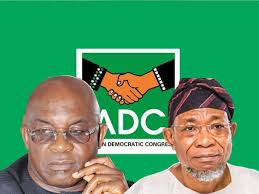
The party’s spokesman Bolaji Abdullahi, urged the electoral commission to provide early assurances on technology deployment and results-management safeguards.
“We welcome the early release of the timetable, which provides political parties, stakeholders, and the Nigerian electorate with needed clarity for long-term planning and democratic preparation.
“However, the credibility of the 2027 general elections will ultimately not be judged by the timeliness of the timetable alone, but by the Commission’s demonstrable commitment to transparency, technological integrity, and strict adherence to due process throughout the electoral cycle,” Abdullahi said.
NNPP’s force
The NNPP has expressed preparedness for the 2027 general elections, following the release of the timetable.
Having contested across all states in the 2023 elections, the party describes itself as a growing national force.
Under leaders such as Rabiu Kwankwaso, it is also open to forming strategic alliances with other opposition leaders and parties, signalling that the 2027 race is likely to be highly competitive.
16 parties struggle with structural weaknesses
Beyond the relatively prepared parties, sixteen others face significant structural and operational deficiencies that could limit their ability to field candidates nationwide.
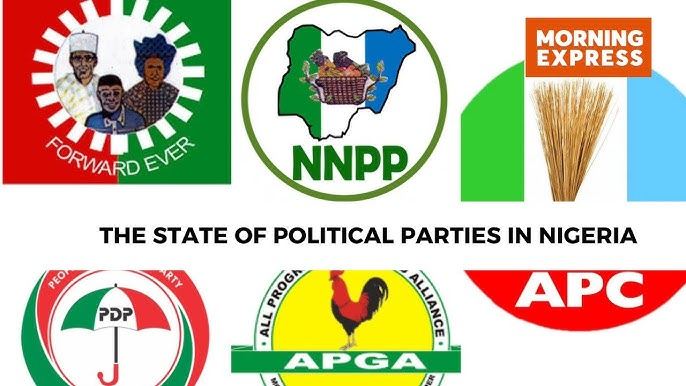
These include the All Progressives Grand Alliance (APGA), African Action Congress (AAC), Action Democratic Party (ADP), Accord, Action Alliance (AA), Boot Party (BP) National Rescue Movement (NRM) Peoples Redemption Party (PRP), Young Progressive Party (YPP), Zenith Labour Party (ZLP), Youth Party (YP), Democratic Leadership Alliance (DLA) – newly registered, Nigeria Democratic Congress (NDC) – newly registered, Action Peoples Party (APP) and Allied Peoples Movement (APM).
Many of these parties operate without fully functional ward, local government, or state structures, and several are also battling leadership crises, funding shortages, or unresolved court disputes that could complicate participation in the primary election window. Others remain active largely in limited regional strongholds without the nationwide organisational networks necessary for presidential contests.
Even among the larger parties, unresolved factional tensions, leadership battles, and litigation remain potential flashpoints capable of reshaping candidate emergence processes and political alignments ahead of the primaries.

About Author