Indications Atiku May Not Get 2027
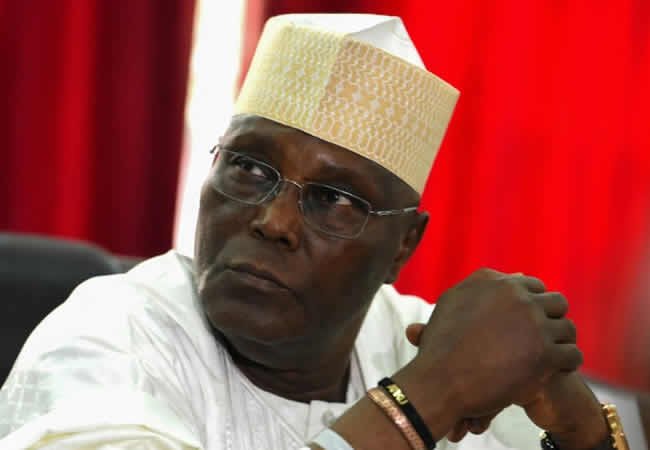
OpenLife Nigeria reports that indications have emerged why Atiku Abubakar may not get the African Democratic Congress, ADC, presidential ticket in 2027. Atiku Abubakar, 78, is one of the leaders of the reformed African Democratic Congress, ADC.
A billionaire in all currencies, the former Vice President of Nigeria and Adamawa State born politician is believed to have the war chest to outsmart any rival for the 2027 ticket of the party.
However, the administrative direction laid bare by the chairman of the party, Senator David Mark, at the maiden National Working Committee, NWC meeting of the party clearly indicates that Atiku may not have his way, as touted by analysts.
According to David Mark, the party’s mission extends beyond attaining power in 2027.
Mark stated that ADC’s primary goal is to establish a political legacy that future generations will be proud to inherit.
He said that the party is not seeking power for its own sake but to build a lasting legacy.
“We are in a marathon; we must compete and win. Failure is not an option,” he said.
The former Senate President assured that ADC would be an institution “bigger than any personality, stronger than any moment” and positively different from any party in the annals of Nigeria.
He described the party’s leadership as pan-African, people-orientated, problem-solving and movement-sensitive to the needs of the people, including persons with disabilities, retirees and the vulnerable.
“The conveners of this mission are respected leaders from every corner of our nation who have freely chosen service over comfort.
“We have set aside narrow interests for the common good. The road will be uphill; sacrifice will be demanded.
“Those threatened by democracy will resist it. Still, we advance – calmly, courageously, together as a formidable team,” he said.
Mark also described ADC’s leadership standard as non-negotiable, resting on four key pillars: character, competence, courage and discipline.

He stated that those pillars would guide the party’s choices and shape its culture.
The national chairman also outlined a new political blueprint for the party, anchored on citizens first, the supremacy of rules over personality, an open party with independent annual audits and merit before loyalty.
He said that these would also include dignity and inclusion for special interest groups, such as workers, women, youth, farmers, professionals, retired security officers, educators, persons with disabilities, retirees, civil society and the vulnerable.
Mark said that the urgent task before the NWC was to review the party’s constitution to reflect the new order and develop a code of ethics, financing rules and compliance systems.
“We must establish functional ward, local government, and state structures with trained organisers, digital registers, and service desks. We will build a leadership pipeline through a merit-based academy policy, ethics, communications and delivery,” he said.
He added that the NWC would field only credible and viable candidates who meet the party’s four-pillar standard.
Mark added that ADC, if elected into power, would pursue price stability and productivity through credible, rule-based coordination of fiscal and monetary policy.
He said that the party would deliver a reliable power supply by expanding power generation, fixing transmission bottlenecks and rewarding distribution performance.
“We will secure our food supply by supporting farmers and agricultural value chains from inputs and storage to processing and markets,” he said.
Reviewing David Mark’s statement, a United States of America based Professor of Political Science, Professor Joe Yakubu emphasized that the key points raised as policy focus of the party show that Atiku may not get the ticket.
“As stated by David Mark, the party is going to review its constitution and that is when the reality will be dawn on Atiku that the ticket is for the South and not North.
“What do you think David Mark meant when he said loud and clear that ADC will be “an institution bigger than any personality, stronger than any moment and positively different from any party in the annals of Nigeria?”
“It is all about Atiku. He will be advised to play an elderly role to allow younger blood take on Tinubu.
“One of the things that will sell ADC is if a younger person is supported to challenge Tinubu and Atiku does not fit into that calculation,” Professor Joe stated.
Born on November 25, 1946, Atiku Abubakar , a politician and businessman served as the vice president of Nigeria from 1999 to 2007 during the presidency of Olusegun Obasanjo.
He ran for the office of governor of Adamawa State in 1990 and 1996 unsuccessfully, but won in 1998.
Before he was sworn in as Adamawa State governor, he was selected as running mate to former military leader, Olusegun Obasanjo, during the 1999 presidential election and was re-elected in 2003.
Atiku Abubakar has run unsuccessfully for Presidency six times, in 1993, 2007, 2011, 2015, 2019, and 2023.
He ran in the Social Democratic Party presidential primaries in 1993, but lost to Moshood Abiola and Baba Gana Kingibe.
He was a presidential candidate of the Action Congress in the 2007 presidential election coming in third to Umaru Yar’Adua of the PDP and Muhammadu Buhari of the ANPP.
He contested the presidential primaries of the People’s Democratic Party during the 2011 presidential election losing out to incumbent President Goodluck Jonathan.

In 2014, he joined the All Progressives Congress ahead of the 2015 presidential election and contested the presidential primaries losing to Muhammadu Buhari. In 2017, he returned to the Peoples Democratic Party and was the party presidential candidate during the 2019 presidential election, again losing to late President Muhammadu Buhari.
In May 2022, he was chosen as the Peoples Democratic Party presidential candidate again, this time for the 2023 general election after he defeated Nyesom Wike, the former Governor of Rivers State, in the primaries.
He came in second in the general election, being defeated by Bola Tinubu, though Abubakar joined other opposition candidates in demanding a revote.
In 2025, Abubakar left the PDP to join the African Democratic Congress, alongside his former rival Peter Obi.
The two opposition leaders intend to present a united front against the APC in the 2027 presidential elections.
Early life
Atiku Abubakar was born in Jada, a village which was part of the British Cameroons – part of the territory later joined with the Federation of Nigeria following the 1961 British Cameroons referendum.
His father, Garba Abubakar was a Fulani trader and farmer, and his mother was Aisha Kande.
He was named after his paternal grandfather Atiku Abdulqadir who hailed from Wurno, Sokoto State and migrated to Kojoli village at Jada, Adamawa State.
His maternal grandfather called Inuwa Dutse migrated to Jada, Adamawa State from Dutse, Jigawa State.
He became the only child of his parents when his only sister died at infancy. In 1957, his father died by drowning while crossing a river to Toungo, a neighbouring village to Jada.
Childhood and education
His father was opposed to the idea of Western education and tried to keep Atiku Abubakar out of the traditional school system.
When the government discovered that Abubakar was not attending mandatory schooling, his father spent a few days in jail until Aisha Kande, his mother paid the fine.
At the age of eight, Abubakar enrolled in the Jada Primary School, Adamawa. After completing his primary school education in 1960, he was admitted into Adamawa Provincial Secondary School in the same year, alongside 59 other students.
He graduated from secondary school in 1965 after he made grade three in the West African Senior School Certificate Examination.
Following secondary school, Abubakar studied for a short while at the Nigeria Police College in Kaduna.
He left the college when he was unable to present an O-Level Mathematics result, and worked briefly as a Tax Officer in the Regional Ministry of Finance, from where he gained admission to the School of Hygiene in Kano in 1966.
He graduated with a Diploma in 1967, having served as Interim Student Union President at the school.
In 1967 he enrolled for a Law Diploma at the Ahmadu Bello University Institute of Administration, on a scholarship from the regional government.
After graduation in 1969, during the Nigerian Civil War, he was employed by the Nigeria Customs Service.
In 2021, Abubakar successfully completed and passed his master’s degree in International Relations at Anglia Ruskin University.
Customs service
Abubakar worked in the Nigeria Customs Service for twenty years, rising to become the deputy director, as the second highest position in the Service was then known.
He retired in April 1989 and took up full-time business and politics. He started out in the real estate business during his early days as a Customs Officer.
Business career In Real estate
In 1974, he applied for and received a N31,000 loan to build his first house in Yola, which he put up for rent. From proceeds of the rent, he purchased another plot and built a second house. He continued this way, building a sizeable portfolio of property in Yola, Nigeria.
In 1981, he moved into agriculture, acquiring 2,500 hectares of land near Yola to start a maize and cotton farm. The business fell on hard times and closed in 1986. “My first foray into agriculture, in the 1980s, ended in failure,” he wrote in an April 2014 blog.
He then ventured into trading, buying and selling truckloads of rice, flour and sugar.
Transportation
Abubakar’s most important business move came while he was a Customs Officer at the Apapa Ports. Gabrielle Volpi, an Italian businessman in Nigeria, invited him to set up Nigeria Container Services (NICOTES), a logistics company operating within the Ports. NICOTES would later go on to become Intels Nigeria Limited and provide immense wealth to Abubakar.
Abubakar is a co-founder of Intels Nigeria Limited, an oil servicing business with extensive operations in Nigeria and abroad.
Atiku’s other business interests are centred within Yola, Adamawa; and include the Adama Beverages Limited, a beverage manufacturing plant in Yola, an animal feed factory, and the American University of Nigeria (AUN), the first American-style private university to be established in Sub-Saharan Africa.
He retired in April 1989 and took up full-time business and politics.
Early political career
Abubakar’s first foray into politics was in the early 1980s, when he worked behind-the-scenes on the governorship campaign of Bamanga Tukur, who at that time was managing director of the Nigeria Ports Authority.
He canvassed for votes on behalf of Tukur, and also donated to the campaign.
Towards the end of his Customs career, he met General Shehu Musa Yar’Adua, who had been second-in-command Chief of Staff, Supreme Headquarters between 1976 and 1979.
Abubakar was drawn by Yar’Adua into the political meetings that were now happening regularly in Yar’Adua’s Lagos home, which gave rise to the People’s Front of Nigeria.
The People’s Front included politicians such as Umaru Musa Yar’Adua, Baba Gana Kingibe, Bola Tinubu, Sabo Bakin Zuwo, Rabiu Kwankwaso, Abdullahi Aliyu Sumaila and Abubakar Koko.
In 1989, Abubakar was elected the National Vice-chairman of the Peoples Front of Nigeria in the build-up to the Third Nigerian Republic.
He won a seat to represent his constituency at the 1989 Constituent Assembly, set up to decide a new constitution for Nigeria. The People’s Front was eventually denied registration by the military government (none of the groups that applied was registered), and merged with the government-created Social Democratic Party (SDP).
On 1 September 1990, Abubakar announced his Gongola State gubernatorial bid. A year later, before the elections could hold, Gongola State was broken up into two – Adamawa and Taraba States – by the Federal Government.
Abubakar fell into the new Adamawa State. After the contest he won the SDP Primaries in November 1991, but was soon disqualified by the government from contesting the elections.
In 1993, Abubakar contested the SDP presidential primaries. The results after the first ballot of the primaries held in Jos was: Moshood Abiola with 3,617 votes, Baba Gana Kingibe with 3,255 votes and Abubakar with 2,066 votes. Abubakar and Kingibe considered joining forces combining 5,231 votes to challenge Abiola.
However, after Shehu Yar’Adua asked Atiku Abubakar to withdraw from the campaign, with Abiola promising to make him his running mate. Abiola was later pressured by SDP governors to select Kinigbe as his Vice-presidential running mate, in the June 12 presidential election.
After the 12 June and during the General Sani Abacha transition, Abubakar showed interest to contest for the Gubernatorial seat of Adamawa State under the United Nigeria Congress Party, the transition program came to an end with the death of General Abacha.
In 1998, Abubakar joined the Peoples Democratic Party (PDP) and later secured nomination for Governor of Adamawa State, winning the December 1998 governorship elections, but before he could be sworn in he accepted a position as the running mate to the PDP presidential candidate, former military head of state General Olusegun Obasanjo who went on to win the 1999 presidential election ushering in the Fourth Nigerian Republic.
Presidential election of 2007
On 25 November 2006 Abubakar announced that he would run for president. On 20 December 2006, he was chosen as the presidential candidate of the Action Congress (AC).
On 14 March 2007, the Independent National Electoral Commission (INEC) released the final list of 24 aspirants for 21 April presidential election.
Abubakar’s name was missing from the ballot. INEC issued a statement stating that Abubakar’s name was missing because he was on a list of persons indicted for corruption by a panel set up by the government.
Abubakar headed to the courts on 16 March to have his disqualification overturned.
The Supreme Court unanimously ruled on 16 April that INEC had no power to disqualify candidates. The ruling allowed Abubakar to contest the election, although there were concerns that it might not be possible to provide ballots with Abubakar’s name by 21 April, the date of the election.
On 17 April, a spokesman for INEC said that Abubakar would be on the ballot. According to official results, Abubakar took third place, behind PDP candidate Umaru Yar’Adua and ANPP candidate Muhammadu Buhari, with approximately 7% of the vote (2.6 million votes). Abubakar rejected the election results and called for its cancellation, describing it as Nigeria’s “worst election ever.”
He stated that he would not attend Umaru Yar’Adua’s inauguration on 29 May due to his view that the election was not credible, saying that he did not want to “dignify such a hollow ritual with my presence”.
Post–vice presidency & Return to the PDP
Following the 2007 elections, Abubakar returned to the People’s Democratic Party. In October 2010 he announced his intention to contest for the Presidency. On 22 November, a Committee of Northern Elders selected him as the Northern Consensus Candidate, over former Military President Ibrahim Babangida, former National Security Adviser Aliyu Gusau and Governor Bukola Saraki of Kwara State.
In January 2011, Abubakar contested for the Presidential ticket of his party alongside President Jonathan and Sarah Jubril, and lost the primary, garnering 805 votes to President Jonathan’s 2736.
In August 2013, the Independent National Electoral Commission (INEC) registered two new political parties. One of them was the Peoples Democratic Movement. Local media reports suggested that the party was formed by Abubakar as a back-up plan in case he was unable to fulfil his rumoured presidential ambitions on the PDP platform.
In a statement Abubakar acknowledged that the PDM was founded by his “political associates”, but that he remained a member of the PDP.
All Progressives Congress
On 2 February 2014, Abubakar once again left the Peoples Democratic Party and became a founding member All Progressives Congress, with the ambition of contesting for the presidency ahead of the 2015 presidential election.
The results of the APC presidential primaries results held in Lagos was: Muhammadu Buhari with 3,430 votes, Rabiu Kwankwaso with 974 votes, Atiku Abubakar with 954 votes, Rochas Okorocha with 400 votes and Sam Nda-Isiah with 10 votes.
On Friday, 24 November 2017, Abubakar announced his exit from the All Progressives Congress (APC), and returned to the Peoples Democratic Party (PDP) on 3 December 2017.
He said he decided to ‘return home’ to the PDP now that the issues which made him leave the party had been resolved.
2019 presidential campaign
In 2018, Abubakar began his presidential campaign and secured the party nomination of the PDP in the presidential primaries held in Port Harcourt on 7 October 2018. He defeated all the other aspirants and got 1,532 votes, 839 more than the runner-up, the Governor of Sokoto State Aminu Tambuwal. Atiku Abubakar continued his campaign rally in Kogi State as he promised to complete abandoned projects in the state.
On 30 January, he participated in the town hall meeting tagged #NGTheCandidate. And in the meeting, he declared that he will grant amnesty to looters and he vowed to privatize 90% of NNPC, Nigeria’s primary source of income. Atiku took his campaigns to Katsina, visit Emir of Daura on 7 February 2019.
On 27 February 2019, Atiku lost the presidential election to incumbent President Muhammadu Buhari by over 3 million votes.
He appealed at the Supreme Court and described the election as the “worst in Nigeria’s democratic history.”
2023 presidential campaign
Atiku Abubakar emerged as the presidential candidate of the Peoples Democratic Party for 2023 election after he defeated 12 other candidates in a keenly contested presidential primary held at the Moshood Abiola Stadium in Abuja on 28 May 2022.
Of the 767 accredited ballots at the election, he polled 371 votes while his closest challenger, Governor of Rivers State, Nyesom Wike, came second with 237 votes. Former Senate President Bukola Saraki scored 70 votes to come a distant third while Governor of Akwa Ibom State, Udom Gabriel Emmanuel, came fourth with 38 votes.
In 2025, Abubakar left the PDP, accusing it of deviating from its founding principles.
About Author