How Segun Osoba Will Determine Who Succeeds Dapo Abiodun
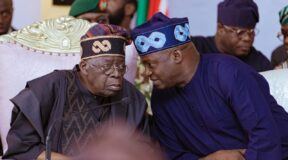
OpenLife Nigeria reports that like President Bola Ahmed Tinubu who will determine who becomes Lagos next governor, Aremo Segun Osoba, according to emerging facts, will determine who succeeds governor Dapo Abiodun of Ogun State in 2027.
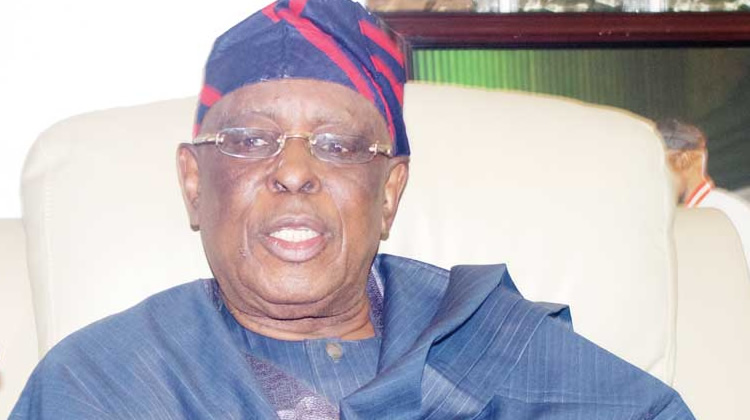
86 years old Chief Segun Osoba, it was, who governed the 49 years old State twice as governor of Ogun State first from 1992 to 1993 during the Nigerian Third Republic and then from 1999 to 2003.
Each time, he recorded excellence in service delivery and accountability. Chief Osoba stands out as one past Nigerian governor without a case with anti graft agencies.
However, and in less than two years to the 2027 general elections and expiration of the eight-year tenure of Ogun State Governor, Prince Dapo Abiodun, political undercurrents are gathering momentum as aspirants seeking to occupy the Oke-Mosan top seat from May 29, 2027 oil their machinery.
Already, a host of aspirants have emerged across party lines, gearing up through consultations and forging alliances.
Factors that will shape contest
Amid the consultations, factors that will shape the emergence of the next governor of the state include power-shift and zoning, influence of Governor Abiodun and political godfathers.
There has been strong agitation for a power shift to Ogun West, which is the only zone that is yet to produce a governor since the state’s creation in 1976.
Many leaders from the zone have been making moves to ensure that it produces the next governor.
Political analysts have attributed the inability of the district to produce a governor in the last 49 years to the internal divisions among its constituent groups.
Influence of godfathers
Technically, the influence of former governors Olusegun Osoba on who gets the ticket of the ruling All Progressives Congress, APC, cannot be over emphasized.
Chief Osoba is indisputably the number one elder stateman of the party in Ogun State, South West and indeed, Nigeria as a country.

The official leader of the party and incumbent governor of the State, Dapo Abiodun, defers to Chief Osoba when critical decisions are to be made.
Chief Osoba also serves as the eye and nose of President Bola Tinubu in and outside Ogun State in some important respects.
Though other political godfathers like Senator Gbenga Daniel (Ogun East) and Senator Ibikunle Amosun (Ogun Central), cannot be underestimated, their influence within APC are far below Osoba.
The 2027 Aspirants
Findings further revealed that some of the politicians showing interest in the exalted position from the ruling All Progressives Congress, APC include the current Deputy Governor, Engr. Noimot Salako-Oyedele; the Chairman, Senate Committee on Appropriations, Olamilekan Adeola, popularly known as Yayi; former Nigerian High Commissioner to the United Kingdom, Sarafa Tunji-Ishola; and Senator Shuaib Salisu.
In the Peoples Democratic Party, the 2023 governorship candidate of the party, Ladi Adebutu, appears to be the only notable aspirant for the number one seat.
Olamilekan Adeola
Leading the list of potential candidates of the APC is Senator Olamilekan Adeola, who is currently representing Ogun West in the Red Chamber of the National Assembly.
Senator Adeola returned to Ogun State after building his political career in Lagos. Adeola has consistently pushed for Ogun West to produce the next governor. His solid political machinery and positioning make him one of the strongest forces to watch in the coming race.
Adeola, a chartered accountant began his political career in 2003 as a member of the Lagos State House of Assembly, representing Alimosho Constituency 1, and was re-elected in 2007. He went on to represent Lagos in both the House of Representatives and the Senate from 2011 to 2023. In 2023, he shifted his political base to Ogun and won the Ogun West Senatorial seat.
Since his return to the state, Adeola has positively impacted on Ogun West senatorial district through various projects and empowerment programmes.
Sarafa Tunji-Ishola
Tunji-Ishola was secretary to the state government during the first term of Otunba Gbenga Daniel between 2003 and 2007. He was also Minister of Mines and Steel Development under late former President Umar Yar’Adua and ex-High Commissioner. he is a grassroots politician from the Egba division of Ogun Central.
Findings show that he is relying on the political structure of the immediate past governor of the State, Senator Ibikunle Amosun, to realise his governorship ambition.
Gboyega Nasir Isiaka
Gboyega Nasir Isiaka, popularly known as GNI, is a chartered accountant and former banker. He is currently representing Imeko-Afon/Yewa North Federal Constituency in the House of Representatives.
He previously served as Special Assistant on Investments to former Governor Gbenga Daniel in 2003 and 2011. Isiaka has contested the governorship position three times—under the People’s Party of Nigeria, PPN, in 2011, the PDP in 2015, and the African Democratic Congress, ADC, in 2019. He is one of the leading governorship aspirants from Ogun West.
Ladi Adebutu
Ladi Adebutu has been active in Ogun politics for over 30 years. He lost to the incumbent governor in the 2023 election by 13,915 votes. Adebutu is a native of Iperu Remo in Ikenne Local Government Area, also the governor’s hometown.
In 2015, he was elected to represent Remo North, Sagamu and Ikenne Federal Constituency in the House of Representatives.
Since the 2023 election, he has retained strong control of the PDP structure in the state making him the party’s most prominent aspirant at the moment.
Noimot Salako-Oyedele
The State incumbent deputy governor hails from Ota in Ogun West Senatorial District. She is believed to be hinging her governorship ambition on the growing advocacy for the state to produce its first female governor. Her aspiration also aligns with the call for Ogun West to produce the next governor. However, political analysts see her chances as slim.
Supporters of the different aspirants have launched a supremacy battle, particularly on social media, promoting their candidates as the most deserving of the ticket.
History of Ogun State
Ogun State a state in southwestern Nigeria, is bordered to the south by Lagos State and the Bight of Benin, to the east by Ondo State, and to the north by Oyo and Osun states while its western border forms part of the national border with the Republic of Benin. The capital and largest city is Abeokuta, and the state is divided into 20 local government areas.
Of the 36 states, Ogun is the 24th largest in area but among the top fifteen most populous, with an estimated population of about 6.4 million as of 2020. Geographically, the state lies primarily in the tropical Nigerian lowland forests ecoregion, although parts of the state’s north transition into the Guinean forest–savanna mosaic and some of the coastal south reach the Central African mangrove ecoregion.
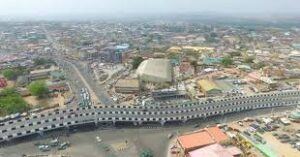
The Ogun and Yewa rivers are the state’s major waterways while the Omo Forest Reserve in the southeastern part of the state is one of the most important conservation areas in the country — home to a variety of bird species along with some of Nigeria’s last remaining Nigeria-Cameroon chimpanzee and African forest elephant populations.
Demographically, the Yoruba people are the largest ethnic group in the state — particularly the Awori, Egba, Ijebu, and Yewa subgroups.
Additionally, there are ethnic minorities of non-indigene groups in urban areas and indigenous Egun people along the border with Benin. In terms of religion, the majority of the state’s population are Christian with a significant Muslim minority.
Historically, parts of modern Ogun State were included in several kingdoms, including the Benin, Ijebu, and Oyo states. In the late nineteenth century, British expeditions took control of the area and Abeokuta became a major center of missionary activity and education.
During the early colonial period, the area was part of the Southern Nigeria Protectorate, which later merged into colonial Nigeria. After independence in 1960, the region was part of the Western Region until the creation of Ogun State in 1976 from the old Western State.
Economically, Ogun State is a major industrial hub with a growing base of factories and companies, especially along the Lagos–Ibadan Expressway corridor. Agriculture remains vital in rural areas, with key crops including cassava, cocoa, and maize along with the indigenous Ofada rice.
The state is also known for its cultural heritage, crafts, and textile traditions along with the arts.
Ogun ranks in the mid-range in Human Development Index and has the eighth highest GDP in the country.
pre-colonial times
In pre-colonial times, today’s Ogun western portion which is now inhabited by the Egba and Yewa people belonged to the kingdom of Oyo, which sank into civil war mid 1800s. South of Ogun, on the tiny island of Lagos, the British had a naval base near which the town of the same name grew rapidly.
Until the Berlin Congo Conference in 1885, Great Britain had focused on a few strategically placed bases for its merchant fleet and navy, such as Lagos and Calabar, and was not interested in the communities developing there.
After the European colonial powers had staked out their spheres of interest 1885 in Berlin (these were only valid if another power had not previously brought the area in question under its control) the United Kingdom quickly expanded its territory in the assigned Niger region.
Ogun became part of the “Protectorate of Lagos” (as opposed to the Colony of Lagos; the border between these two is identical to the modern border between Lagos State and Ogun State – inhabitants of a colony were treated as fully entitled subjects of the British crown, those in protectorates were not) in 1893 and later of the “Protectorate of Yorubaland”, in 1906 of the “Protectorate of Southern Nigeria” and in 1914 of the whole of Nigeria.
In 1899 it received a railway connection to Lagos, the “Boat Express” ran through Ogun to Apapa and thus connected the region with the wider world. In 1899, it was several years earlier in this than other regions in West and Central Africa that were not connected to the coast.
In the 1930s, Ogun was a centre of the Nigerian women’s movement under the leadership of Funmilayo Ransome-Kuti (Fela Kuti’s mother). Democracy in colonial Nigeria after 1922 only existed in Lagos and Calabar; Nigerians could not participate politically elsewhere.
During the 1940s, food was strictly rationed in Nigeria. The transport of food from the more agrarian Ogun to the hungry metropolis of Lagos was severely penalized.
In the first elections in Ogun, 1954, the semi-socialist “Action Group” (AG) under Ọbáfẹ́mi Awólọ́wọ̀ became the strongest party in the Western Region, to which Ogun also belonged.
After independence in 1960, the Yoruba region, and Ogun in particular, was engulfed in conflict between the Ọbáfẹ́mi Awólọ́wọ̀ and Samuel Ládòkè Akíntọ́lá fractions of the AG party (“Operation Wetie”, see here). In July 1966, the then ruler of Nigeria, Johnson Agulyi-Ironsi, was assassinated in Abeokuta in the second coup of the year, which was the prelude to the Biafra War.
The state was formed on 3 February 1976 from part of the former “Western” state.
Geography
Ogun State borders the Republic of Benin to the West for about 185 km, Oyo State and Osun State (for 84 km) to the North, Ondo State to the east, Lagos State to the South for about 283 km, and has 31.6 km of coastline on the Bight of Benin to the south, Araromi beach belongs to Irokun land in Ogun Waterside (Ijebu province) local government but insistently claimed by Ondo state due to the influx of Ilaje migrants from neighbouring communities and due to no attention given to this area by the Ogun state government.
About Author