Dead Romance
OpenLife Nigeria reports that Queen Chanel Chin, the former wife of Oba Abdulrasheed Akanbi, has called
the Oluwo of Iwo a liar.
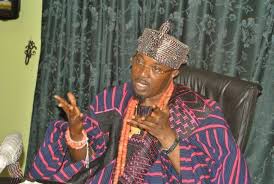
Oba Abdulrasheed Akanbi is the traditional ruler of Iwo, a prominent city located in Osun State, Nigeria.
The highly rated traditional ruler came under heavy fire from his former wife after the monarch accused the Ooni of Ife, Oba Adeyeye Ogunwusi, of conspiring with her to orchestrate his downfall.
Queen Chanel Chin described the Oluwo a “deadbeat father.”
Born in Canada to Jamaican parents, Chanel is the daughter of reggae star Ludlow “Bobo Zaro” Chin, renowned for collaborations with artistes such as Capleton.
Before her marriage to the Iwo monarch, she worked as a model and entrepreneur.
She reportedly met the king at a party in Lagos during a 2015 visit to Nigeria, but their union collapsed in December 2019 after almost three years.
In a widely publicised divorce statement, Oluwo premised the break-up on “personal irreconcilable differences.”
The monarch reportedly forced the queen out of the palace leading to heated public exchanges via social media in which the queen accused Oluwo of emotional abuse.
The controversy reignited on Tuesday after a video posted on Oluwo’s Instagram page went viral.
In the clip, the Iwo monarch alleged that the Ooni masterminded a plot against him by “packaging” Chanel for marriage, claiming the relationship was a setup designed to destroy him.
“He (Ooni) was looking for my downfall, and the next thing, they packaged a woman for me. I don’t know her from Canada, but it was packaged for me. It was a setup,” Oluwo alleged.
The monarch further claimed that Queen Chanel poisoned him twice, attempted to assassinate him, and bore a child whose paternity he now doubts.
“She had a child, which I don’t even know if it’s mine. I have to confirm that through DNA,” he said, accusing the Ooni of housing his former wife and allegedly having an affair with her.
Oluwo also declared that no power, traditional or spiritual, could kill him.
“Sango cannot kill me; Ogun cannot kill me. Only God determines when someone will die,” he insisted.
All attempts to reach the Ooni’s media aide, Moses Olafare, for comments were unsuccessful.
But in a statement shared on her Instagram page on Friday, Queen Chanel dismissed Oluwo’s allegations as “false, misleading, and damaging to the sacred Yoruba traditional institution.”
She clarified that she was introduced to the monarch by a respected Lagos oba, not the Ooni of Ife, as claimed.
“I was introduced to Mr Akanbi by a respected Lagos monarch, not by the Ooni of Ife. During my time as Olori Oluwo, I regarded this Lagos monarch as my Royal Father and still do with respect,” she said.
Chanel went further to accuse the monarch of abandoning their son, Prince Oduduwa, for over five years, describing him as a neglectful father.
“Mr Akanbi has been absent from Prince Oduduwa’s life for over five years. He only resurfaced in August this year in Canada, refused to sign passport papers, but dropped $500 – the first support Oduduwa ever received from him since we left the palace,” she revealed.
She urged the public to disregard the monarch’s claims, calling on traditional institutions to caution him.
“This shall be my final statement on the matter. Prince Oduduwa remains my beloved son, and I hold the Yoruba people in deep love and respect,” she added.
Marriage built on falsehood
In a 2020 interview, published in Punch newspaper, Queen Chanel described her marriage to Oluwo as one built on lies.
She denied allegations of infidelity and poisoning, stressing that she was used to boost the monarch’s public image due to her Canadian background.
“He used me to build his profile. People didn’t even know him before. He used me as a show horse, saying, ‘My wife is Canadian.’ He even named our son Oduduwa, a name elders later advised me to change,” she recounted.
Chanel maintained that contrary to Oluwo’s claims, they first met in Lagos at a party in 2015—not in Canada.
With both sides trading allegations, the bitter feud between Oluwo and his ex-wife has once again spilled into the public space, dragging the revered Ooni of Ife into the storm.
Early Life and Family Background
Oba Abdulrasheed Adewale Akanbi was born on June 21, 1967, to the family of Prince Kola Akanbi of Gbaase Ruling House in Iwo Kingdom, Osun State. Growing up in the ancient town of Iwo, a significant Yoruba settlement with deep historical and cultural roots, young Abdulrasheed was exposed to traditional values and customs from an early age.
His father, the late Prince Kola Akanbi, belonged to the Molasan Compound within the Gbaase Ruling House, one of the royal families entitled to produce the Oluwo of Iwo. This royal lineage positioned him as a potential candidate for the throne, though his path to becoming king would take several decades and involve significant time abroad.
The Iwo Kingdom, where he was born, has a rich history dating back centuries as an important center of commerce and Islamic learning in Yorubaland. Growing up in this environment, Akanbi developed an appreciation for both traditional Yoruba culture and Islamic teachings, which would later influence his approach to leadership as a traditional ruler.
His childhood was marked by exposure to the complexities of Nigerian society during a period of military rule and economic challenges in the 1970s and 1980s. These formative experiences would shape his worldview and later inform his unconventional approach to traditional rulership, combining respect for tradition with a desire for modernization and development.
Educational Background
Oba Akanbi received his elementary education at Omolewa Nursery and Primary School in Oritamefa, Ibadan, from 1972 to 1978. His primary education in Ibadan, the capital of Oyo State, exposed him to a more cosmopolitan environment beyond his hometown of Iwo.
In 1978, he began his secondary education at Iwo Grammar School in Araromi, Iwo, before later transferring to Oba Akinyele Memorial High School in Idi-Ape, Ibadan. This movement between schools in both Iwo and Ibadan demonstrates the family’s commitment to providing him with quality education while maintaining connections to both his hometown and the broader Yoruba cultural center.
Tertiary Education
He obtained a National Diploma in Mass Communication from The Polytechnic Ibadan in 1987. This educational background in mass communication would later prove valuable in his ability to navigate media attention and public relations as a traditional ruler, particularly given his controversial public statements and social media presence.
International Certifications
Between 2001 and 2005, he obtained a Certificate in Cybis & Axis System from Convergys Institute in Halifax, Nova Scotia, Canada. This technical certification represented his efforts to gain marketable skills in the Canadian job market.
He earned a Bachelor of Science degree in Business Administration from George Brown College in Toronto, Ontario, from 2005 to 2009. This degree equipped him with business management knowledge that would later inform his approach to managing the affairs of Iwo Kingdom.
He also obtained a Seismic Certificate in Operations, Oil & Gas Processing Facilities in 2005, demonstrating his diverse educational pursuits and interest in the energy sector, which is significant in the Canadian economy.
Life in Canada
Before ascending to the throne of Iwo, Oba Akanbi spent considerable time in Canada, where he built a career and life far removed from traditional Nigerian monarchy. His time in Canada, spanning several years, was marked by various business ventures and community involvement that would later inform his approach to development-focused leadership.
Military Experience
One of the most surprising revelations about his past is that he fought in the Liberian civil war for three years. This military experience in one of West Africa’s most brutal conflicts gave him exposure to warfare, survival under extreme conditions, and the devastating effects of political instability. While the exact nature and circumstances of his involvement remain somewhat unclear, this experience undoubtedly shaped his worldview and leadership philosophy.
The Call to Kingship
While in Canada, he claimed to have heard a voice from heaven instructing him to “pack your things, I am going to make you a king” just three days before his predecessor passed on. He was attending a picnic in Toronto when he received this spiritual message, which he interpreted as a divine calling to return to Nigeria and assume the throne of his ancestors.
This spiritual calling, whether taken literally or metaphorically, marked a dramatic turning point in his life. He left behind his Canadian life, businesses, and comfort to return to Nigeria and compete for the traditional throne of Oluwo of Iwo, a decision that would forever change both his life and the kingdom he would come to rule.
Becoming the 16th Oluwo of Iwo
Then 48-year-old Prince Akanbi, a contractor based in Canada from Gbaase Ruling House, was announced as the 16th Oluwo and successor to Oba Ashiru Tadese, whose death was made public on February 18, 2012. The selection process took place over several years, as is common with traditional throne succession in Nigeria, involving consultations with kingmakers, family deliberations, and government approval.
In the statement conveying his appointment signed by then Secretary to the Osun State Government, Alhaji Moshood Adeoti, incidentally an indigene of Iwo, he was described as a childhood friend of Ooni of Ife, Oba Adeyeye Ogunwusi, who was appointed just a few weeks earlier. This early mention of their friendship is ironic given the bitter rivalry that would later develop between the two monarchs.
The announcement on November 9, 2015, was initially greeted with excitement and high expectations. As someone who had lived abroad and was exposed to international best practices, many hoped he would bring fresh perspectives and development-focused leadership to the ancient throne. However, this initial optimism would soon give way to controversy and conflict.
Early Controversial Decisions
The ecstasy that greeted Akanbi’s announcement as Oluwo soon gave way to disbelief and fear, as the newly-appointed Oba started making headlines for controversial reasons. Almost immediately after his coronation, he began making decisions that shocked traditional Yoruba society and challenged conventional expectations of how a monarch should behave.
His first major decision as the Oluwo of Iwo was to combat idolatry in kingship, declaring that idol and deity worshipping should not be in the palace. He argued that if anybody has idols or deities, they should keep them in museums where priceless things are kept. This stance, while consistent with Islamic teachings, was controversial in a traditional Yoruba context where sacred objects and deities are often integral to royal rituals.
Life of Oba Abdulrasheed Adewale Akanbi at a glance
Oba Abdulrasheed Adewale Akanbi is a devout Muslim who married Princess Firdaus after divorcing his first wife Chanel Chin, with whom he had a son. His marriage to Chanel Chin, a Canadian woman with Jamaican heritage, was highly publicized and controversial from the start.
The marriage between the royal father and the Jamaican produced a son named Oduduwa. The choice to name their son after the legendary progenitor of the Yoruba people reflects the monarch’s desire to connect his foreign-born son to Yoruba heritage.
In December 2016, shortly after the birth of his son, the Oluwo shared that his Canadian/Jamaican wife and baby were in Canada, and he described her as “the most Beautiful and gorgeous looking Queen ever, The only Queen that wears a crown in Africa after Olokun the Great Queen”. These early declarations of love and pride contrast sharply with the acrimonious divorce that would follow.
The marriage ended in December 2019 after irreconcilable differences. The palace issued a statement formally announcing that Ms. Chanel Chin was an ex-queen and requesting that the public avoid according her respect attached to the sacred stool of Oluwo.
Allegations Against Ex-Wife
In October 2025, the Oluwo sparked fresh controversy after accusing his ex-wife of conspiring with the Ooni of Ife to assassinate him, claiming she was introduced to him from Canada as part of a setup. He alleged that she poisoned him twice and made several assassination attempts while secretly working with rival traditional rulers.
The monarch also expressed doubts over the paternity of the child he had with the woman, a shocking allegation that has drawn widespread criticism and denials from his ex-wife.
Chanel Chin responded to these allegations, stating that she was introduced to the Oluwo by a respected Lagos monarch, not by the Ooni of Ife, and that the Oluwo had been absent from Prince Oduduwa’s life for over five years. She revealed that he only resurfaced in August 2025 in Canada, refused to sign passport papers, but dropped $500, the first support their son ever received from him since they left the palace.
Second Marriage: Princess Firdaus
In October 2022, the Oluwo celebrated his wife, Queen Firdaus, on her birthday, describing the Kano State-born princess as a “Real Queen”. This second marriage appears to be more stable and aligned with his cultural and religious values, as Princess Firdaus comes from a prominent Northern Nigerian Muslim family.
He wrote that since she came into his life, she made kingship like a “walk in the park” for him through the grace of Olodumare, describing their partnership as having the strongest bond. This marriage has been less publicized than his first, with fewer controversies surrounding it.
Net Worth, Assets and Lifestyle
While the exact net worth of the Oluwo of Iwo is not publicly known, he is known to spend significant amounts of money on luxury items and has a love for expensive cars, suggesting he is worth millions of dollars. His wealth appears to come from multiple sources, including his businesses in Nigeria and Canada, investments, and possibly income from his royal position.
Luxury Car Collection
The Oluwo of Iwoland’s official cars include models from luxury brands like Rolls-Royce, Toyota, Innoson, Lamborghini, Lexus, and Mercedes. His garage represents one of the most impressive collections among Nigerian traditional rulers.
In 2017, the Oluwo shared pictures of himself posing with his Italian machine, a Lamborghini Murcielago sports car. The Murcielago, manufactured by Lamborghini between 2001 and 2009, features the brand’s signature vertical doors and is valued at hundreds of thousands of dollars.
His collection also includes a Toyota Land Cruiser Prado, a Lexus LX 460, and Innoson G80 sports utility vehicles (SUVs) with customized number plates. These SUVs are often used for official duties and moving around the kingdom.
The Oluwo also boasts a black open-roof Mercedes-Benz S-Class sedan, as well as a Rolls-Royce Phantom 7 in his fleet, with the British-made luxury sedan being the most expensive car in his collection. The Rolls-Royce Phantom represents the pinnacle of automotive luxury and can cost several hundred thousand dollars.
Properties and Investments
Beyond his cars, the Oluwo is believed to own properties in both Nigeria and Canada, though specific details are not publicly disclosed. His business interests, including the quarry business in Ibadan and other ventures, contribute to his overall wealth and financial stability.
Developmental Projects and Philanthropic Works
Before becoming Oba, it took three hours to get to Osogbo from Iwo because of the bad road condition. As soon as he became the Oba, he started fixing the 44km road, working from 8am to 6pm to ensure the road was fixed. This road had been abandoned for 13 years before his intervention, and his hands-on approach to fixing it surprised many skeptics who thought it was media hype.
Healthcare Contributions
The Oluwo has donated medical equipment worth over N1 billion to hospitals and health centers in Iwo. These donations have significantly improved healthcare delivery in the ancient town, providing modern equipment that was previously unavailable to the local population.
Community Development
His approach to using the throne for development rather than personal aggrandizement has been one of the positive aspects of his reign. He has been involved in various community development projects, including support for education, youth empowerment, and economic development initiatives in Iwo and its environs.
Relief and Humanitarian Work
His humanitarian work, which began during his time in Canada, has continued during his reign. His organization, People Against Loneliness Inc., continues to provide support to vulnerable individuals, and he has been involved in disaster relief efforts both within Nigeria and internationally.
The Emperor Declaration Controversy
Early in 2016, Oba Akanbi declared himself an emperor and his town an empire, placing number plates with ‘EMPEROR’ on his vehicles. This unilateral declaration was rejected by other Yoruba monarchs and the Osun State government, but he has maintained the title despite criticism.
Religious Controversies
In July 2016, Oba Akanbi stirred controversy when he relegated the Chief Imam to the background and led the Eid-Fitri prayer at the Iwo Praying Ground. Muslim clerics described the action as un-Islamic and inappropriate, but he justified it by citing historical precedent of a previous Oluwo who led prayers.
His stance against idol worship and traditional religious practices has also created tensions with traditionalists who believe a Yoruba king should respect and participate in ancestral worship regardless of personal religious convictions.
Claim to Ife Ancestry
Oba Akanbi visited Ile-Ife to trace his origin, stating that it had been established that indigenes of Iwo could come to Ife and aspire to be the Ooni, and vice versa. This declaration did not go down well with many Ife indigenes. On the day of his visit, he and his entourage were denied access to the Ooni’s palace because Oba Ogunwusi was said to be unaware of the visit.
Physical Assault on Fellow Monarch
The Oluwo was suspended for six months from the Osun State Council of Traditional Rulers after allegedly physically attacking the Agbowu of Ogbaagba during a peace meeting. This incident, which allegedly resulted in the Agbowu’s hospitalization, shocked the traditional institution and led to disciplinary action against the Oluwo.
Traditional rulers recalled that Oluwo had previously had issues with fellow Obas in the Iwo axis, including the Olu of Ile-Igbo, Olowu of Kuta, Olu of Songbe, and Agbowu of Ogbaagba.
2025 Feud with Ooni of Ife
In October 2025, the Oluwo of Iwo accused the Ooni of Ife of conspiring with his ex-wife, Chanel Chin, to poison and kill him. In a viral video, he alleged that his former wife was introduced to him from Canada as part of a grand conspiracy, that she poisoned him twice, and that the Ooni accommodated her after their separation.
Following these allegations, traditional rulers from Ife North Local Government Area issued a 21-day ultimatum to the Oluwo to retract his allegations or face legal action. Eight monarchs, led by the Salu of Edunabon, described the Oluwo’s allegations as criminal, defamatory, and disrespectful to the sacred throne of Oduduwa.
The allegations have deepened the rift between the two most prominent Yoruba monarchs, with accusations of conspiracy, betrayal, and attempted murder shaking Osun’s royal circles.
Accusations Against Other Monarchs
In January 2025, the Oluwo accused Ekiti and Kwara monarchs of engaging in ritual killings, calling out traditional rulers, royal chiefs, pastors, and politicians for perpetrating gruesome acts. He demanded they stop using human beings for rituals or sacrifices, claiming that some kings sacrifice humans monthly to elongate their lives and reigns.
Leadership Philosophy
The Oluwo has consistently advocated for modernizing traditional institutions while maintaining respect for valuable cultural traditions. He believes that traditional rulers should be active development partners rather than ceremonial figureheads, and that monarchs should be accountable to their people just as political leaders are.
Religious Stance
His first major decision as Oluwo was to combat idolatry in kingship, refusing to worship idols or deities in the palace. As a devout Muslim, he believes his allegiance is to God alone, and that traditional rulers should serve as custodians of moral values rather than promoters of what he considers outdated religious practices.
Development Focus
He has stated that his approach is to use the throne for development, not for any other thing, emphasizing that a king must be a servant to his people. This servant-leadership philosophy, while admirable, has sometimes clashed with traditional expectations of royal authority and dignity.
Call for Hierarchy Among Traditional Rulers
He has advocated for establishing a clear hierarchy among traditional rulers similar to military ranks, arguing that without order and structure, the traditional institution cannot function effectively. He has criticized the lack of formal structure in Osun State compared to Ogun State, where there are coronet obas, beaded crowns, and paramount rulers who respect one another.
Public Perception and Media Presence
The Oluwo of Iwo has a significant social media presence, particularly on Instagram and Facebook, where he regularly posts about his activities, opinions, and controversies. His social media usage is unprecedented among Nigerian traditional rulers of his rank, making him one of the most visible monarchs in the digital space.
His public image is deeply polarizing. Supporters praise his developmental initiatives, philanthropic works, and willingness to challenge what they see as outdated traditions. Critics, however, view him as disrespectful to tradition, unnecessarily controversial, and unbecoming of a traditional monarch.
His relationship with the media has been complex, becoming the subject of both positive coverage for his development projects and negative coverage for his controversies. His background in mass communication has arguably helped him navigate media attention, though not always successfully.
Legacy and Impact on Traditional Leadership
Despite the controversies, Oba Abdulrasheed Akanbi has undeniably impacted discussions about the role of traditional rulers in contemporary Nigeria. His reign has sparked important conversations about modernizing traditional institutions, the balance between cultural preservation and progress, and the accountability of traditional rulers to their subjects.
His developmental initiatives, particularly in infrastructure and healthcare, have set an example for active traditional leadership focused on tangible improvements in people’s lives. However, his confrontational approach and numerous conflicts have also demonstrated the challenges of implementing radical changes to traditional institutions that have existed for centuries.
Whether history will judge him as a visionary reformer or a controversial disruptor remains to be seen. What is certain is that his reign as the 16th Oluwo of Iwo has been anything but ordinary, and his influence on discussions about traditional leadership in Nigeria will likely extend far beyond his time on the throne.
Highlights About Oba Abdulrasheed Akanbi
- War Veteran: He fought in the Liberian civil war for three years, an unusual background for a Nigerian traditional ruler.
- Divine Calling: He claims to have received a message from heaven about becoming king just three days before his predecessor’s death, while at a picnic in Toronto.
- International Humanitarian: Before becoming king, he traveled globally providing relief to disaster and war victims.
- First Emperor: He is the first Yoruba traditional ruler to declare himself an Emperor in modern times.
- Muslim King Against Idols: Unlike most Yoruba traditional rulers, he refuses to participate in traditional idol worship, keeping his palace free of deities.
- Led Islamic Prayer: He became the first Oluwo in recent history to personally lead the Eid prayer, bypassing the Chief Imam.
- Luxury Car Enthusiast: His car collection includes a Lamborghini Murcielago, Rolls-Royce Phantom, and other luxury vehicles.
- Road Construction: He personally supervised the fixing of the 44km Iwo-Osogbo road, working daily from 8am to 6pm.
- Social Media Monarch: He is one of Nigeria’s most active traditional rulers on social media, regularly posting on Instagram and Facebook.
- Multiple Suspensions: He was suspended from the Osun State Council of Traditional Rulers for allegedly physically attacking a fellow monarch.
About Author