“I Rejected America’s Asylum, I Drove Myself To Prison”
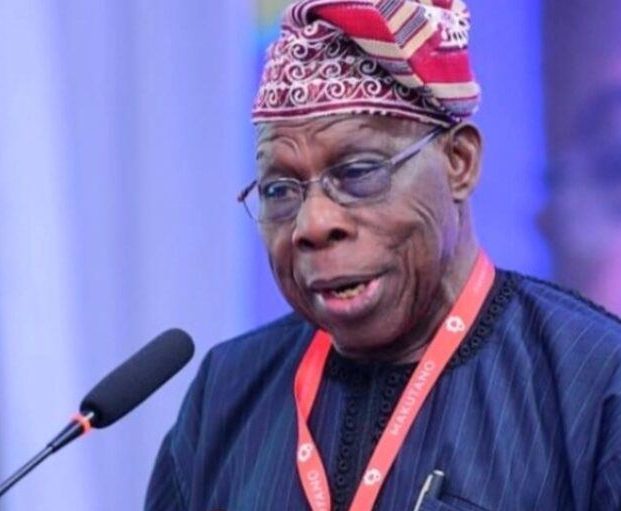
OpenLife News reports that former President Olusegun Obasanjo has revealed that he rejected an offer of political asylum from the United States despite being warned that he would be arrested if he returned to Nigeria under the late military Head of State, Gen. Sani Abacha.
Obasanjo also recounted how he ventured into farming after retiring from the Nigerian Army at 42, and how his farming business was progressing well until Abacha’s government moved against him because, in his words, Abacha had decided he must be liquidated.
He was 42. A four-star general. A former Head of State. And America was begging him to run.
“The former president disclosed this while narrating his experience under the military government in an interview published by BBC News Pidgin on Tuesday.This is the story of a man who had everything, lost everything, and chose to face death rather than run.
“I Retired At 42 — I Didn’t Join The Army To Retire At 42”
Obasanjo said his journey to prison started long before Abacha.
“When I was leaving government as military head of state, I was leaving too early. I didn’t join the army to retire at the age of 42.
“Now I had to retire at the age of 42. At the age of 42, I had become a four-star general. There’s nothing else I can do in the army. I’ve become the military head of state. That’s the highest political office I could rise.”
Think about it. At 42, most men are just starting. Obasanjo had already reached the top of the army and the top of Nigeria.What do you do when you have already been Head of State at 42? Obasanjo chose the farm.“So what can I do? I decided I would go into farming. It really was going well, and it went well until I was arrested.”
His Ota Farm became one of the biggest in Nigeria. He was breeding chickens, growing crops, building an agricultural empire. He was finally living a quiet life. Until Abacha came.
Abacha Had Decided I Must Be Liquidated”
Obasanjo revealed what he did not know at the time — that Abacha had already marked him for elimination.
“Abacha had decided that I must be liquidated; otherwise he would not be able to have his way. I didn’t know that.
READ ALSO: Obasanjo Hints At Death, Makes Important Request
How I Saved Obasanjo From Death Twice—Atiku
Obasanjo Lists What Osoba Didn’t Know About How AD Was Defeated In 2003
“I was travelling and coming back, and the American ambassador in Nigeria called me and said his country had offered me political asylum because they knew that I would be arrested if I returned home.”
The American ambassador was not joking. US intelligence knew Abacha’s plan. They knew Obasanjo was a threat to Abacha’s ambition to transform from military ruler to civilian life president.
They knew Abacha was arresting, jailing, and killing his critics.America offered him a safe escape: Political asylum. Come to America. We will protect you.
Most people would have taken it. Obasanjo refused.
“This was difficult for me. I don’t — I haven’t done anything. What do they want to arrest me for? Um, I don’t want political asylum.”
He said he rejected the US asylum because he had committed no crime.That decision — to return home to face arrest — would change Nigerian history forever.
If he had run, he would have lived comfortably in the United States of America. He would never have gone to prison. He would never have become civilian President in 1999. Nigeria’s story would be different.
But Obasanjo chose Nigeria over safety.
“They Seized My Passport — I Drove Myself To My Arrest”
Obasanjo said his passport was later seized, after which he proceeded to his farm. On arrival, one of his security personnel informed him that government security operatives had surrounded the premises.
According to him, a police officer dressed in civilian clothes subsequently approached him, claiming that an Assistant Inspector-General of Police (AIG) had invited him.
“And when I arrived, they seized my passport; I made for my farm. At the gate of my farm was my security. He waved me down. He said that security had surrounded the farm.
“And within 15 minutes, this man came in mufti, not in uniform, a policeman, and he said, ‘Well, you have been invited by the AIG to come and help him.’ I said, ‘You are a fool.’
‘If the AIG wants me to help him, he will not be inviting me. He will come here,” Obasanjo lamented, adding, “So it was my own car that I used to take myself to the police station. We saw the AIG, and the AIG said, ‘I have been instructed to arrest you.'”
It is however, noteworthy that a former Head of State, a four-star general, drove himself in his own car to the police station to be arrested.
He was not dragged. He was not handcuffed on the road. He walked into his own arrest like a man who knew his conscience was clear.
Jimmy Carter Pleaded — Then They Took Him At 1am
The former president also disclosed that former United States President Jimmy Carter intervened on his behalf by appealing to Abacha.
He said the intervention initially resulted in his being placed under house arrest after he had been held at an undisclosed location.“I didn’t know that it was a decision of Abacha that some of us must not be kept free; otherwise, he would feel unsafe. I was put in a place.
“Then President Jimmy Carter came. He pleaded, and then they put me under house arrest. Then they came one day; I was playing squash at about 1 am. They came and said they were taking me away. And they took me away, and from there, I went to prison,” Obasanjo stated.
1am. While playing squash. In his own house.
That is how Abacha’s men operated — in the dead of night, without warning, without mercy.
From house arrest, Obasanjo was moved to prison. He was later tried by a military tribunal over an alleged coup plot — a charge he always denied — and sentenced to death.
The sentence was later commuted to life imprisonment, then to 15 years. He spent three years in prison, much of it in solitary confinement in Yola, where his health deteriorated and he nearly died.
He was released in 1998, days after Abacha suddenly died. Less than a year later, he was elected President of Nigeria.
The significance of Obasanjo’s story
Obasanjo’s story is not just history. It is a lesson for Nigeria in 2026.
Courage is expensive. America offered him safety. He chose prison. How many Nigerian leaders today would do the same?
Farming was his fallback. When power ended, Obasanjo did not chase contracts. He went to the farm. Today, his Ota Farm is still one of Nigeria’s largest agro-businesses. He proved that a retired general can become a farmer — and a farmer can become President again.
Abacha’s fear was Obasanjo’s power. Abacha did not fear Obasanjo because he had guns. He feared him because he had credibility. Nigerians trusted Obasanjo. The world respected him. That was why he had to be “liquidated.”
Prison did not break him. Many men come out of prison bitter. Obasanjo came out and became President — twice. He forgave. He rebuilt. He still speaks his mind at 89.
The Man Who Refused To Run
Today, at 89, Obasanjo is still farming, still writing, still criticising governments, still travelling the world as Africa’s elder statesman.
But his greatest moment may not have been when he ruled Nigeria as military Head of State from 1976 to 1979. Or when he ruled as civilian President from 1999 to 2007.
His greatest moment may have been that quiet decision at the airport — when America said “Run, we will save you,” and he said, “No. I have done nothing. I will go home.”
He went home. He was arrested. He was jailed. He was nearly killed.And then he came back to lead the same country that jailed him.
That is why, decades later, Nigerians still listen when Obasanjo speaks.
Because this is a man who did not run when he could have run. He drove himself to prison — and drove Nigeria into a new era.
The Obasanjo, General Abacha and America story in questions & answers
Q: Did Obasanjo reject US political asylum?
A: Yes. Obasanjo revealed the American ambassador in Nigeria offered him political asylum because the US knew he would be arrested if he returned home under Abacha. He rejected it, saying he had committed no crime and asking what they wanted to arrest him for.
Q: Why did Abacha want Obasanjo arrested?
A: Obasanjo said Abacha had decided he must be liquidated, otherwise Abacha would not be able to have his way. Obasanjo said Abacha decided some of them must not be kept free, otherwise he would feel unsafe.
Q: How old was Obasanjo when he retired from the army?
A: Obasanjo retired at 42. He said he didn’t join the army to retire at 42, but by then he had become a four-star general and military Head of State, the highest offices he could rise to.
Q: What did Obasanjo do after retiring from the army?
A: After retiring at 42, Obasanjo went into farming. He said his farming business was progressing well and went well until he was arrested under Abacha.
Q: How was Obasanjo arrested under Abacha?
A: His passport was seized, his farm was surrounded by security operatives, a policeman in mufti told him the AIG invited him. Obasanjo drove himself in his own car to the police station, where the AIG told him he had been instructed to arrest him.
Q: What role did Jimmy Carter play in Obasanjo’s arrest?
A: Former US President Jimmy Carter pleaded with Abacha on Obasanjo’s behalf. The intervention initially resulted in Obasanjo being placed under house arrest after being held at an undisclosed location, before he was later taken away at about 1am while playing squash and sent to prison.
Q: How long was Obasanjo in prison under Abacha?
A: Obasanjo spent about three years in prison after being tried over an alleged coup plot. He was initially sentenced to death, which was commuted to life imprisonment and later to 15 years. He was released in 1998 after Abacha’s death and elected President in 1999.
About Author