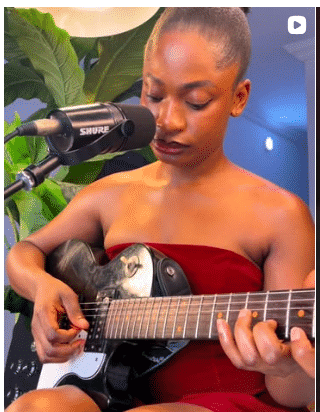
Why I Choose The Inner Temple Over The Trend
OpenLife News reports that Ifechukwu Mercy Michael, known professionally as Ifé, is a Nigerian singer-songwriter and performer specializing in Afro-Soul, Afrobeats, and alté music.
When asked why she chose the hard path of folklore in a world chasing viral Afrobeats, Ifé didn’t talk about market strategy.
She talked about spirit.“I don’t know but I feel like it’s a spiritual pull. When I sit in my solitude and I’m trying to reach my inner temple, the only thing that makes sense to me is those records, like the vibrations and frequencies they were able to access,” Ifé said during an intimate stage interview in Lagos.
It was a defining moment that explains who Ifé really is.
Who is IFÉ?
Born on November 29, 1997, and hailing from Umuawulu, Awka South LGA of Anambra State, Ifechukwu Mercy Michael is not an accidental musician.
She obtained a Bachelor’s degree in Music and Performing Arts from Nnamdi Azikiwe University, Awka, where she formally trained her ear for harmony, arrangement and stagecraft.
Her sound is deliberately unboxed: Afro-Soul, Highlife, Alternative Pop, and Igbo folk fusion.She is a multi-instrumentalist: Vocals, guitar, piano, and crucially, the Igbo traditional thumb piano (Uba Aka) and native percussion — the very instruments that carried moonlight tales in her village.
The Spiritual Pull: From Rex Lawson To Her Solitude
Ifé said during a season of personal struggle, it was not modern pop that saved her, but the old records.“When I was going through a season in my life, it was their music that got me through it. They hit it home for me.”
Those records are the foundations of Igbo folklore highlife — the storytelling Egwu Ekpili, the majestic Egedege of Theresa Onuorah, and the timeless brass of the late Cardinal Rex Jim Lawson.
Rex Lawson, though Kalabari, made Igbo highlife immortal by fusing native rhythms with soulful horns in classics like ‘Sawale’ and ‘Love Adure’. He proved that folklore could be both spiritual and sophisticated.That is the lineage Ifé is tapping into.
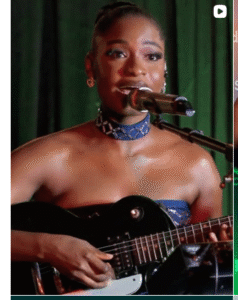
She describes those old frequencies as vibrations that access the inner temple — what our grandmothers called mmuo in the music.
The Manifesto: Honesty First
“I also want to do what I like. I don’t want to do what everybody is doing. If I don’t like it, it’s not good enough for the world. But if I like it, it’s good enough to share. So it speaks to you first.
“I want to be honest with what I’m saying and what I’m singing.”
It is a powerful rejection of industry pressure.
With her degree, her instruments, and her Igbo roots, Ifé is positioning herself not just as a singer, but as a vessel.
The Prospect: The Future Is Folk-Fusion
The industry is watching. Just as the world embraced Tems for soul and Asake for Fuji, there is a global hunger for authentic Igbo folk-soul. With artists like Ifé who can play Uba Aka, sing in Igbo proverbs, and lace it over Alternative Pop and Afrobeats drums, the genre can travel from Umuawulu to the world.
At 28, with her training from Unizik, her Anambra heritage, and her spiritual clarity, Ifé is not chasing the Afrobeats wave. She is creating her own — one that starts from solitude, from the inner temple, and ends in the hearts of listeners who still crave music that heals, not just entertains.
About Author