From UN General Assembly To TCC
OpenLife News reports that chairman and Chief Executive Officer of the National Drug Law Enforcement Agency (NDLEA), Brig. Gen. Mohamed Buba Marwa (Rtd) has called for stronger international intelligence sharing and increased financing for mental health with priority for women and children, from the United Nations General Assembly in New York to The Conversation Conference 5.0 in Abuja.
Marwa made the call first at the 81st Session of the UN General Assembly in New York on Monday 12th October 2026, where Nigeria’s statement themed “Restoring Trust, Managing Transformation: A United Nations that Delivers for All” was delivered on his behalf by the Agency’s Secretary, Shadrach Haruna.
Presenting the transformation of Nigeria’s drug control architecture as a practical case study, Marwa said the NDLEA has evolved from a predominantly enforcement-focused organisation into an integrated, intelligence-led and people-centred body.
He said the shift was driven by sophisticated trafficking networks, technology-enabled illicit activity, rapid movement of criminal proceeds and rising drug dependence, forcing Nigeria to broaden focus from drugs and offenders alone to criminal networks, illicit profits and vulnerabilities.
According to him, between January 2025 and September 2026, the Agency recorded 38,242 arrests, seized more than 5.8 million kilograms of illicit drugs valued at over ₦2.5 trillion, secured 6,232 convictions, while over 16,303 persons received counselling, treatment or rehabilitation.
He noted that emphasis is now on dismantling major traffickers and financial networks, citing the Alternative Development pilot in three communities in Ondo State where residents are transitioning from illicit cannabis cultivation to legitimate agriculture, and digital reforms such as the Drug Integrity Test and Visa E-Administration System.
The reforms, he said, are consolidated in the National Drug Control Master Plan 2026–2030 anchored on six pillars: supply reduction, demand reduction, access to controlled medicines, governance and coordination, alternative development and disruption of the illicit drug economy.
Nigeria urged the international community to strengthen timely intelligence sharing so criminal networks cannot exploit jurisdictional gaps, intensify financial investigation and asset recovery, strengthen prevention and treatment alongside enforcement, expand support for Alternative Development, support capacity development of officers, and invest in institutions in developing countries through technology and training.
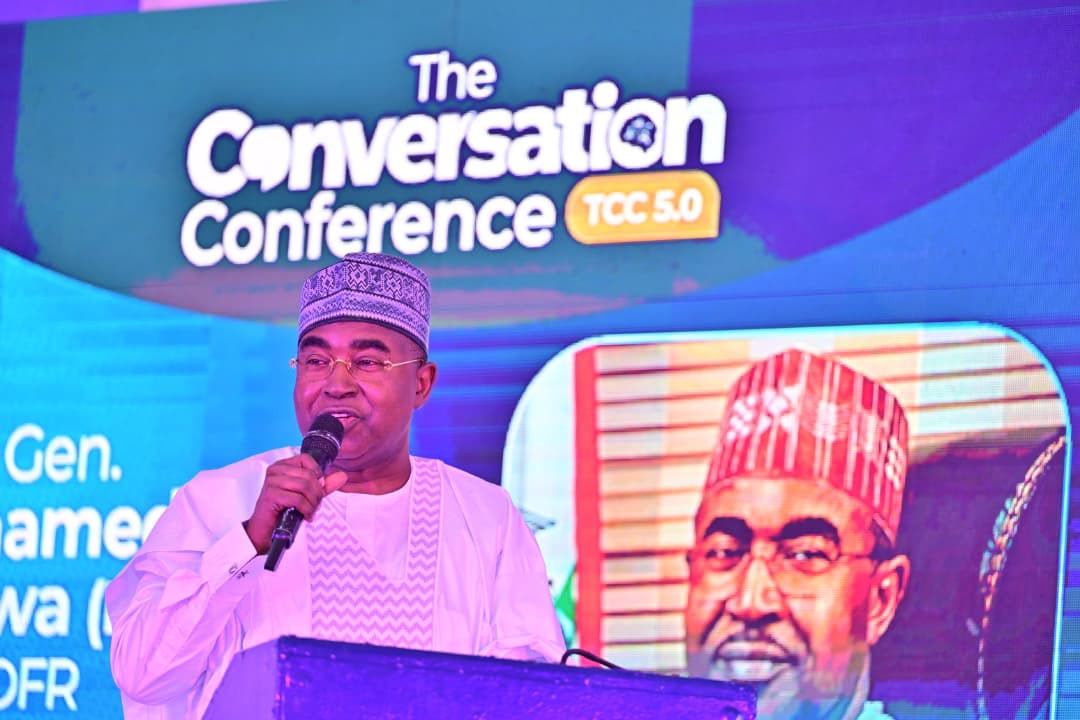
A day later, on Tuesday 13th October 2026, as Chairperson of the 5th edition of The Conversation Conference (TCC 5.0) organised by Intersect Consortium led by Dr. Vincent Udenze at Nicon Luxury Hotel, Abuja, Marwa extended the call to mental health financing.
Speaking days after World Mental Health Day, he warned that drug use and mental illness feed each other. “If we only arrest the symptoms, we will keep missing the cause,” he said, noting that behind many drug abuse cases in NDLEA facilities lies untreated pain, depression and trauma.
He said mental health cannot remain the poorest relation in health budgets, calling for increased financing that prioritises women, children and the vulnerable. “Care that only the well-off can afford is not a system, it is a privilege,” he stated.
Marwa cited the Agency’s War Against Drug Abuse (WADA) campaign and 24/7 toll-free helpline, disclosing that over 53,843 persons have passed through NDLEA‘s 31 rehabilitation facilities in the last five years.
He commended TCC 5.0’s focus on women and children, saying survivors of violence, displaced mothers and families displaced by conflict are too easily missed, and that recovery lasts longer when mother, child and household are supported together.
He called for strategic investments, partnerships and community-led action, integration of mental health into primary healthcare, deployment of more psychiatrists, psychologists and counsellors, and for health, education, security, justice and social welfare sectors to work together.
He urged participants to “finance what works, scale proven community models, put women, children and the vulnerable first, and hold one another accountable.”
About Author