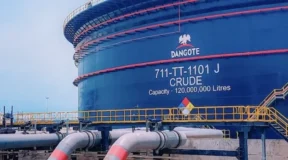
Petrol Pump Price Goes Up In Nigeria
OpenLife News reports that many filling stations across the Federal Capital Territory, FCT, have adjusted the pump price of Premium Motor Spirit, PMS, upward following a new increase by Dangote Petroleum Refinery.
The refinery raised its gantry price by ₦85, from ₦1,265 to ₦1,350 per litre, representing a 6.7% increase.
The new price is now above the current petrol landing cost of ₦1,311 per litre.
The adjustment comes amid rising global crude prices, with Brent crude climbing from $107.92 to $108.21 per barrel, driven by the escalating crisis in the Strait of Hormuz.
Checks by the News Agency of Nigeria, NAN, on Sunday in Abuja showed that retailers have begun passing the cost to consumers.
MRS increased pump price from ₦1,350 to ₦1,395 per litre, Mobil from ₦1,350 to ₦1,400 per litre, while NIPCO raised it from ₦1,350 to ₦1,430 per litre.
A petrol attendant at an MRS station who pleaded anonymity said prices could rise further:
“We are currently selling our old stock at ₦1,395 per litre, but from tomorrow, once the new stock arrives, the price will be higher.”
Economic Impact
Economist and development expert, Dr. Aliyu Ilias, said the hike would worsen inflation and deepen hardship.
“The more prices increase, the more the cost of producing goods, especially food, will rise because everything is affected by transportation costs. This kind of change is not good for the economy at all,” he said.
Former OATUU Secretary-General, Mr. Owei Lakemfa, called on government to shield Nigerians from global oil shocks.
He noted that as an oil-producing nation, Nigeria should not allow domestic prices to automatically mirror every international crisis.
“We have to plan. That is the only sense of governance,” he said, warning against monopoly tendencies in the downstream sector.
Marketers React
Chinedu Ukadike, National Publicity Secretary of IPMAN, said marketers adjusted prices following Dangote Refinery’s review.
He added that frequent changes are creating uncertainty for both marketers and consumers.
With global tensions showing no sign of abating, motorists in Abuja and other cities may face higher transportation costs and increased household expenses in the coming weeks.
About Author