We Have Supported About 9 Million Households
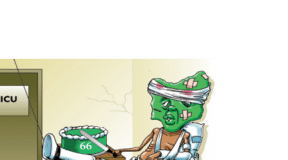
OpenLife News reports that the Federal Government says it has disbursed over N600 billion in cash transfers to slightly over 9 million households to cushion the effects of economic shocks, with each household receiving about N66,000.
The disclosure was made by the Minister of Humanitarian Affairs and Poverty Reduction, Dr. Bernard Doro, during an appearance on <strong>Channels Television’s Politics Today.
Over N600 Billion Disbursed In 3 Tranches
According to Doro, the cash transfer programme was introduced as a stabilisation measure following the removal of fuel subsidy and other economic reforms.
“Over N600 billion in cash transfers has been done in three tranches, and that has made significant impact. We have reached slightly over nine million households, about 10 million households,” he said.
This puts the average support at approximately N66,000 per household.
Impact Assessment Underway
The minister, however, said the government has not yet determined with updated data how many beneficiaries have been lifted out of poverty.
“I have not given you any figure. What I’ve said is this: there have been several interventions. I won’t give you a figure if we have not already reviewed what is going on. We will do this review and once we do that review, we will be able to share the numbers,” Doro stated.
He noted that current poverty data is based on the 2022 Multidimensional Poverty Assessment, and that a new review has been commissioned.
New System To End Fragmentation
Doro said the government is overhauling Nigeria’s social protection system through the newly unveiled One Humanitarian, One Poverty Response System.
The system, he explained, will coordinate interventions across federal, state and local governments and improve collaboration with development partners.
“Before now, our delivery has been fragmented. But with the new reforms, it brings coordination so that programmes start talking to one another,” he said.
A key component is the Unified National Social Registry, which contains data on poor and vulnerable Nigerians. Beneficiaries will be identified, enrolled, and tracked through “growth and exit registers” until they graduate from poverty.
Other Interventions
The minister also listed other programs, including:
Vocational training for over 18,000 Nigerians with starter kits, stipends and business management skills
Shock-responsive cash transfers</strong> to support vulnerable Nigerians during economic shocks
“My job is to translate macroeconomic gains to the micro level,” Doro said.
On Economic Reforms And Inflation
Defending the removal of fuel subsidy and FX unification, Doro said the reforms have helped stabilise the economy. He added that inflation has dropped from a peak of over 34% to about 15% in recent readings.
“We are actually driving down inflation, and that translates to increase in purchasing power,” he said.
He compared Nigeria’s poverty fight to China’s, saying it took China about 40 years to lift millions out of poverty.
“Things take time. Nigeria can scale up poverty reduction, and I’m here to establish the system,” Doro said.
The minister also assured that the ministry is open to a comprehensive and auditable impact assessment of the cash transfer programme.
About Author