As Erosion Threatens Nigeria’s Administrative Heartbeat
OpenLife News reports that gully eroson, as a menace to most environment worldwide, has found its way to Nigeria’s administrative heart beat, Asokoro District, a district that housese presidential Villa.
Overtime, researchers’ findings revealed that human activities such as farming, intensive and short-period rainfall, improper land use, improper irrigation design, improper discharge of water in the channels¸ soil characteristics are major causes.
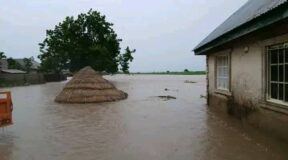
Only recently and in Abuja, rain started as a trickle and by 10pm , Abuja — Nigeria’s seat of power — was under water. What followed was the first major flood in recent history to hit the city’s most exclusive districts: Asokoro, Maitama, Guzape, Katampe, Garki and Wuse.
For residents used to seeing floods in Kubwa, Lokogoma and Galadima, the message was clear: the water has come for the hills. And it came with audacity.
Water Doesn’t Know Asokoro From Anywhere Else
In Asokoro, Mr. Emmanuel Okoro, a retired civil servant who has lived on the same street since 2008, watched water rise to a brown line halfway up his wall.
“14 years. Water has never come this high,” he said Wednesday morning. “By 12:30am, it was in my boys’ quarters. I kept thinking this is Asokoro. This doesn’t happen here. But water doesn’t know Asokoro from anywhere else.”
Across the road, an embassy vehicle was being towed out, water still dripping from its exhaust. In the WhatsApp group for the street, someone posted a video of a man “kayaking” on a plastic chair. Minutes later, a photo of a collapsed wall silenced the chat.
Four streets away, a government official’s SUV was trapped mid-road. The driver had mistaken it for a shallow puddle.
Maitama: Mud, Diesel and Lost Savings
In Maitama, home to Nigeria’s political and diplomatic elite, the flood didn’t just damage property. It disrupted lives.
Zainab, 34, a banker, got home at 8pm. By 11pm she was moving her mother and children upstairs as water filled the kitchen and knocked over the fridge.
“The smell the next day… mud, diesel, sewage. You can’t wash that out in one day,” she said. “My househelp’s room was gone. Mattress, clothes, everything. She was crying. ‘Aunty, my salary is in that bag.”
Mrs. Aisha Dogo, a provision seller, lost a deep freezer and bags of rice. “We pay ground rent. We pay tax. The drainage here has not been cleared in years. Now look,” she lamented.
Guzape Takes The Worst Hit
If Asokoro and Maitama were shocked, Guzape was devastated. The hillside district, Abuja’s version of Lagos’ Lekki, is filled with duplexes worth hundreds of millions.
Site engineer Tunde said water came “from three places: the hill behind us, the unfinished road, and the next estate.” Sandbags were useless.
“I lost bags of cement, rods and tiles worth over N2 million. My client called: ‘Tunde, is this what we paid for?’ What do I say? That the hill decided to cry?”
Down the road, the fence of a newly completed duplex was crushed. The Lagos-based owner flew in Thursday and stood silent in his compound.
Labourers lost a week’s wages. “No work, no pay,” one said as he tried to dry cement bags.
What Went Wrong
Engineers and planners say it wasn’t just the rain. NiMet data showed over 90mm fell in less than four hours — a once-in-several-years downpour.
But three other factors made it worse:
1. Silted Drains: Most drainage in the city centre is outdated, built for a smaller Abuja with more trees. Decades of refuse have cut capacity.
2. Abuse of Master Plan: Waterways have been built on. Drainages have been sand-filled and allocated. Green areas are now high-rises.
3. Guzape Development: Hills have been cut. Natural water paths are now roads and houses. When concrete replaces soil, runoff moves faster.
“When you build on a water path, water will find another path. Sometimes that path is through your parlour,” a Guzape contractor said.
An FCDA official admitted desilting started last month, “but you can’t clear 30 years of blockage in one month. And people still dump refuse in drains.”
For A Long Time, We Raised Alarm
Former FCT Council Chairman of NUJ, Emmanuel Ogbeche, said the flood was predictable.
“For a long time, some of us have voiced our concerns over the indiscretion of the FCT Minister in allocating green areas, gardens and open spaces… In Maitama, most open spaces have been cannibalised by the government that is supposed to protect its master plan.”
He asked if areas allocated for public hospitals in Guzape and Wuye would be reclaimed, and if logging in the city would stop. “Abuja can’t thrive as a city of concrete and steel. Let the trees breathe.”
Government Response: Demolitions And Task Force
By Tuesday afternoon, FEMA and FCDA officials were on ground with pumps. FCT Minister Nyesom Wike toured the affected areas and acknowledged the abuse of water channels.
Within hours, he ordered demolitions. Bulldozers moved into Mississippi Street and parts of Maitama Extension, pulling down fences, homes and businesses built on waterways.
Business owner Mustapha Onimisi said they were promised two weeks’ notice. “To our shock, we woke up and heard Wike was here himself and ordered the demolitions.”
The Minister also banned the conversion of green spaces, parks and gardens into car dealerships across Abuja, and set up a Task Force to enforce compliance. An administrative probe has begun into officials who issued illegal approvals.
A New Fear In The Seat Of Power
The biggest change is psychological. Estate groups now send alerts: “Clouds are gathering. Park on high ground. Move documents upstairs.”
“Before, we worried about traffic when it rained,” an Asokoro resident said. “Now we check weather apps.”
Zainab bought rubber boots. “For next time,” she said. “Because there will be a next time.”
An urban planner warned: “You can’t have a capital city where the centre floods and we call it normal. We need to retrofit the old drainage. And we need to enforce planning rules in new areas like Guzape.”
As residents sweep mud from parlours, the question remains: will the demolitions and task force be sustained, or will Abuja wait for the next downpour?
“Government should tell us the truth,” Mr. Okoro said. “If this place can flood again, let us know. We can’t be living in fear every time it rains.”
The hills still stand. The houses still stand. But after Tuesday night, no one in Abuja’s power corridor is taking the rain for granted again.
About Author