Audit Reports Query N4. 35 Billion Delta Government’s Expenditure As Payments Lack Mandatory Supporting Documents
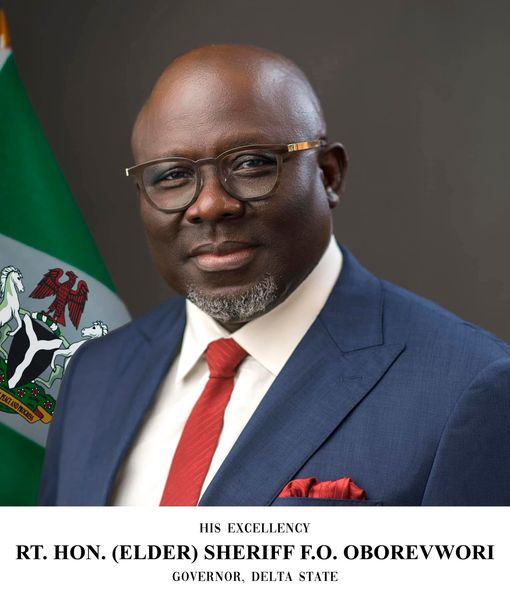
OpenLife Nigeria reports that a 2025 audit report by the Office of the Auditor-General for Delta State has raised fresh questions over N4.35 billion in government expenditure after auditors flagged dozens of payments for allegedly lacking mandatory supporting documents, including audit certificates, receipts, evidence of expenditure, contractor registration documents, boarding passes and other records required under public financial management procedures.
The findings, contained in the 2025 Audit Report of the Auditor-General for Delta State, span payments made by Government House and several ministries, departments and agencies (MDAs).
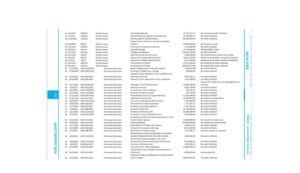
While the report does not conclude that the expenditures were fraudulent, it documents repeated instances where payments were queried because key documents expected to support public spending were either missing or not attached to payment vouchers.
Among the most striking entries is N135 million spent on “Christmas gift for selected leaders.” Auditors queried the expenditure with the remark, “No Audit Certificate.”
The report also questioned another N60.5 million spent as “Additional Christmas Gift,” stating there was “No evidence of expenditure.” A separate payment of N60.5 million for “Purchase of Christmas Gift” was similarly flagged because there was “No Audit Certificate.”
Together, the Christmas gift-related payments alone amounted to about N256 million, all appearing in the audit report with observations highlighting missing supporting documentation.
Vehicle procurement accounted for another major category of queried expenditure.
Government House recorded a payment of N568.9 million for “Procurement of Vehicle,” which auditors queried with the remark, “No receipt & No Audit certificate.”
Recording “No audit Certificate. ”
The report further questioned N32.4 million spent on the “ICT training materials,” citing “No receipt and Audit Certificate.”
Beyond vehicle-related spending, the audit identified hundreds of millions of naira in fuel reimbursements that were also queried.
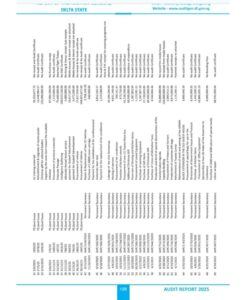
One payment of N336.9 million described simply as “Fuel reimbursement” was flagged for lack of approval, while another N316.6 million for “Fuel reimbursement for the month of Oct 2025” attracted the remark, “No Audit Certificate.”
Auditors also queried N281.6 million for “Fuel reimbursement for 8.5mwipp,” stating that the “fuel receipt not attached.”
The report further highlighted substantial payments for electricity infrastructure projects that also lacked required documentation.
Among them were N178.3 million for the “Extension of 33kv of overhead voltage line extension,” queried over “No Audit Certificate for the Transformer,” and N125.4 million for the “Installation of solar-powered light,” which auditors said had “No receipt for Procurement installation of solar light.”
A payment of N121.2 million for the “replacement of burnt transformer” was also queried because of “No Audit Certificate,” while N65.1 million for the “Replacement of burnt 2MVA11/0 distribution transformer” was similarly flagged with “No Audit Certificate.”
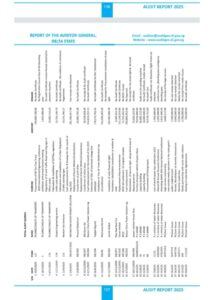
Another N39.3 million for the replacement of a burnt transformer attracted the remark, “No receipt & No Audit certificate.”
Also listed among the queried expenditures was N415.9 million for the “Installation of 7no 30 Tones Media Rooftop air conditioner(s),” with auditors stating, “No Audit Certificate.”
Another sum of N125 million spent on installation of solar-powered light was flagged for lack of receipts to prove the installation.
Government House media-related expenditures equally featured prominently in the report.
The Auditor-General queried N45.8 million spent on the “Production and Airing of special documentary of the transformation Agenda,” with the observation, “No record from media house.”
provide the documents required to satisfy the audit observations.
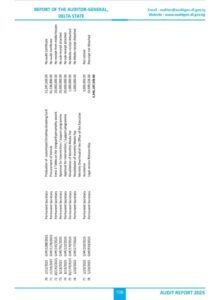
With N4.35 billion in payments flagged for documentation deficiencies, the report is likely to intensify calls for greater transparency, stronger financial controls and stricter compliance with public procurement and accounting regulations in the management of Delta State’s public funds.
Source: Sahara Reporters
About Author