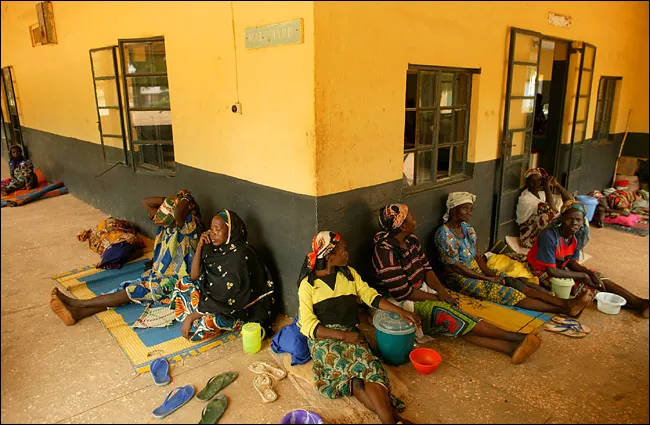
Why We Could Not Deliver Quality Health Care In 2025
OpenLife Nigeria reports that the Minister of Health, Prof. Mohammed Ali Pate, on Monday said the Ministry of Health was unable to utilise its 2025 capital budget, having received only N36 million out of the N218 billion appropriated for the year.
Professor Pate made the disclosure during a 2026 budget defence session with the House of Representatives Committee on Healthcare Services.
He stated that while the ministry’s entire personnel budget was released and fully expended, the same could not be said of the capital component, due largely to the bottom-up cash planning system operated by the Office of the Accountant-General of the Federation.
He further informed lawmakers that the ministry was unable to access certain counterpart funds because of delays in the release of Nigeria’s counterpart contributions, adding that implementation of the 2025 capital budget was consequently stalled by unforeseen circumstances.
According to the minister, Nigeria’s health sector is guided by Vision 20:2020, the Medium-Term National Development Plan (NDP) 2021–2025, and the National Strategic Health Development Plan (NSHDP) II.
Technically, Health in Nigeria is characterized by significant, yet slow, improvements alongside major challenges, including high rates of malaria, infectious diseases (HIV/AIDS, tuberculosis), and rising non-communicable diseases.
The system suffers from inadequate funding (often 5% of the budget), severe brain drain of healthcare professionals, and underdeveloped infrastructure.
Key Health Status and Challenges:
Leading Causes of Death: Malaria, lower respiratory infections, HIV/AIDS, neonatal disorders, and diarrheal diseases are the top causes.
Maternal & Child Health
Nigeria contributes significantly to global under-5 and maternal mortality, with 25% of under-5 deaths and 11% of maternal deaths.
Disease Burden
High prevalence of malnutrition and, more recently, rising instances of chronic conditions like heart disease and cancer.
Infrastructure
Healthcare is structured in three levels (primary, secondary, tertiary), but primary care is often underfunded and dysfunctional.
System Constraints:
Brain Drain
Over 50% of trained Nigerian doctors are estimated to work abroad, leading to a severe shortage (approx. 23.3 doctors per 100,000 people).
Funding
Public spending on health is low, forcing high out-of-pocket payments for citizens, making care inaccessible for many.
Medical Tourism
The country loses over $2 billion annually to medical tourism, particularly to India.
Government Initiatives
Efforts to improve the sector include the Presidential Initiative on Unlocking Healthcare Value Chains (PVAC) launched in 2023 to boost local manufacturing of medicines and improve facilities.
Key Statistics (as of 2026):
Population
Over 200 million (fastest growing in Africa).
Life Expectancy
Improved to approximately 55.2 years by 2021.
Poverty Rate: Roughly 63% of the population faces multidimensional poverty, limiting access to care.
About Author