United States Contradicts WTO Director
OpenLife Nigeria reports that the United States of America has contradicted Director-General of the World Trade Organisation (WTO), Dr Ngozi Okonjo-Iweala over the state of Nigerian economy, saying that the new minimum wage of N70,000 had been undermined by the continued depreciation of the Naira.
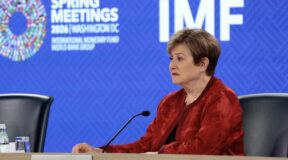
Ngozi Okonjo-Iweala had, on August 14, commended President Tinubu’s administration’s reforms by restoring stability to Nigeria’s economy.
“You cannot really improve an economy unless it’s stable. The President and his team have worked hard to stabilise the economy. The reforms have been in the right direction. The next step is growth, alongside building social safety nets so those feeling the pinch of reforms can get support,” the former Finance Minister said in Abuja after a meeting with Tinubu in the Villa.
However and in contrast, reports on Human Rights Practices, released by the Department of State, Bureau of Democracy, Human Rights and Labour, the US also identified lengthy pre-trial detention and delays as major challenges facing justice delivery in Nigeria.
The report also said the new minimum wage of N70,000 had been undermined by the continued depreciation of the naira.
It noted that the new wage, pegged at about $47.90 per month, had lost its value due to the naira trading at over N1,500 to the dollar.
The report, which added that firms with fewer than 25 workers did not benefit from the wage increase, stated: “The National Minimum Wage (Amendment) Act 2024 doubled the minimum wage to N70,000 ($47.90) per month.
“Despite the increase, currency devaluation meant the minimum wage was no longer higher than the poverty income level. Many employers had fewer than 25 employees, so most workers were not covered.’’
The law provides a national minimum wage for employers with 25 or more full-time staff, with exceptions for seasonal agricultural workers, part-time employees, and commission-based roles.
The US report further observed that some states had declined to implement the law, citing financial constraints, and also pointed out gaps in enforcement.
It stated: “The law did not define premium pay or overtime and prohibited excessive compulsory overtime for civilian government employees, stressing that the government rarely effectively enforced minimum wage and overtime, while penalties were low and not commensurate with other crimes such as fraud.”
According to the report, between 70 and 80 per cent of Nigeria’s working population operates in the informal economy, where authorities fail to enforce wage, hour, and occupational safety and health laws.
About Author